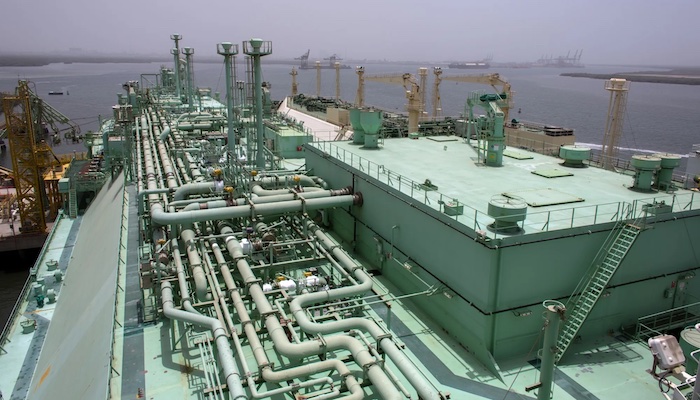
Pakistan’s Power Minister Awais Leghari has said the country’s growing reliance on domestic energy sources has significantly reduced its exposure to disruptions in global liquefied natural gas supplies.
Pakistan’s Power Minister Awais Leghari said the country’s expanding use of indigenous energy including solar and wind power, nuclear reactors, coal and hydropower has helped shield its electricity sector from potential LNG supply shocks.
Speaking to Reuters Leghari explained that about 74 per cent of Pakistan’s electricity generation now comes from domestic sources, with the government aiming to raise the figure to more than 96 percent by 2034.
He said the shift has been driven partly by what he described as a “people led solar revolution”, alongside earlier investments in nuclear power, hydropower and locally mined coal, all of which have strengthened the country’s energy self-reliance.
Pakistan has historically struggled with electricity shortages and once faced daily power cuts lasting several hours during periods of peak summer demand.
However, the country now has surplus generation capacity after adding coal fired, LNG and nuclear power plants, while demand growth has slowed and rooftop solar installations have surged.
At times, solar generation has even exceeded grid demand in some areas. Despite this, outages still occur in parts of the country due to electricity theft, transmission losses and financial constraints within the power sector, rather than an overall shortage of supply.
The comments come amid heightened concern over LNG availability after Qatar the world’s second largest LNG producer after the United States temporarily halted production earlier this month. Asian nations, which buy around 80 percent of Qatar’s LNG output, have been scrambling to secure alternative supplies.
Leghari said LNG currently accounts for roughly 10 percent of Pakistan’s electricity generation and is mainly used to meet evening demand peaks and help stabilise the grid.
He noted that during the global energy crisis triggered by Russia’s invasion of Ukraine in 2022, Pakistan was forced to impose extended power cuts after failing to secure LNG cargoes on the spot market.
According to the minister, even if LNG imports were disrupted or became prohibitively expensive, the effect on the country’s overall production capacity, industry and agriculture would be limited.
However, he warned that prolonged disruptions could still result in additional shortages during the summer months, when electricity demand surges because of widespread air conditioner use.
“In a worst case scenario, if LNG cargoes stopped for several months, Pakistan might experience one to two hours of load shedding during peak summer evenings,” Leghari said.
Such outages, he added, would likely affect some urban and rural communities rather than critical sectors such as industry or agriculture.
Pakistan is also working to expand battery storage systems that would allow surplus daytime solar power to be stored and used later in the evening when demand peaks.
The country has already cancelled 21 LNG cargoes scheduled for delivery in 2026 and 2027 under a long term agreement with Eni, reflecting declining gas demand as domestic generation and solar capacity continue to grow.
Leghari said the government does not plan to invest in energy sources that could compromise national energy security and will instead prioritise indigenous clean power over the next six to eight years.
Currently, about 55 per cent of Pakistan’s electricity is generated from clean sources, with the government targeting more than 90 percent by 2034.
Hydropower produces around 40 terawatt hours of electricity each year, while nuclear power generates about 22 terawatt-hours and domestic coal roughly 12 terawatt hours, forming a substantial portion of the country’s power supply without relying on imported fuels.
Rooftop solar installations have expanded rapidly to more than 20 gigawatts nationwide. Behind the meter capacity is estimated at between 12 and 14 gigawatts, and could be as high as 18 gigawatts, significantly reducing daytime demand on the national grid.
Hydropower output also rises during the summer months as river flows increase, providing up to 7,000 megawatts of additional capacity and helping to meet the surge in electricity demand from cooling systems.
Goodness Anunobi
About the Author