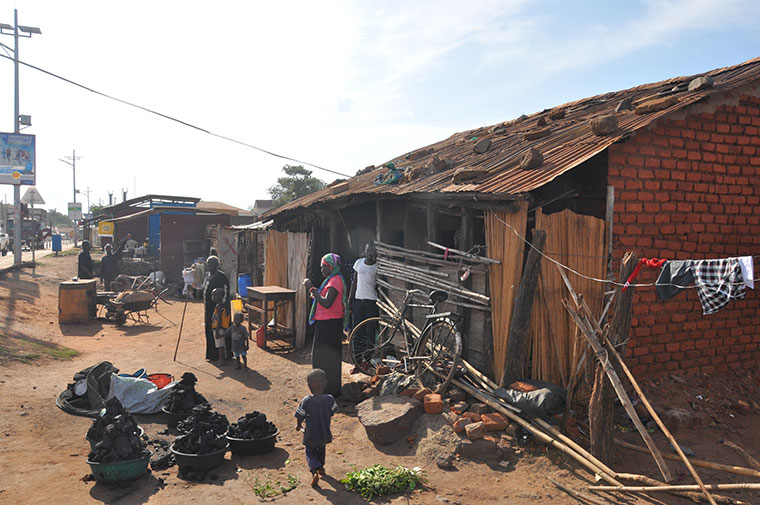
At least 27 out of every 100 Ugandans are experiencing multidimensional poverty, according to the Uganda Bureau of Statistics (UBOS).
The findings are contained in the fifth monograph of the Multidimensional Poverty Index (MPI), which highlights persistent gaps in health insurance, sanitation and living standards despite progress in reducing income poverty.
Stephen Baryahirwa, head of the department for social surveys and censuses at UBOS, said traditional poverty measures based on household consumption and expenditure do not fully capture the extent of deprivation.
“The MPI provides a broader understanding of poverty by looking at multiple aspects of deprivation affecting people’s daily lives,” Baryahirwa said.
UBOS statistician Elemia Muhandogwa noted that among the 13 indicators used to measure multidimensional poverty, lack of health insurance is the most prevalent, affecting 53 out of every 100 Ugandans.
This is followed by deprivation in cooking fuel and technology, which affects 52 in every 100 people. He added that the lowest level of deprivation relates to households that experienced a death in the past 12 months.
Muhandogwa said multidimensional poverty is more widespread in rural areas, where it stands at 32 per cent, compared to 19 per cent in urban areas.
“Deprivation is particularly severe in rural communities, where 61 per cent of residents lack access to health insurance compared to 39 per cent in urban areas. Similarly, 60 per cent of rural households are deprived of cooking fuel and technology, far higher than the 13 per cent recorded in urban settings,” he explained.
Lack of health insurance is the largest contributor to multidimensional poverty, accounting for 24 per cent of the MPI. Cooking fuel and technology contribute about 12 per cent, while other factors include poor housing materials and limited access to essential services.
Indicators such as recent household deaths contribute minimally to overall poverty levels. The report also shows that female-headed households experience higher poverty levels, with an MPI of 29 per cent, compared to 26 per cent for male-headed households.
Education levels also influence poverty outcomes. Households headed by individuals with no formal education recorded the highest poverty levels at 44 per cent, with poverty declining as education levels increase.
Regionally, Karamoja remains the most affected sub-region at 57 per cent, followed by West Nile at 39 per cent, while Kampala recorded the lowest levels of multidimensional poverty.
State minister for Finance, Planning and Economic Development Amos Lugolobi said the findings provide stronger data to guide development planning.
“The availability of comprehensive census data marks a turning point for Uganda’s long-term vision, including Vision 2040, enabling more accurate measurement of progress and better policy decisions,” Lugolobi said.
He, however, noted a growing challenge in data utilisation.
“We are now suffering from an oversupply of data. The challenge is ensuring that users can interpret and apply it effectively,” he said.
According to the report, Uganda’s MPI stands at 0.27, indicating moderate progress. However, Lugolobi warned that significant challenges remain, particularly in sanitation and living standards.
He noted that 45 per cent of Ugandans lack access to improved toilet facilities, while 54 per cent remain deprived in cooking fuel and technologies. He also raised concerns about limited health insurance coverage and continued barriers to accessing healthcare services despite government investments in the sector.
About the Author