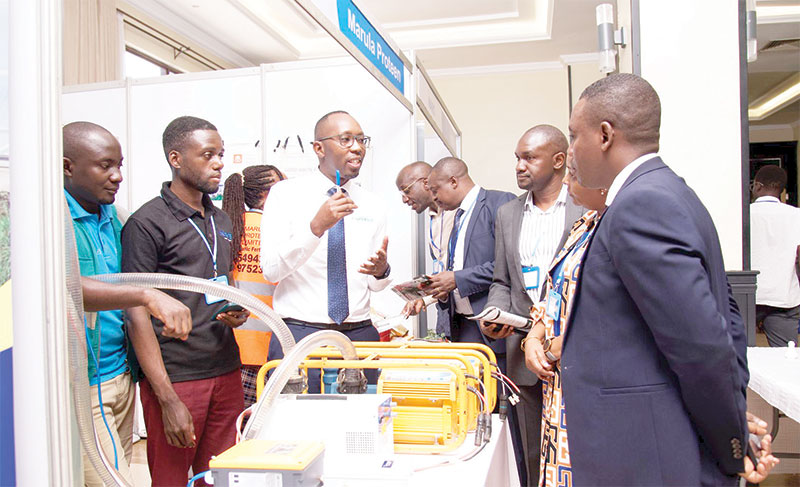
At least 14 districts are set to benefit from the £45 million (Shs 185.4 billion) Power for Food Partnership Uganda programme, The Observer has learned.
The regional initiative, coordinated by SNV with support from the IKEA Foundation, aims to drive systemic change at the intersection of agri-food systems and renewable energy in Eastern Africa.
Across Uganda, Ethiopia, Rwanda and Kenya, the programme strengthens linkages between regenerative agriculture (RA) and the productive use of renewable energy (PURE) to build more resilient, sustainable and inclusive food and energy systems.
Uganda’s agriculture sector remains the backbone of the economy, employing the majority of the population and contributing significantly to GDP, exports and food security. Many farmers still depend on rain-fed production, cooperatives struggle with drying and storage, and agribusinesses face interruptions that reduce competitiveness.
By generating evidence, fostering collaboration and enabling locally led solutions, SNV and its partners work with ecosystem actors across sectors to accelerate transformative change.
Representing the minister of state for Agriculture, Kyakulaga Fred Bwino, Julius Twinamasiko, the commissioner in charge of Strategic Interventions to Boost Food and Animal Feed Security, said Uganda has long relied on nature without replenishing it.
“Season after season, this has resulted in declining food security, increasing biodiversity loss and growing climate change challenges,” he noted.
“The sector continues to face persistent problems such as low productivity, post-harvest losses, limited access to energy and vulnerability to climate change. With this programme, we are not only addressing productivity challenges but also advancing climate resilience, food security and rural livelihoods,” he added.
Twinamasiko said that by linking food and energy systems, the Power for Food Partnership unlocks synergies and positions Uganda to achieve sustainable agricultural transformation.
Currently, government is expanding access to green energy for irrigation, cold storage and agro-processing while strengthening farmers’ cooperatives, SMEs and local governments to adopt and scale regenerative agriculture powered by renewable energy.
“The Food Partnership Uganda programme will serve as a catalyst for systems transformation by generating evidence, aligning stakeholders, building champions for the renewable energy nexus and leveraging investment opportunities to expand renewable energy solutions in agriculture,” he said.
Representing Megan Ritchie, the country director of SNV Uganda, Peace Kansiime, Energy Sector leader at SNV, noted that lack of reliable, affordable and clean energy continues to undermine agricultural productivity.
“Uganda’s progress in energy-enabled agriculture requires coordination across government, civil society, the private sector, financial institutions and farmer organisations,” Kansiime said.
The regional approach gives Uganda access to cross-country learning, innovation and scaling opportunities while tailoring solutions to national priorities.
“Agriculture contributes nearly a quarter of Uganda’s GDP and remains the backbone of employment. However, productivity is constrained by soil degradation, biodiversity loss, climate shocks, high costs, post-harvest losses and limited access to energy services such as irrigation, cooling, drying and processing,” he explained.
“When soils are restored and landscapes regenerated, and when energy powers irrigation, storage and value addition, we achieve higher productivity, reduced losses, stable quality, stronger farmer incomes and predictable energy. This creates a virtuous cycle benefiting households, markets and the environment.”
Districts will act as local implementation hubs, supporting farmers in adopting long-term regenerative and energy-enabled practices. Carlos Bueso, the Power for Food Partnership lead in Uganda, said the programme focuses on the nexus between regenerative agriculture and renewable energy.
“We believe that by bringing together these two sectors, we can catalyse a system transformation that makes the agri-food system more inclusive and rooted in equity,” he said.
“We must work with ecosystem actors in both the agri-food and energy systems, amplifying their efforts to address specific challenges.”
“By managing land well and improving soil fertility and soil health, we build resilience. If we integrate solutions such as solar energy and storage facilities, we reduce post- harvest losses,” Bueso added.
Uganda is ranked second worldwide in organic production, behind India, and the programme aims to scale up these achievements.
“Power for Food is a partnership programme. We want to scale up organic production through regenerative agriculture practices. Uganda is on the right pathway, aligning with national strategies in both energy and agriculture,” he said.
About the Author