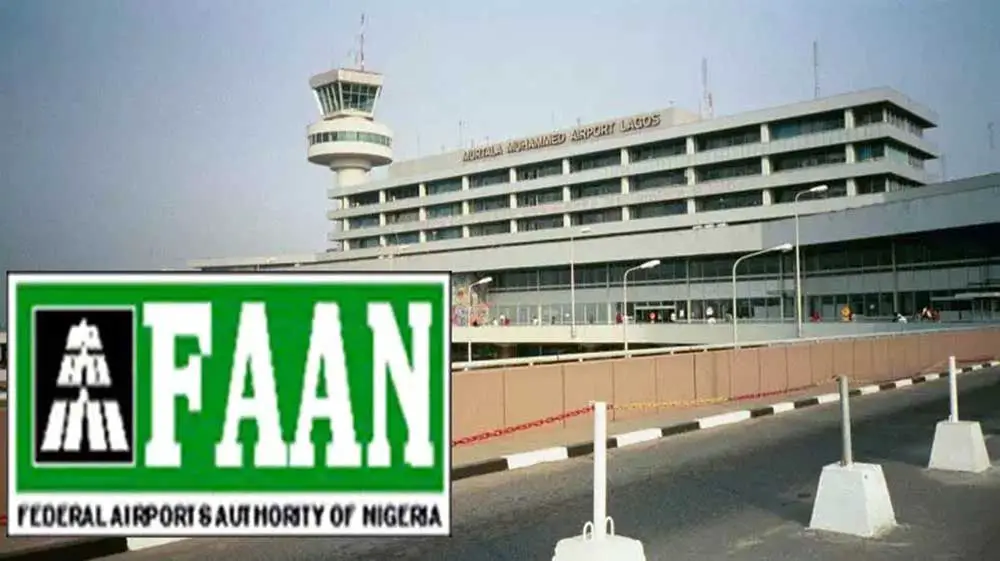
FAAN says 62,000 cards were issued in three days after rollout triggered gridlock at major Nigerian airports…
More than 100,000 motorists have registered for airport access cards nationwide as part of the Federal Government’s push to implement a cashless payment system at airport tollgates, the Managing Director of the Federal Airports Authority of Nigeria (FAAN), Olubunmi Kuku, has revealed.
Kuku disclosed on Monday that 62,000 of the cards were issued within just three days of enforcing the policy, following a surge in registrations as motorists rushed to comply with the new payment requirement.
The development comes amid ongoing disruptions caused by the initial rollout of the cashless system at major airports across the country, which triggered long queues and traffic gridlock at entry points.
In response to the situation, President Bola Ahmed Tinubu ordered that airport tollgates be temporarily opened, allowing motorists to pass through without payment while authorities review the implementation process.
As a result, travellers and airport users have enjoyed free access into Nigerian airports for the past five days.
The new cashless policy, which took effect on March 1, was introduced to modernise payment systems at airport entry points and reduce cash handling. However, the first phase of enforcement led to confusion and heavy congestion, particularly at the country’s busiest airports in Lagos and Abuja.
Passengers reported missing flights as vehicles struggled to gain entry through tollgates while many motorists attempted to register for the required access cards at the same time.
Speaking on the challenges experienced during the rollout, Kuku acknowledged that the early days of enforcement created significant bottlenecks despite the awareness campaigns conducted before the launch.
“Of course, the implementation of the cashless policy made things quite hectic because a lot of commuters and passengers, despite the awareness, did not believe we would actually start enforcement on March 1,” she said.
“It created a huge bottleneck in the first few days, but we began to see improvements. From October, when we started preparations, up until March 3, we have registered about 100,000 customers, and 62,000 of those registrations happened within the last three days.”
She added that traffic conditions had already started improving in some locations, including Abuja, before the presidential directive temporarily halted enforcement.
According to Kuku, the primary objective of FAAN remains ensuring smooth airport operations while maintaining safety and security.
“We are an airport authority, and outside safety and security, our goal is to make sure passengers and surrounding communities enjoy a seamless experience. We’re grateful to Mr. President for stepping in,” she said.
Findings showed that immediately after the presidential directive, FAAN officials stationed at airport tollgates vacated the entry points and removed barricades, allowing vehicles to move freely without payment.
Motorists confirmed that the gates had remained open since the announcement.
One driver, who identified himself simply as Idris, said vehicles had been passing through the tollgates without any checks or payments for several days.
“I’ve been passing through the tollgate for about five days now, and I haven’t seen a single FAAN official there. Vehicles just move freely. I guess they are trying to fix the system,” he said.
Eyewitnesses said the absence of toll officials has significantly reduced congestion at airport entrances, a stark contrast to the long queues and frustration experienced during the early enforcement period.
Earlier, the Federal Government announced the suspension of the cashless toll system after the rollout generated public complaints and operational disruptions.
The Minister of Aviation and Aerospace Development, Festus Keyamo, confirmed the President’s directive while briefing State House correspondents after a Federal Executive Council meeting.
According to him, the decision was taken after reports that passengers were missing flights due to traffic delays caused by the new payment system.
“Mr President was very concerned about the welfare of Nigerians and the fact that many were missing their flights. Out of empathy, he directed that we suspend the present system because it created a lot of gridlock and Nigerians were suffering as a result,” Keyamo said.
He added that the ministry and FAAN have been instructed to temporarily revert to the previous payment arrangement while work continues on a more efficient electronic access system for airport tollgates nationwide.
About the Author