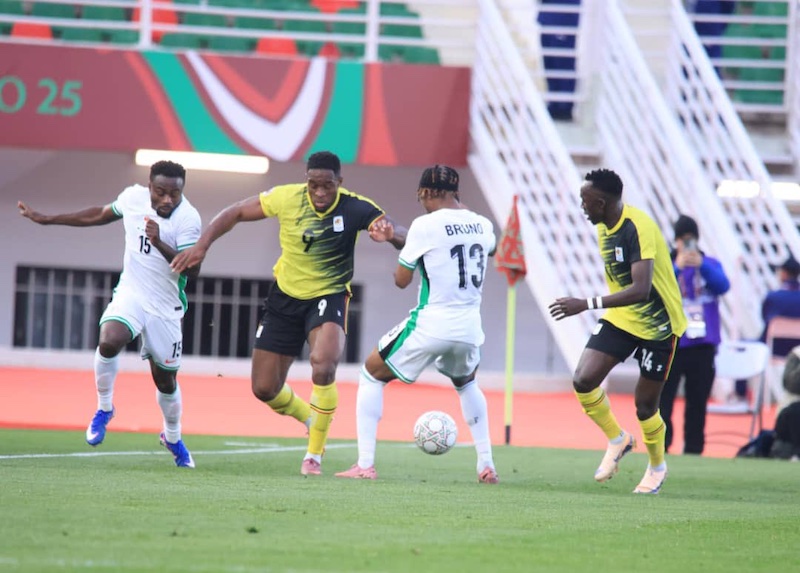
At the time of writing this piece reflecting on Ugandan football in 2025, the national team was yet to play Nigeria at the ongoing Africa Cup of Nations (Afcon).
It will take a huge upset for The Cranes to overcome the Super Eagles. Nonetheless, this piece is not about Afcon, but it is about how struggles in the domestic league are affecting our success, not just domestically, but on the continent.
So, Uganda’s struggles at Afcon have little to do with tactics or preparation; it has all the hallmarks of an unyielding domestic league. Just take this in; out of the 23-man Afcon squad, there are only six locally-based players of which none is an assured starter.
This may not sound new at all given that we have always fielded a squad dominated by foreign stars. The difference is while in the past most of these stars were bred and nurtured through our domestic football system, the current foreign-based stars in the team today, at the risk of sounding offensive, are recruited like mercenaries.
The likes of Cape Verde and Gabon have gone that route with some tangible success but I don’t feel that is the way for Uganda. Those aforementioned countries are greatly limited when it comes to domestic support. With populations much smaller than a division of Kampala, it is understandable when they hunt for players with the slightest of roots to their countries.
Uganda cannot afford such a cheap tactic with a population of more than 45 million people. I watched a hilarious video clip where Nigerian social media bloggers made fun how Uche Ikpeazu, Uganda’s goal-scoring hero against Tanzania, is their own who failed to break through in a village team.
Away from blaming the national team set-up, most of the negative responsibility lies with docile leadership of domestic football, especially at club level. You cannot have passive leaders managing top-level club football to be abreast with the ever-changing football trends.
Today, exposure counts a lot in the progress or success of a team yet several years have gone by without seeing Ugandan clubs test themselves with the best teams in other leagues.
In my days as SC Villa president between 2014 and 2018, I ensured that we utilized every off-season to test our strength against the best teams in the region to the extent that I even took the team to Vietnam for some weeks.
The fruits of such engagements are often subtle but actually rewarding because players get exposed to various environments, styles and expecta- tions. Many players are even scouted during these friendly matches.
Ask yourself, when was the last time a Ugandan team participated in a competition involving top-level continental clubs? Suffice to say, that was Vipers FC’s biggest undoing in the Caf Champions League this season. Unfortunately, such endeavors are a thing of the past to today’s football leaders, who are still locked into the old-fashion tradition of playing cards to their chest.
For instance, I was recently surprised to learn that my SC Villa hides its training sessions at East High School in Ntinda to prevent opponents from picking up their tactics. Not only is this outdated but it actually regresses the club’s fortunes as one-dimensional because they have only one platform to learn from.
In all this, what domestic clubs need are vibrant administrations capable of amalgamating history with the future of the game. Football is digital today, there is no need for fans to show up at a particular place to prove their loyalty.
In 2026, there will be need for domestic clubs to have outwardly-thinking administrations that seek to expose players to the global game than those seeking to consolidate small domestic bragging rights.
If Uganda exposes its best talent to the world, the national team will be greatly strengthened and only then will we have a chance to truly shine at the 2027 Afcon co-hosted by Uganda.
The author is a football investor and Villa President emeritus.
About the Author