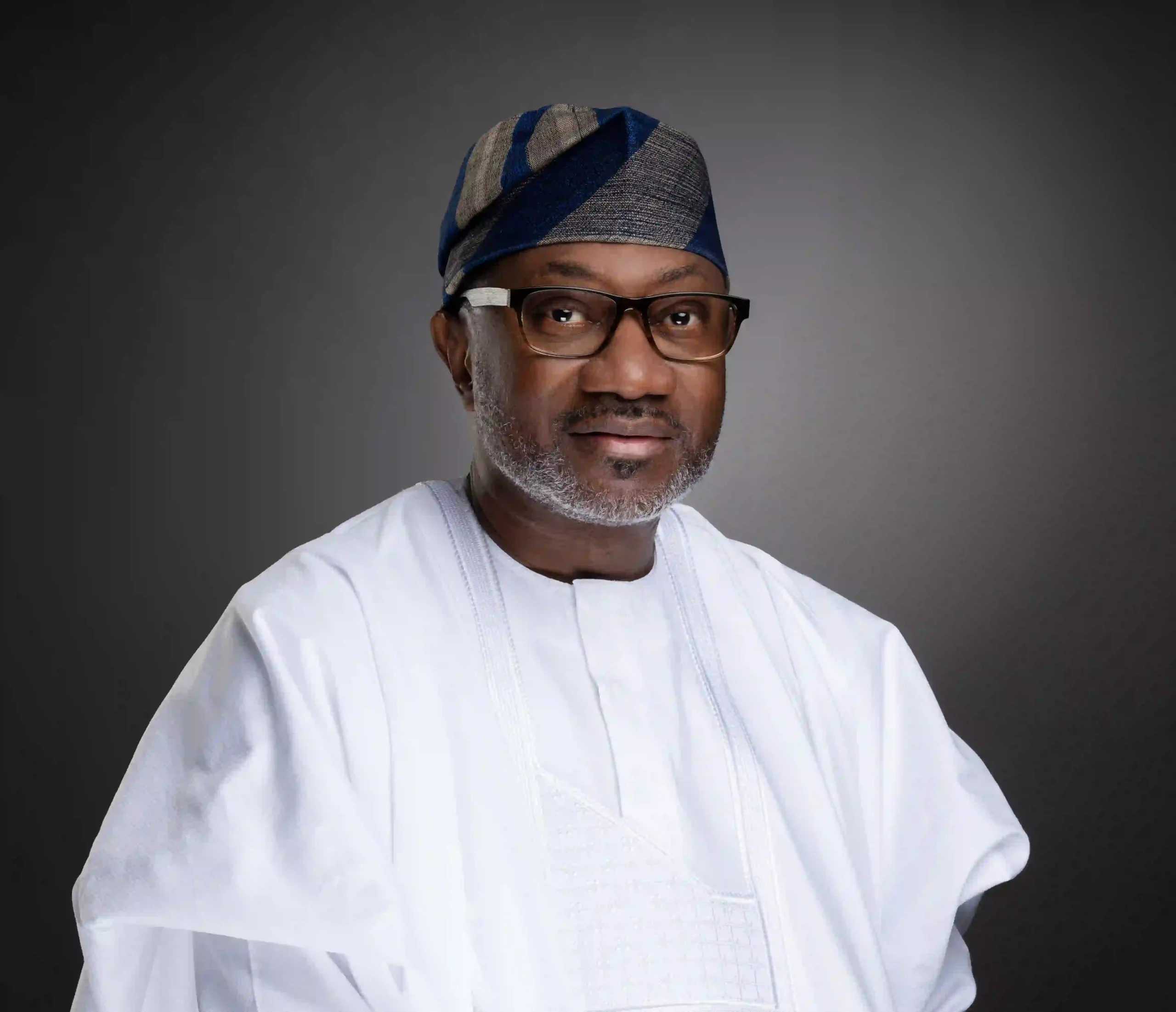
First HoldCo chairman backs recapitalisation, urges ₦1trn minimum for international banks
Chairman of First HoldCo Plc, Femi Otedola, has disclosed that First Bank has successfully met the ₦500 billion minimum capital requirement set by the Central Bank of Nigeria (CBN) for banks with international operating licences.
The development comes ahead of the March 2026 deadline imposed by the apex bank, following its recapitalisation directive issued in March 2024.
Under the CBN framework, commercial banks with international licences are required to maintain a minimum capital base of ₦500 billion, while national and regional banks are expected to raise ₦200 billion and ₦50 billion, respectively.
So far, about 27 banks have raised fresh capital, with 16 institutions fully meeting the new requirements, according to the CBN Governor, Olayemi Cardoso.
First Bank operates as the commercial banking subsidiary of First HoldCo.
In a statement on the state of Nigeria’s financial sector, Otedola said shareholders of the holding company remain committed to further capital injection across its subsidiaries and future business ventures.
“FirstBank, the commercial banking arm of First HoldCo Plc, has met the ₦500 billion minimum capital base required by the Central Bank of Nigeria for an international banking licence,” Otedola said. “The shareholders of First HoldCo are fully committed to injecting additional capital into its existing subsidiaries and new business adjacencies.”
The billionaire investor described the banking sector recapitalisation as a bold and necessary policy, noting that although it faced criticism initially, it was the right decision for the long-term health of the financial system.
He observed that while banks recorded strong profits in 2024, 2025 marked a shift toward caution, balance-sheet strengthening and consolidation—an approach he said is essential for supporting real sector lending and sustainable economic growth in 2026.
Otedola went further to call for a higher capital threshold for banks with international licences, proposing a new minimum of ₦1 trillion.
“A modern economy aspiring to reach a $1 trillion size cannot depend on weakly capitalised banks,” he said. “Stronger banks translate to better governance, wider ownership and institutions that are not run as personal estates—an issue Nigeria has grappled with for far too long.”
The First HoldCo chairman also praised President Bola Tinubu for what he described as courageous and well-informed economic reforms, saying the administration’s policy direction reflects a deep understanding of Nigeria’s economic realities.
According to him, the reforms have laid the foundation for policies that are increasingly gaining international recognition.
“I have witnessed several administrations, but the conviction shown at this critical time deserves commendation,” Otedola said.
He also lauded CBN Governor Olayemi Cardoso, describing him as an exceptional leader who has brought discipline and clarity back to monetary policy.
Otedola said the gradual slowdown in inflation reflects a return to orthodox monetary management, while reforms in the foreign exchange market have restored confidence among investors and businesses.
“For the first time in years, the naira is strengthening on the back of market forces rather than artificial interventions,” he said, adding that the rise in Nigeria’s external reserves to over $46 billion, a seven-year high, underscores the effectiveness of current policies.
“I say this without hesitation: Yemi Cardoso is the best Central Bank Governor Nigeria has ever produced,” Otedola said, citing the governor’s calm leadership, discipline and focus on long-term stability.
He urged the CBN leadership to remain steadfast, noting that Nigeria is at a turning point and that continued support for bold monetary reforms is crucial to building a stronger economic future.
Meanwhile, Otedola’s recent decision to sell his stake in Geregu Power Plc for about ₦1.088 trillion on December 29, 2025, has fueled market speculation over his next major investment move.
About the Author