Former Nigerian Vice President to advise on health financing, policy, and Africa’s global positioning….
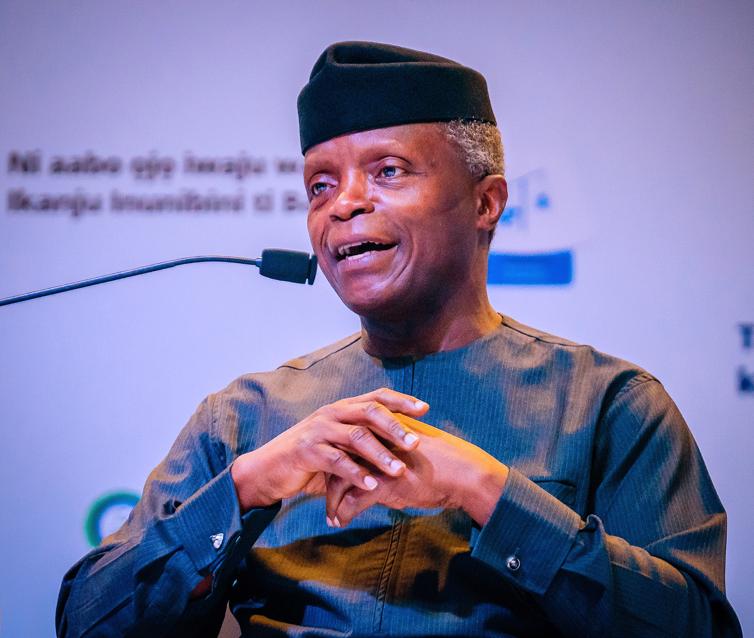
Nigeria’s former Vice President, Yemi Osinbajo, has taken on a new international role following his appointment as Senior Strategic Advisor to the Director General of the Africa Centres for Disease Control and Prevention.
The appointment, announced in a statement released on April 6, signals a strategic move by the continental health body to strengthen its leadership capacity at a time of growing pressure on Africa’s healthcare systems.
In his new role, Osinbajo is expected to provide high-level advisory support on critical issues shaping the future of healthcare across the continent. These include health financing, local production of medical supplies, partnerships, and Africa’s voice in global health reforms all within the framework of the African Union.
Why the appointment matters
Director General of Africa CDC, Jean Kaseya, described the former vice president as a seasoned leader whose experience cuts across governance, law, finance, and diplomacy.
He noted that Osinbajo’s appointment comes at a crucial time when Africa must take a more assertive role in shaping its health future.
“His leadership will be invaluable as the continent works to strengthen its health security and policy direction,” Kaseya said, adding that the move reflects a broader push to harness top African expertise for continental development.
A track record in governance and reform
Osinbajo served as Nigeria’s Vice President from 2015 to 2023 under former President Muhammadu Buhari.
During his time in office, he played a central role in several key initiatives, including:
- Chairing Nigeria’s Economic Sustainability Committee
- Driving ease-of-doing-business reforms
- Overseeing major social investment programmes
Before his vice presidency, he also served as Attorney General and Commissioner for Justice in Lagos State.
In 2022, Osinbajo entered the race for Nigeria’s presidency but did not secure his party’s ticket at the primaries.
Expanding global footprint
Since leaving office, Osinbajo has steadily built an international portfolio of leadership roles.
In recent months:
- He was appointed Co-Chair of the Future of Development Cooperation Coalition in January 2026
- The Economic Community of West African States (ECOWAS) tapped him to oversee aspects of the 2025 presidential elections
- He was named Chairman of the Board of Advisors for a London-based African art institution
- He also partnered with the United Nations Development Programme to help mobilise $1 billion for youth innovation through the Timbuktoo Fund
These roles reflect his growing influence beyond Nigeria, particularly in development, governance, and international policy circles.
Africa’s health challenges in focus
The Africa CDC, a specialised agency of the African Union, plays a critical role in strengthening health systems, improving disease surveillance, and coordinating emergency responses across member states.
The institution has been actively working to close funding and capacity gaps. In 2025, it supported national public health institutes across several African countries, including Nigeria, with targeted funding to improve preparedness.
However, the continent still faces a major structural challenge, heavy dependence on external funding, which currently accounts for a significant share of healthcare financing.
Recent contributions from countries like China and South Korea have helped bridge some gaps, especially following funding disruptions linked to policy changes in the United States.
Looking ahead
Osinbajo’s appointment comes at a pivotal moment as Africa seeks to build more resilient, self-sufficient health systems and reduce reliance on foreign aid.
With his background in policy, economics, and governance, his role is expected to support ongoing efforts to reposition the continent in global health conversations while strengthening internal systems to better respond to future crises.
For Africa CDC, the move signals a clear intention: to combine technical expertise with political and strategic leadership in tackling one of the continent’s most pressing challenges.