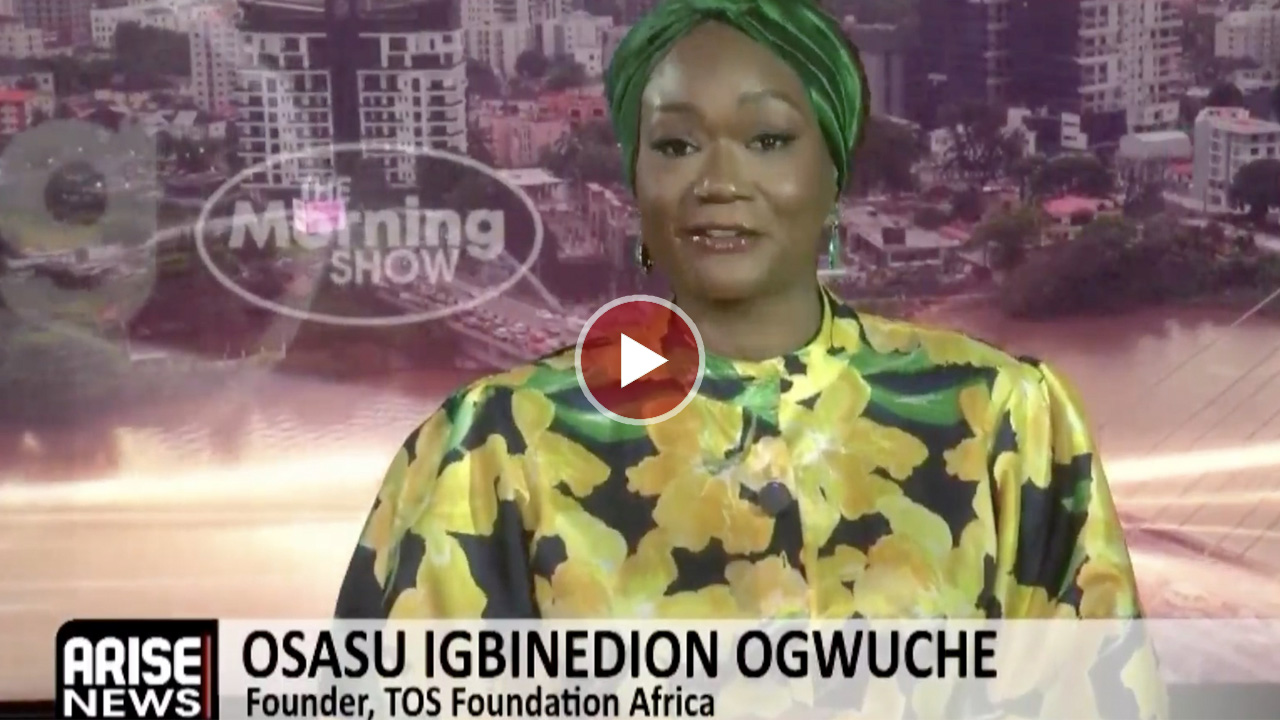
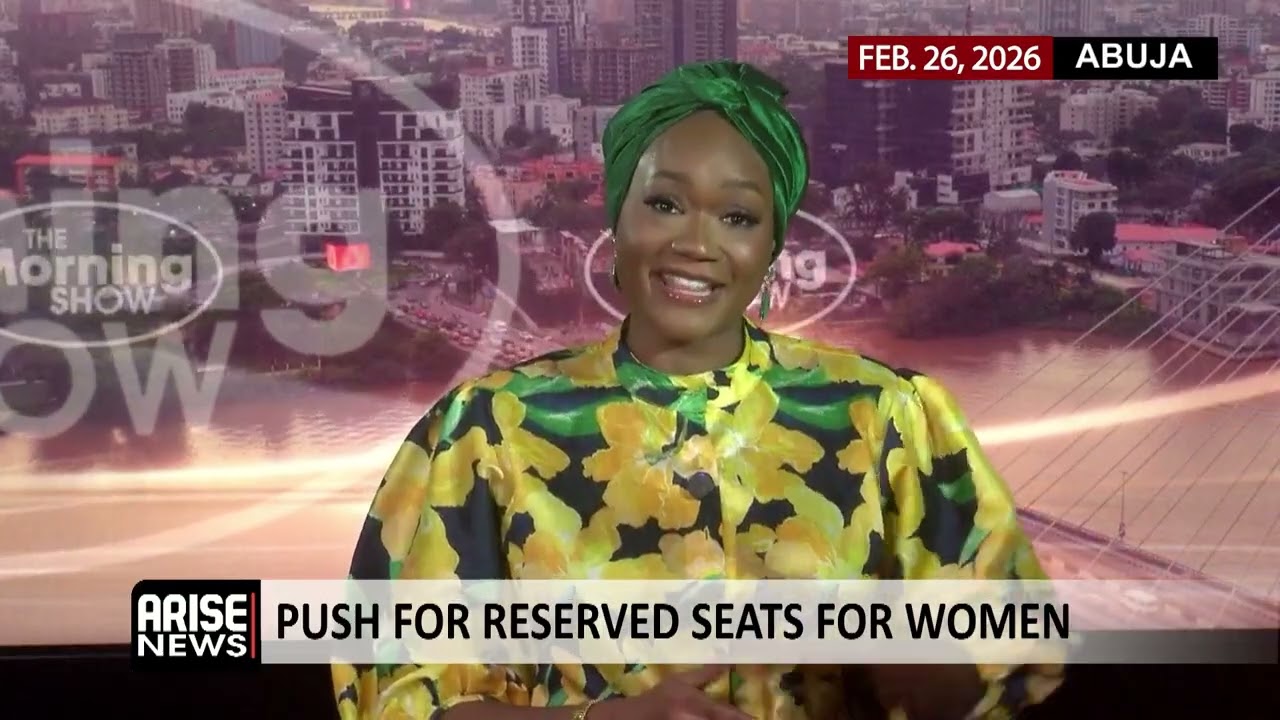
Founder of TOS Foundation Africa, Osasu Igbinedion Ogwuche, has urged Nigerian lawmakers to pass the proposed reserved seats for women bill, warning that the country’s extremely low level of female representation in politics is both a democratic and economic setback.
Speaking during an interview with ARISE News on Thursday, Ogwuche said Nigeria currently ranks at the bottom in Africa for women’s representation in parliament despite women making up nearly half of the population.
She said the proposed legislation is not about symbolism but about unlocking economic and governance benefits.
“Rwanda has 63.5 percent of women who are in parliament. Nigeria currently ranks 54 out of 54 in Africa. Yes, we call ourselves the giant, but globally I believe we are about 174 out of 182.
“So we can do better. As you’re well aware, women make up almost 50 percent of Nigeria’s population but occupy only about four percent of seats in parliament — that is 16 out of 360 seats in the House of Representatives and four out of 109 seats in the Senate.
“Across the 36 state assemblies, which have about 993 seats, you have roughly 51 women, and in some states you don’t even have women at all.”
According to her, increasing women’s participation in governance would deliver measurable economic benefits.
“When we are campaigning for the reserved seats for women bill — a quota system for women to participate — it is not symbolism, it is not tokenism, and it is not an emotive discussion or appeal. It is actually a socioeconomic case.
“The World Bank, McKinsey and some UN agencies have carried out research and they found that by 2030 — which is just four years from now — Nigeria can boost its GDP by 229 billion dollars by closing the gender gap, both in the workforce and politically.”
Ogwuche noted that the current administration has shown strong political support for the proposal.
“Thankfully, the President, Bola Ahmed Tinubu, the First Lady, Oluremi Tinubu, the Senate President, the Speaker and the top leadership in both the executive and legislative arms of government have realised the potential — economically and politically — of boosting our economy through women’s participation in governance, and they have all endorsed the reserved seats for women bill.”
She added that the First Lady had hosted a dinner with parliamentarians to encourage their support for the bill.
“The First Lady had a beautiful dinner for parliamentarians late last year appealing to them to vote in support of the bill when it is tabled on the floor of the National Assembly for third reading.
“The President on the 19th of December also commended the Speaker and the Senate President for throwing their full weight behind the reserved seats for women bill and reiterated that this is a priority for his administration and is in line with the Renewed Hope agenda that the APC is preaching.”
Ogwuche also highlighted growing bipartisan backing across political parties and state governments.
“I was in Oyo State visiting the executive governor, Seyi Makinde, and he also threw his weight behind the bill. The PDP is behind it, the chairman of the APC is behind it and other political parties as well. So we are really hopeful that this time around things will be different.”
She recalled that similar legislative attempts had failed in previous assemblies.
“As you are well aware, in the 8th Assembly a similar bill failed. It was proposed then by Senator Biodun Olujimi and it also had the backing of the Senate President at the time, Bukola Saraki.
“In the 9th Assembly a similar bill was proposed by Honourable Nkiruka Onyejeocha with the backing of the Speaker at the time, Femi Gbajabiamila, but it also failed.
“Now we are in the 10th Assembly and we have wide bipartisan support. We have been doing a lot of lobbying and a lot of talking, and we are hopeful that when it is brought to the floor for third reading the lawmakers will do the needful.”
She stressed that greater female leadership benefits society broadly.
“It is not an emotive case. It is one that has socioeconomic benefits to every Nigerian, because when women lead, nations thrive.”
Beyond advocating for the bill, Ogwuche said civil society groups are also working to prepare women for leadership roles through training and mentorship.
“TOS Foundation Africa has just signed a memorandum of understanding with the Swiss Embassy in Nigeria where we are officially launching our Academy Leadership Institute.
“This is to enable women who have the appetite for politics not only to run successfully but to ensure that when they emerge victorious they have the skills, the competence and the capacity to legislate when they get there.”
She explained that the initiative aims to address the mentorship gap many women face in politics.
“One thing we see is that their male counterparts always have mentors — they have godfathers and people who hold their hands. A ranking member in the National Assembly told me that one thing that accelerated his growth to leadership when he joined parliament was that he had someone who was already ranking who held his hand and walked him through the ropes of parliament. If more women had that kind of mentorship, you would see more women who are active as soon as they become parliamentarians.”
Ogwuche said the programme would select participants from across the country.
“We are now sourcing for our candidates. We will be picking one from each state and the FCT, giving us 37 participants who will go through a rigorous six-week intensive training where you have parliamentarians, both sitting and past, coaching them on how things are done.”
Responding to concerns about women supporting other women in politics, she insisted that advocacy and solidarity are growing.
“I can tell you that I am a woman speaking up for women, and there are many out there who will do the needful when the time arises. The Senate President has thrown his support behind the bill and said he has four daughters and would want a situation where, if they decide to run for parliamentary seats, they have a level playing field.”
She added that the momentum behind the proposal suggests a critical moment for reform.
“The time is now. We have the political will with the present administration and we have public buy-in and demand. So I believe we stand at a very critical time to get this through the hurdle.”
Addressing concerns that quota systems might favour politically connected women rather than competent candidates, Ogwuche argued that many capable Nigerian women already exist.
“There are so many competent women, and not just women who have an affiliation with powerful men. We have seen examples like Senator Natasha Akpoti-Uduaghan, Senator Olujimi in the 8th Assembly and many others who reached parliament and performed exceptionally due to their brilliance and political sagacity.”
She added that political competition would ensure quality representation.
“Once the reserved seats for women bill passes into law, women will be competing among themselves. The APC will bring its female candidate, the PDP will bring its female candidate, the ADC and others will do the same, and the best woman will emerge. I am very hopeful.”
Boluwatife Enome