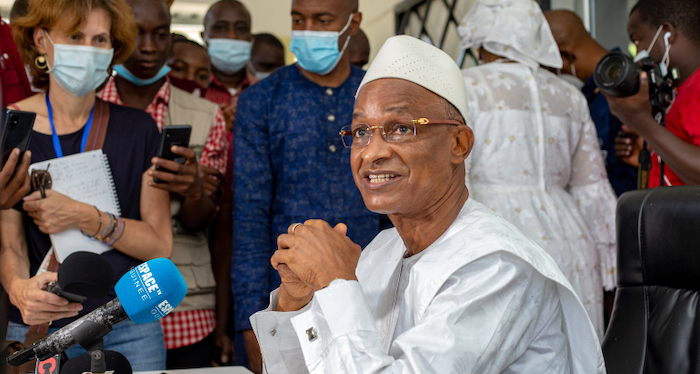
epa08755489 Guinean opposition leader Cellou Dalein Diallo speaks during a press conference after casting his ballot in the presidential elections in Conakry, Guinea, 18 October 2020. 82-year-old incumbent president Alpha Conde is seeking a controversial third term in the Guinea presidential elections. EPA-EFE/PAPA SECK
Guinea’s main opposition leader, Cellou Dalein Diallo, has declared that “direct resistance” against the country’s military ruler–turned–president is now the only path to political change after authorities dissolved 40 political parties across the country.
The sweeping decision, announced late Friday by Guinea’s Ministry of Territorial Administration and Decentralisation, ordered the closure of the headquarters and local offices of the affected parties. It also banned the use of their logos, acronyms and other identifying symbols, while confiscating party assets and sealing their offices.
Authorities said the parties were dissolved for failing to comply with legal requirements, including submitting mandatory financial statements. However, several of the targeted groups have rejected the allegations, insisting they fulfilled all obligations under the law, according to reports by Reuters.
The move comes just two months after former junta leader Mamady Doumbouya was sworn in as president following a controversial election that barred several key challengers from running.
Doumbouya first seized power in 2021 when he overthrew then-president Alpha Condé in a military coup. Since then, critics have increasingly accused his administration of tightening control over political space and undermining democratic freedoms in the West African nation.
Among the parties dissolved were the Rally of the People of Guinea, founded by former president Condé, and Diallo’s Union of Democratic Forces of Guinea. Diallo, who has been living in exile, responded in a video message posted on social media on Sunday.
“The decree shows that war has been openly declared against those who challenge President Doumbouya,” he said, arguing that political change would no longer come through dialogue or democratic processes.
“The head of the junta and his malevolent clique want to rewrite the country’s history by erasing from the political landscape all forces likely to overshadow his nascent one-party state,” Diallo added.
Other opposition figures also condemned the decision. Jean‑Marc Telliano, a former minister and leader of the Rally for the Integrated Development of Guinea, said his party would challenge the move through legal channels.
“We will fight to assert our rights and use all legal means to have them restored,” he told Reuters.
The dissolution of the parties comes just two months before Guinea is expected to hold legislative elections—seen as a crucial stage in the country’s promised transition from military to civilian rule.
Boluwatife Enome
About the Author