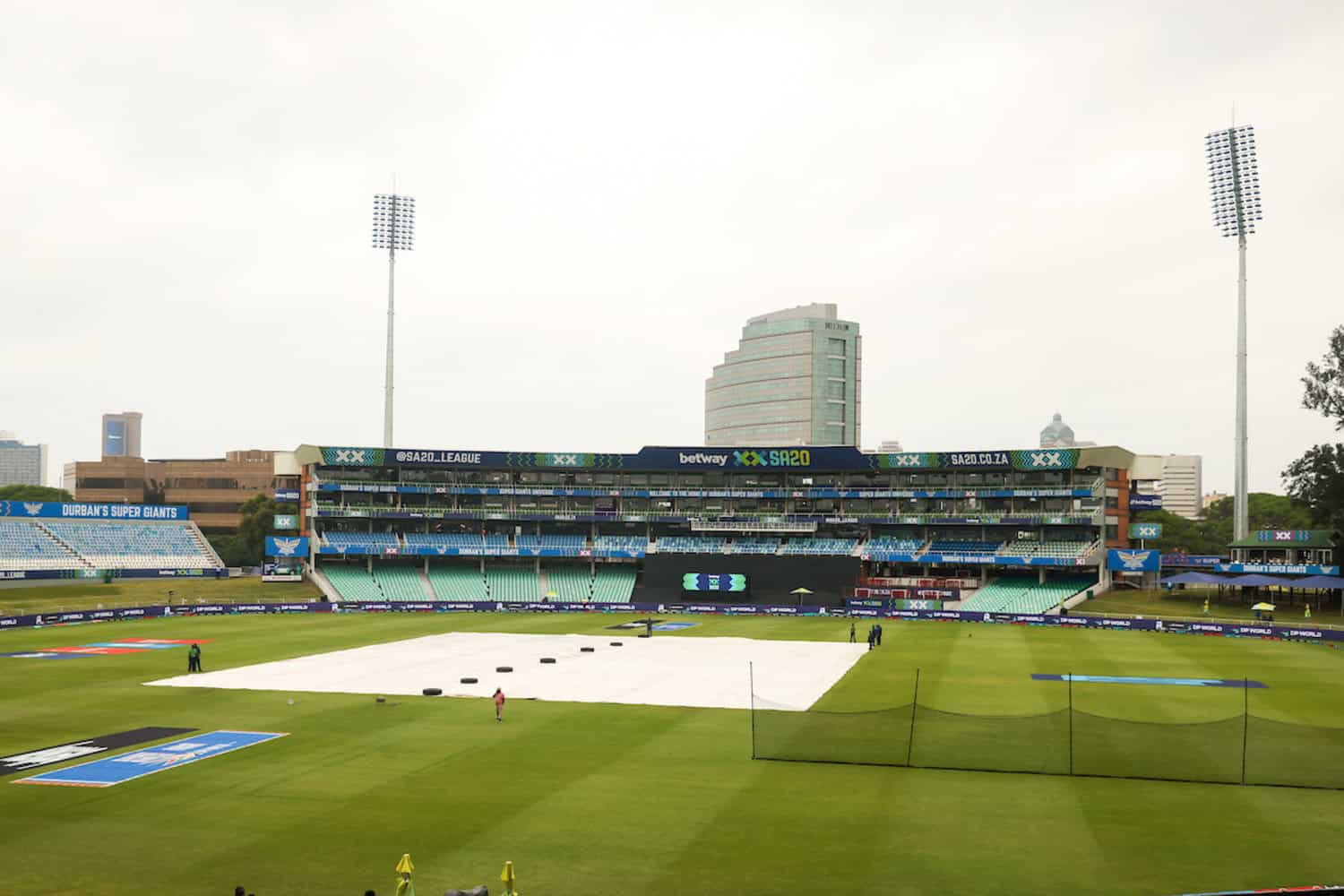
Rain covers up during match 18 of the Betway SA20 season 4 between Durban Super Giants (DSG) and Sunrisers Eastern Cape (SEC) held at the Kingsmead Cricket Stadium in Durban , South Africa on the 9th January 2026 Photo by Carl Fourie for SA20
T20 cricket has changed the way the world looks at the game, so maybe it’s time the rules change to keep up with the tremendous pace of this format.
For many years the Duckworth-Lewis-Stern (DLS) method has frustrated cricket fans with its complicated scientific method of determining the outcome of games that have been impacted by inclement weather.
According to Wikipedia, it is a mathematical formulation designed to calculate the target score (number of runs needed to win) for the team batting second in a limited overs cricket match interrupted by weather or other circumstances.
This definition sort of makes sense in the longer 50-over format, but much less so in the crash-bang shorter format.
One major determining factor is that DLS is mostly based on the number of wickets lost in an innings as opposed to the number of overs bowled at any given time.
JSK v MI Cape Town game
In a SA20 game last week, the Joburg Super Kings were on the receiving end of this against MI Cape Town.
When the rain came – after six overs – the Super Kings were cruising on 69/2.
When play eventually restarted, the game was reduced to 12 overs, and the Super Kings had to throw the bat at everything, adding 54 runs for the loss of five extra wickets.
Their total of 123/7 was revised, gifting them four extra runs, leaving MI Cape Town to chase a target of 128, which they did with four balls to spare.
This is just one of many instances where the team batting first has been punished for chasing extra runs and losing wickets, heavily affecting the calculated score they needed to defend.
Super Kings captain Faf du Plessis made his feelings clear after the game saying: “The frustrating thing is that Duckworth-Lewis in T20s still has a long way to go. Cloudy conditions made it tough to catch. Wet conditions made fielding difficult as well as death bowling.”
At the end of the day, wickets lost in T20 should not be the defining factor in the outcome of the game.
It’s time for the big cheeses of cricket to catch a wake-up and get with the times.
About the Author