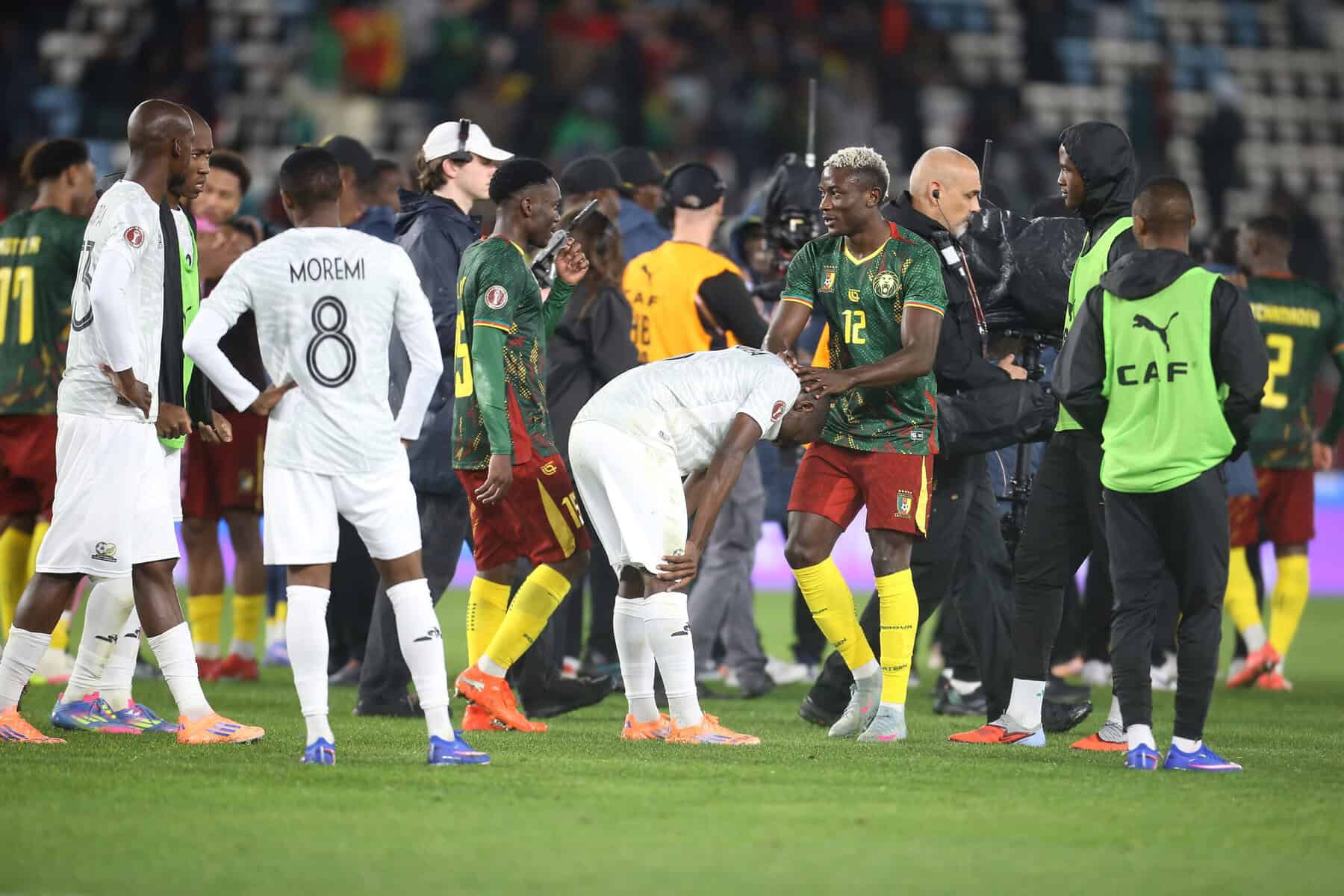
RABAT, MOROCCO - JANUARY 04: Players during the Africa Cup Of Nations, Round Of 16 match between South Africa and Cameroon at Stade El Barid on January 04, 2026 in Rabat, Morocco. (Photo by Zamani Makautsi/Gallo Images)
Hugo Broos may have touched a nerve with his comments about the need for more South African footballers to test themselves in Europe’s top leagues, but it is difficult to argue against the substance of his message. Whether popular or not, the Bafana Bafana head coach is right. Progression at international level is increasingly tied to exposure at the highest level of club football.
Bafana players need elite environments
At its core, football development is simple, the best players improve by competing regularly against top level opposition. That is how standards are raised, by being tested week in and week out, and surviving in elite environments. While the local game has made notable strides, it cannot replicate the intensity, tactical sophistication and physical demands of Europe’s top leagues.
ALSO READ: Rulani explains why Pirates’ Mofokeng will not stay in Africa
Broos’ comments should not be viewed as a convenient excuse, particularly in the aftermath of Bafana’s 2-1 defeat to Cameroon at the Africa Cup of Nations. That result stands on its own, and the coach must take responsibility for his poor team selection and tactical approach. He experimented and it backfired, full stop. But to dismiss his broader point because of that setback would be short-sighted.
The modern game has evolved, and international football has moved decisively in one direction. While the strong continental performances of Mamelodi Sundowns in the CAF Champions League, and more recently Orlando Pirates, are encouraging, they are not enough on their own. Domestic success, no matter how impressive, has its limits when it comes to preparing players for the international stage and that reality was evident in Bafana’s loss to Cameroon.
Relebohile Mofokeng, for all his undoubted talent, was physically outmuscled with alarming ease. It is no slight on the youngster, but rather an illustration of where his development needs to go next. A move abroad would not only harden him physically, but also broaden his football education by exposing him to elite coaching and competition.
1996 is long gone
The same argument applies to the likes of Teboho Mokoena and Khuliso Mudau, players of genuine quality who have arguably outgrown the domestic game. Their consistency and influence suggest they are ready for the next challenge, yet they remain confined to a league that, while competitive locally, does have a developmental ceiling.
Clinging to the nostalgia of 1996 does South African football no favours. Yes, Bafana were crowned African champions with a largely locally-based squad, but that era is gone and the evidence from recent AFCON tournaments is overwhelming.
Côte d’Ivoire’s 2023 triumph featured only two Africa-based players, while Senegal’s 2021 success saw an entire squad based in Europe bar one goalkeeper and 2019 champions Algeria followed a similar pattern.
ALSO READ: Diallo stars as Ivory Coast set up Egypt showdown in AFCON
Against Cameroon, only three of Bafana’s starters were Europe-based. Their opponents, by contrast, fielded a side dominated by players competing at the highest level abroad. The talent in South Africa is undeniable, but unless more players make the leap to Europe’s competitive leagues, Bafana will continue to fall short when it matters most and forever chase the past instead of shaping the future.
About the Author