Screenshot

As a young woman with a disability, I have experienced firsthand the barriers and biases that exist in our societies.
But one issue that often gets overlooked is digital violence – a scourge that is silencing women and girls, especially those with disabilities like me. Digital violence affects women and girls more than men across all walks of life, but it has a compounding and disproportionate impact on women and girls with disabilities.
I vividly remember when I was in senior four, I posted my full picture on Facebook. But I got so many negative comments of body shaming, mainly from men. Those comments were hurtful, but what is worse is that they silenced me.
I stopped posting pictures and sharing my thoughts and ideas, and withdrew from online spaces for close to three years. I am just one example out of the millions of women and girls who experience digital and online violence.
Globally, 38 per cent of women have experienced online violence, and 85 per cent have witnessed it, according to UN Women. Digital tools are designed to automatically exclude women and girls with disabilities from accessing online spaces.
Many women with visual and hearing impairments have no access to online platforms. This is exactly what digital violence does – it makes women and girls with disabilities feel like they are not worthy of being seen and heard.
Online and digital spaces should empower women and girls, yet every day, for millions of women and girls with disabilities, the digital world has become a minefield of harassment, abuse, control and a toxic environment.
We have a lot of hate speech, disinformation on social media platforms, sexual harassment, cyberbullying, and online threats, mainly targeted at women and girls with disabilities. These acts don’t just happen online. They often lead to offline violence in real life such as coercion, physical abuse and even femicide.
The harm can be long-lasting, and affect survivors over a prolonged period. Digital violence is not just a gender issue – it is a human rights, democratic governance and economic injustice issue. When women are excluded from digital spaces, countries lose talent, innovation and growth opportunities.
Closing gender gaps in lifetime earnings could add trillions to global wealth, but only if women are safe online. As a medical doctor, I understand how important digital spaces are. They are used to access health information. If women and girls with disabilities are not safe online, they will not have access to important health information.
Also, if harassed online, it can affect their mental health, leading to episodes of stress, anxiety, depression, and post-traumatic stress disorder. As a young woman with a disability and a medical doctor, I demand action.
Let us break the silence and unite to end digital violence against women and girls with disabilities. We need to work together to create safe digital spaces. I call on the government to domesticate the African Union convention on ending violence against women and girls with disabilities.
Together, we can create a digital world that is inclusive, safe and empowering for all.
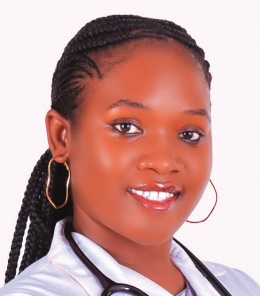
The writer is a passionate advocate for rights of people with disabilities
About the Author