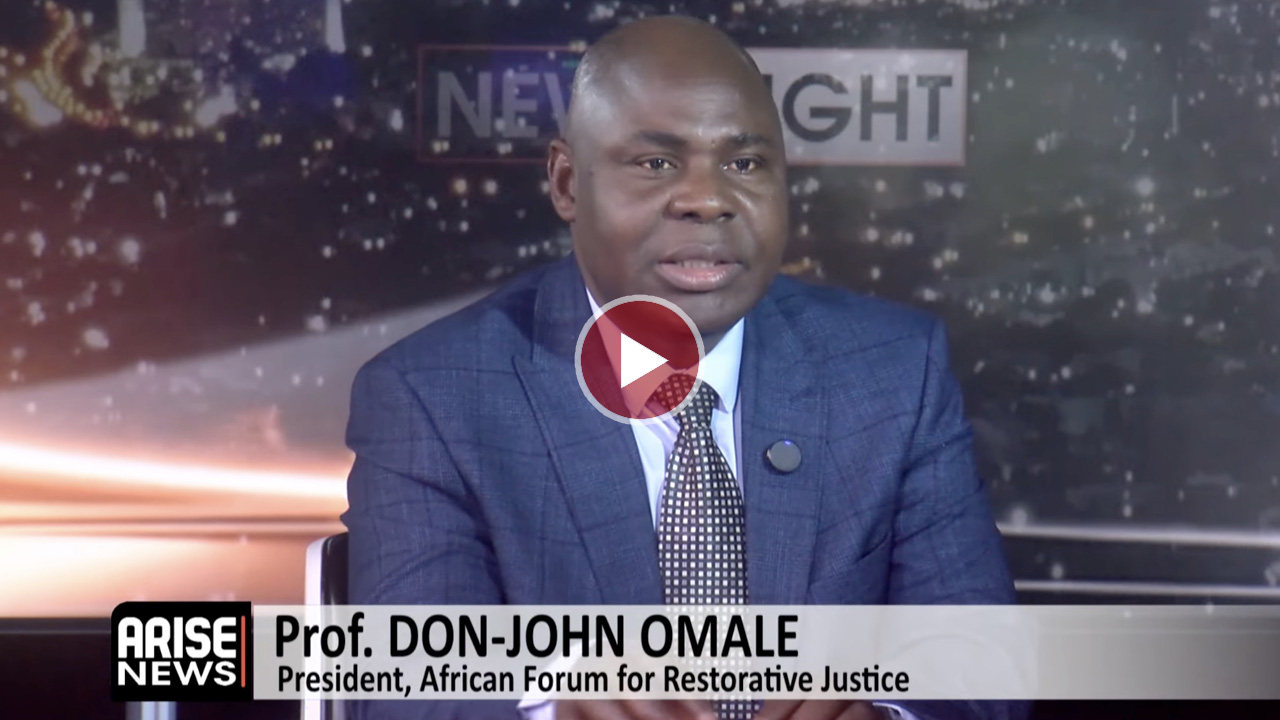
The President of the African Forum for Restorative Justice, Professor Don-John Omale, has warned that app-based transport drivers across Nigeria are facing widespread victimisation, insecurity and systemic neglect, calling for urgent regulatory intervention to protect their lives and livelihoods.
Speaking in an interview with ARISE News on Tuesday, Prof. Omale said cases of robbery, violent attacks and killings of ride-hailing drivers were being recorded across all geopolitical zones, with many victims too afraid to speak out publicly.
“To be honest, the level of victimisation of app-based drivers in Nigeria is very widely spread across all geopolitical zones in this country,” he said.
He explained that findings from a recent survey conducted by the Digital Workers’ Labour Initiative, led by Damola Adeniro, exposed the severity of the crisis.
“He did a survey in about six states and the finding is really, really very shocking. So many of the victims are, like you see in the news reports, some of them are shy, some of them are afraid of coming out in public, just sticking out. So the Digital Workers’ Initiative approached the African Forum for Restorative Justice so that we can help speak on behalf of the victims.”
Prof. Omale noted that most ride-hailing drivers operate without insurance, hazard compensation or any structured grievance mechanism, largely because the platforms they work for have no physical presence in Nigeria.
“Because these guys cannot approach the app-based organisations themselves, they are faceless. They have no physical office locations in Nigeria, and yet they are raking so many billions of naira from Nigeria through these app-based drivers.”
He revealed that discussions at the Abuja Reparative Summit focused on developing a national framework that would formally define the relationship between drivers and digital platforms.

“What we have tried to do at this Abuja Reparative Summit today is to come up with a framework, a national framework, that will be tabled and adopted as a guideline that will create a relationship between the app-based driver and the app platforms, so that there will be a built-in social security, a structured grievance approach and insurance.”
On the role of government and regulators, Prof. Omale welcomed growing interest from key institutions, including the Federal Ministry of Labour, NITDA and NIMC, in regulating app-based transport companies.
“We’re very, very happy to see that the regulatory agencies like the Federal Ministry of Labour, NITDA, NIMC and all these agencies are beginning to see the reasons why app-based organisations operating in this country have to be properly regulated and protected.”
He stressed that regulation was not only necessary for workers’ welfare but also for national security, warning that the absence of a proper digital identification system was enabling criminal activity.
“Why it is important for Nigerian regulatory agencies to join the African Forum for Restorative Justice and the Digital Workers’ Initiative in this fight is that a well-structured app-based platform in Nigeria that’s fully regulated is good not only for the drivers but also for national security.”
“What is happening in Nigeria is that everybody can just come into this country without a digital ID and book any ride — Bolt, Uber and so on — and most often these are the guys, because they have no digital ID, who go on to victimise the drivers, kill them, try to take their cars away, and so on and so forth.”
Addressing compensation and justice for victims and their families, Prof. Omale said a formal framework was already being prepared for legislative approval.
“Yes, that’s exactly what this summit today is about — to call the national agencies together to see that the framework we are tabling before the National Assembly is supported and approved, so that these people will get justice, they will get compensation, and they will get a structured social security apparatus like insurance cover and all that.”
Boluwatife Enome
About the Author