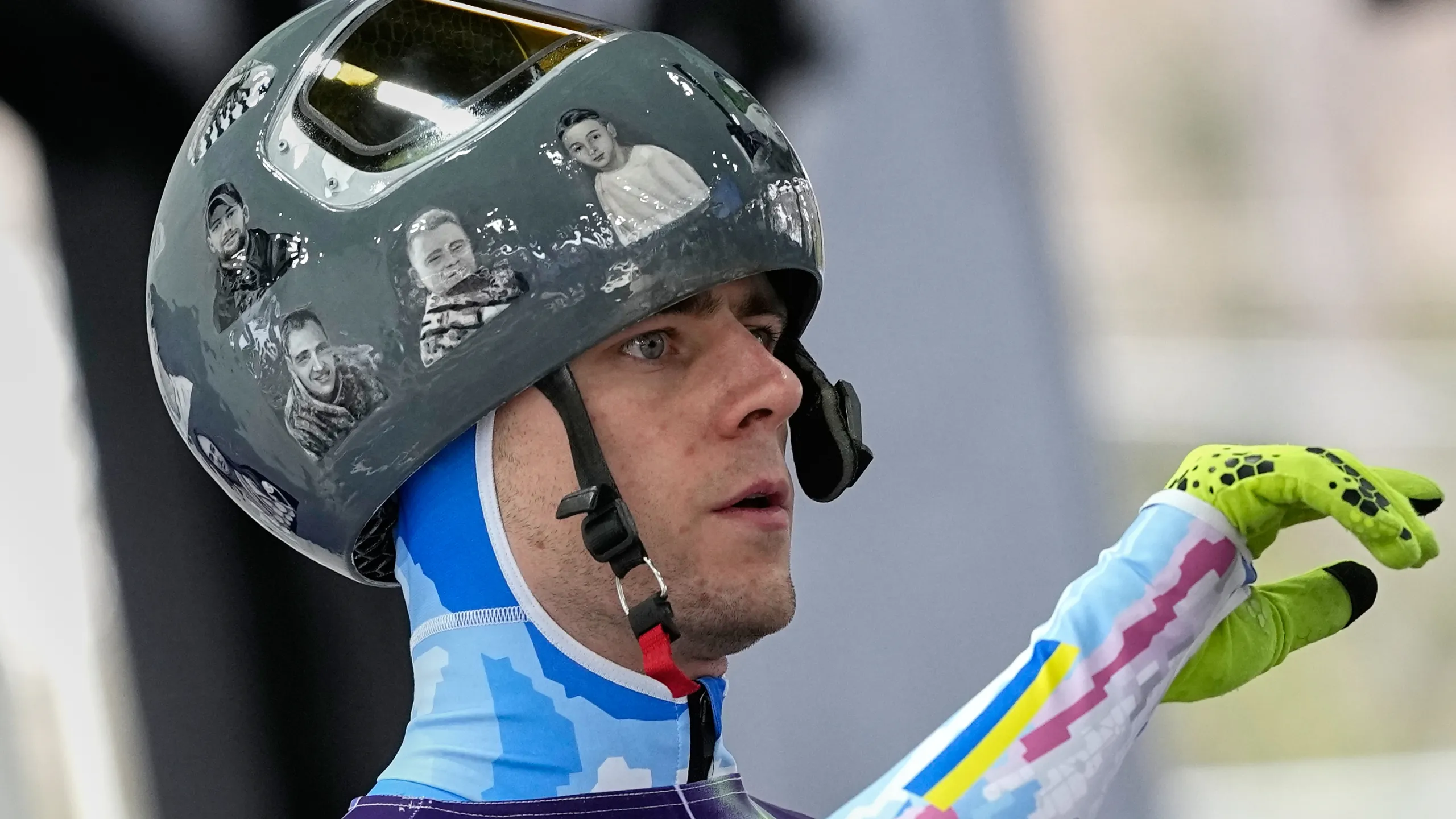
The International Olympic Committee (IOC) has officially removed Ukrainian skeleton pilot Vladyslav Heraskevych from the Milan-Cortina Winter Games following a high-profile standoff over his specialized racing equipment. On Thursday morning, officials disqualified the 27-year-old athlete after he repeatedly refused to discard a helmet that pays tribute to members of the Ukrainian sports community killed during the ongoing conflict with Russia. The gear features the portraits of several fallen countrymen, a gesture the IOC deemed a violation of strict regulations governing athlete expression on the field of play.
Heraskevych consistently maintained that he would not compete without the commemorative headgear, which honors athletes and coaches who have lost their lives since the 2022 invasion. Despite several days of internal negotiations and a personal meeting with IOC President Kirsty Coventry at the sliding venue, the skeleton racer remained steadfast in his decision. The IOC eventually stripped the athlete of his accreditation, stating that the move became necessary after he failed to comply with the established Olympic charter.
“To adhere to the IOC athlete expression guidelines” was the central requirement the committee cited when announcing his removal. While the organization acknowledged the emotional weight of the tribute, they argued that such political or commemorative displays are prohibited within the field of play to maintain neutrality. Ukrainian President Volodymyr Zelensky stepped in to support the racer, defending his right to honor his fallen compatriots on the world stage. However, the governing body insisted that the rules apply to all competitors regardless of the nature of the message.
The disqualification ends what was a promising medal campaign for the Ukrainian, who had previously used his platform at the 2022 Beijing Games to call for peace. The IOC noted that while athletes may express their views in press conferences and on social media, the specific use of the helmet during the race crossed the line into forbidden political territory. As the Milan-Cortina Games continue, the incident has reignited a global conversation about the limits of free expression for athletes competing under the Olympic banner.
About the Author