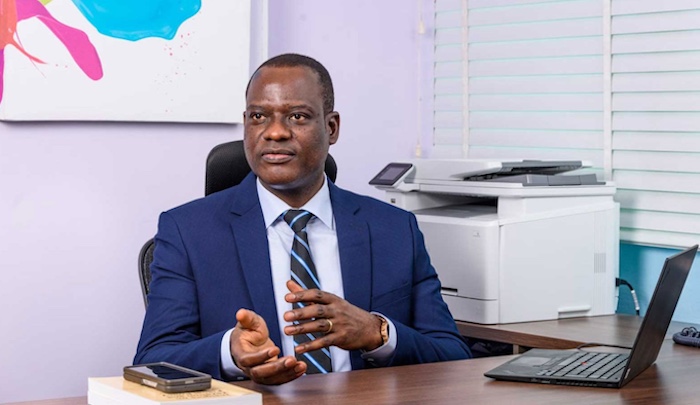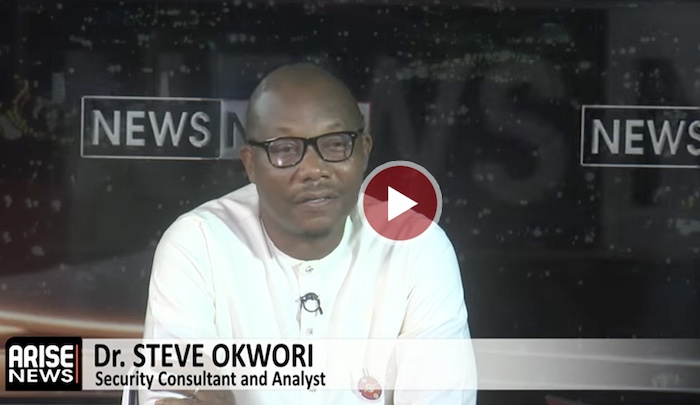

A security consultant and analyst, Dr Steve Okwori, has warned that Nigeria’s worsening insecurity reflects a failure to translate official speeches into concrete action, arguing that the military has effectively taken over the constitutional responsibilities of the police amid rising terrorism, banditry and kidnapping across the country.
Speaking in an interview on ARISE News on Monday, Okwori said Nigerians were demanding more decisive action from government and security agencies as daily incidents of violence continue to spread across states such as Kogi and its neighbours.
“I think that it’s high time that we go beyond the reading of speeches when it has to do with security issues. We need to see the practical aspect of it. Let us match the speeches with actions, because a lot is happening in Nigeria as we speak with regards to insecurity,” he said.
Okwori described terrorism as a global phenomenon but stressed that Nigeria’s internal security crisis had been worsened by banditry and kidnapping for ransom, noting that citizens now live in constant fear.
“Nigerians are kidnapped almost on a daily basis, ransom being paid and all that. Nigerians are asking for more, like Oliver Twist. We need to see more of their efforts,” he said.
While acknowledging some recent gains by security forces, including joint police-military operations in Kogi State, Okwori said these interventions were long overdue, particularly from the Nigeria Police Force.
“The police this year will be about 96 years old since it was established in 1930, and here we are, we are not seeing the expected efforts coming from the Nigerian police,” he said. “Inasmuch as we know they are faced with inadequacies, these challenges are not new. Government is aware of issues of equipment, training, logistics and motivation.”
He said recent aerial operations involving helicopters and fighter choppers were commendable but should not be treated as exceptional achievements.
“Inasmuch as we want to commend them, I think such operations are long overdue when it has to do with the Nigerian police. They did these operations in collaboration with the military, and we expect such interventions in other states as well,” he added.
Okwori argued that the increasing reliance on the military for internal security had blurred institutional roles.
“When it has to do with internal crime, you and I know that it is the responsibility of the police. We have allowed the military to take over the responsibility of the police when it has to do with internal crime,” he said. “They took over, because when you look at security operations today, the military are all over Nigeria.”
He cited instances where senior military officers responded first to internal security incidents, saying this undermined police leadership.
“When there was the schoolgirls’ abduction in Kebbi, it was the Chief of Army Staff that first went there. We have an Inspector-General of Police whose responsibility is internal crime. Even if the IGP was outside the country, there are senior officers who should have represented him. We did not see that,” Okwori said.
According to him, the police should reclaim their lead role in internal security, including deploying capabilities many Nigerians are unaware they possess.
“The police have an air wing. Nigerians are aware of this, but it is strange to many citizens. We need more of this intervention. Let the police be more active so that we know they are carrying out their responsibility as the lead agency when it has to do with internal security,” he said.
On terrorism in the Sahel, Okwori warned that Nigeria remained part of one of the world’s deadliest regions for extremist violence.
“I carried out research on terrorism in the Sahel, looking at Burkina Faso, Mali, Niger and Nigeria. Unfortunately, these countries rank among the most affected globally when it has to do with terrorism,” he said.
He expressed concern over the exit of Burkina Faso, Mali and Niger from ECOWAS, warning that it could weaken regional counter-terrorism efforts.
“Terrorism is not fought by one country. We need collaboration. ECOWAS needs to look at how to bring these countries back because this will affect regional operations,” he said.
Okwori also identified terrorism financing as a major unresolved challenge, saying tracking illicit funds remained extremely difficult.
“When it has to do with terrorism funding, it is difficult to track. That is why we need specialised training to track terrorism financiers, because you cannot easily differentiate between legitimate and illegitimate funds,” he said.
He questioned the lack of accountability over companies previously accused of financing terrorism.
“A couple of years ago, some companies were seen to be financing terrorism in Nigeria and other countries, some linked to Dubai. What happened to those companies? We have not heard anything,” he said.
Okwori added that kidnapping for ransom had become a major source of terrorist financing.
“Monies collected from Nigerians through kidnapping are also used to finance terrorism. Unfortunately, we are unable to track these ransoms because they are paid in cash,” he said, calling for improved training and intelligence capabilities.
“There is a lot that we need to do as a country,” Okwori said, concluding that without sustained action, Nigeria’s security challenges would continue to deepen.
Boluwatife Enome
About the Author