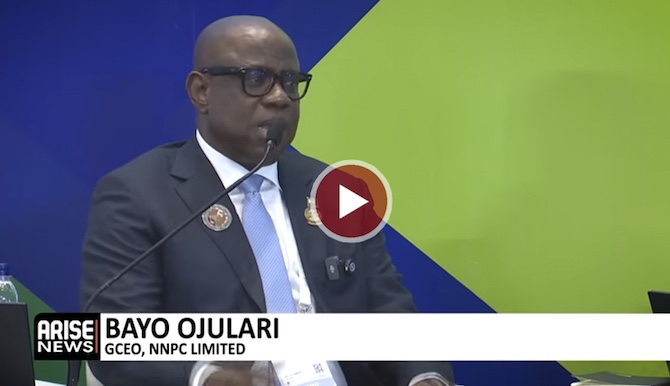

The Group Chief Executive Officer of the Nigerian National Petroleum Company (NNPC), Bayo Ojulari, has attributed the long-standing failure of Nigeria’s state-owned refineries to the absence of strong operational capacity, describing the existing system as one designed for “value destruction” rather than sustainability.
Speaking at the 9th Nigerian International Energy Summit, Ojulari said an internal review of the refineries revealed structural flaws that would have continued to drain value for decades if left unaddressed. As a result, he said NNPC took the decision to halt the process entirely and embark on a comprehensive reassessment.
According to Ojulari, making a refinery work requires three critical elements: adequate financing, a competent engineering, procurement and construction (EPC) contractor, and a world-class operational capacity to run the facility over the long term. While Nigeria’s refinery projects have historically focused on the first two, he said the third and most important element was consistently neglected.
He said, “The refineries, after like two months of review, we saw that it’s just one way. That way is value destruction for the next 30 years. We’re not gonna do that. So we stopped it completely.
“We decided to embark on a major review. And I will explain to all of us, because now, I’m more confident. I have learnt, I have burnt my fingers and my toes and all of that. I will simplify the refinery story for you all, so that you can tell the story yourself. To make the refinery work, you need three things. I’ve simplified it to three things.
“First, you need the financing, because you need to finance the work, finance the activities and all of that. Two, you need a competent EPC contractor to deliver world-class projects for you that are great. Three, you need a world-class operational capacity to run the refineries. So I’m now clear why the Nigerian refinery never worked. This is Bayo’s version. Anybody can have their own version, but this is my version. So if I’m wrong, please, I’m happy to be wrong.
“The reason our refineries have not worked is that we are focused on the first two, EPC and financing. Anybody who wants to do the financing, the persons financing are not financing for free. They are financing you for margins and profitability. The EPC contractors do their work and get paid. So they move on. So you as an NNPC are left for the next 20, 30, 40 years to run with those refineries. And we’ve never really focused on that.
“When we came in, there were a lot of conversations around O&M. If you look internationally, when you run an O&M, you must have a solid operational excellence team that can supervise your O&M, otherwise it’s a waste.
“Then O&M is another contract. So you end up with financing, EPC, O&M, all of them taking money from the system without any skin in the game. There’s no way you can sustain any business like that. It’s very clear. The system was designed for taking, not to put anything in. So what we’ve decided to do is to focus on that part that has not been there.
“For those of us who spend years building big facilities, multi-billion dollar facilities for the IOCs and all of that, we know these principles. The day you start a project, that day you appoint what we call an operational person, operational assurance person, who will be part of that project from the get-go and ensure that whatever you deliver can be operated.”
Melissa Enoch
About the Author