Escalating tensions around the Strait of Hormuz push crude higher and rattle global markets as diplomacy stalls and major powers weigh security responses…..
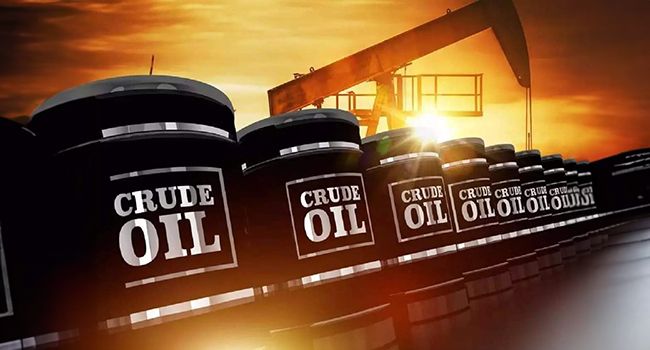
Oil prices climbed toward the $100-per-barrel mark on Monday as the war involving Iran entered its third week, fueling concerns about a potential disruption to one of the world’s most vital energy routes and sending jitters through global financial markets.
Crude prices surged early in trading after Donald Trump said over the weekend that US forces had struck military targets on Kharg Island, a key hub responsible for handling the majority of Iran’s oil exports. The island, located in the Persian Gulf, plays a central role in Tehran’s ability to ship crude to global markets.
The US president also warned that further strikes could extend to Iran’s energy infrastructure if Tehran interferes with shipping through the Strait of Hormuz, a narrow waterway through which roughly a fifth of the world’s oil supply normally passes.
Despite the reported strikes, Iran’s Fars News Agency said no oil facilities were damaged during the attacks.
Trump also called on other nations that depend heavily on oil shipments through the Gulf to help protect tanker traffic, suggesting that countries such as China, France, Japan, South Korea, and the United Kingdom should contribute naval support to keep the passage open.
Posting on his social media platform Truth Social, he wrote that safeguarding the strait should be a collective effort among nations that benefit from its trade routes.
“The countries of the world that receive oil through the Hormuz Strait must take care of that passage, and we will help a lot,” Trump said. “This should have always been a team effort.”
However, early reactions from some allies suggested reluctance to deepen military involvement. Japan said it was not currently considering a maritime security deployment to the region, while Australia announced it had no plans to send naval vessels.
Trump also claimed Tehran was seeking a deal to halt the fighting but indicated that Washington was unwilling to negotiate under the current conditions.
Iran pushed back strongly against the suggestion.
Speaking on CBS’s Face the Nation, Iranian Foreign Minister Abbas Araghchi said Tehran saw no reason to enter talks with Washington, arguing that previous negotiations had been undermined by military action.
“We don’t see any reason why we should talk with Americans,” Araghchi said. “We were already in discussions when they decided to attack us.”
He added that Iran had neither requested a ceasefire nor initiated negotiations, though he acknowledged that several countries had quietly approached Tehran to discuss ensuring safe passage for their vessels through the region.
Meanwhile, hopes for a swift end to the conflict have dimmed. Kevin Hassett, a senior economic adviser to the White House, said the Pentagon estimates the military operation could continue for as long as six weeks, although he noted that progress so far was ahead of schedule.
Energy markets reacted quickly to the heightened uncertainty.
Global benchmark Brent Crude jumped roughly three percent in early trading, briefly reaching $106.50 per barrel before trimming gains, while US benchmark West Texas Intermediate hovered near $99.
The surge in crude prices has intensified concerns that a prolonged disruption could trigger a broader energy crisis, potentially placing additional pressure on the global economy.
Equity markets across Asia reflected those worries. Major indexes in Tokyo, Shanghai, Sydney, Seoul, Wellington, Manila, and Jakarta all moved lower, while markets in Hong Kong, Singapore, and Taipei managed modest gains.
Analysts say the outlook remains highly uncertain.
According to Saxo Markets strategist Charu Chanana, investors may welcome any indication that the Strait of Hormuz could reopen, but confidence remains fragile given the ongoing military threats and uneven diplomatic efforts.
Adding to the economic unease were fresh data from the United States showing that growth slowed more than previously estimated. The US economy expanded by just 0.7 percent in the fourth quarter, sharply below the earlier estimate of 1.4 percent.
At the same time, delayed figures showed the Federal Reserve’s preferred measure of inflation eased slightly to 2.8 percent in January — before the latest spike in energy prices.
Investors are now closely watching a busy week for global monetary policy, with interest rate meetings scheduled at several major central banks including the Federal Reserve, the Bank of England, and the European Central Bank.
While policymakers are widely expected to leave rates unchanged, any signals about how the conflict and rising energy costs could affect inflation and economic growth will be closely scrutinized.
For now, markets remain on edge as the war continues with no clear diplomatic breakthrough in sight and with one of the world’s most critical oil routes still under threat.
About the Author