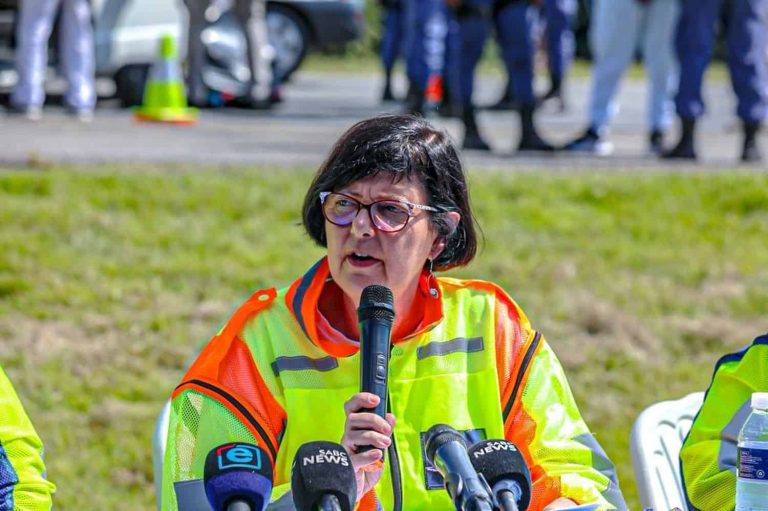
Convener of the North-Central Agenda, Dr Ene Ogbole, has warned that the projection that 35 million Nigerians could face hunger is “alarming and disturbing”, calling on the Federal Government to urgently prioritise internal, sustainable solutions as international aid continues to decline.
Speaking in an interview with ARISE News on Sunday, Dr Ogbole said the scale of the looming food crisis demands immediate action, particularly as global humanitarian support is no longer as reliable as it once was.
“I definitely agree with you that the number mentioned, 35 million people, is alarming, it is disturbing. It calls for urgent solutions,” she said.
“But again, the good news is that there’s no problem without a solution. Every problem in life has a solution, and I think that what we need to do at this point is to begin to look inward as a country, knowing as it were that clearly, obviously, the aid is no longer going to come as it used to come, for obvious reasons.”
Dr Ogbole noted that the global humanitarian system itself is under strain, with donor fatigue setting in after years of protracted crises.
“The entire globe is in crisis, and of course he made mention of something. He said because the crisis has been a protracted one, people are getting fed up with the assistance and so on and so forth. You can’t blame them,” she said.
She argued that Nigeria must now develop home-grown responses to food insecurity rather than relying heavily on foreign intervention.
“Where external solutions and external aid fail, we have to look inward. We have to begin to find local solutions to our local problems — African solutions to African problems,” Dr Ogbole said.
“I don’t think that is going to be something too big for the government to do. The government needs to begin to look internally to see what can be done, to see how we can provide solutions to these problems.”
She stressed that food security is not charity but a constitutional obligation of the state.
“These people are all Nigerians, and as Nigerians, it is their entitlement. The right to livelihood is their entitlement. The right to at least a minimal standard of living — by way of feeding, education, security and so on — is their fundamental human right,” she said.
“So I think that the government will do something about it as soon as possible.”
Addressing what she described as the “elephant in the room”, Dr Ogbole identified insecurity as the primary driver of hunger and displacement, particularly in the North-East.

“First of all, I think we need to look at the root cause of the problem. What is the cause of this problem? It’s insecurity,” she said.
“Insecurity has been a menace that has consumed the North-East particularly, because I think that is where we have the most hit people.”
She explained that restoring security would allow farmers to return to their land and resume economic activities.
“If insecurity can be degraded, if insurgency can be brought to book, people can begin to go to their farms, people can begin to live together in harmony and go about their normal businesses,” she said.
“To a very large extent, we will begin to see results.”
While acknowledging ongoing security challenges, Dr Ogbole said efforts by the government and security agencies were beginning to yield results.
“The government should go out of its way and do everything within the confines of the constitution to ensure that security is restored as soon as possible,” she said.
“I want to assure you that the government is doing everything they can within the confines of the law. The insecurity has been degraded. The people are being chased into the bushes. A lot of them are being neutralised, they are being killed, and hope is gradually being restored.”
She added that once people feel safe, food production will recover.
“Once hope is restored and people know that their lives are safe — that they can go to the farm and come back safely without being hurt or killed — then I think this will become a thing of the past,” she said.
Dr Ogbole also emphasised that most Nigerians do not want food aid but the ability to sustain themselves.
“Nobody wants to be a perpetual beggar. Everybody wants to have a source of income,” she said.
“When your source of income is being halted, it affects you emotionally, psychologically, materially and otherwise. So they are going through a lot of trauma themselves.”
She noted that insecurity is not limited to one region and requires collective responsibility.
“It’s not even just the North-East or the North as it were. The whole of Nigeria is under insecurity, problems and crisis,” she said.
“We also need to devise a way around it, because it’s not enough for people to sit down, fold their hands and complain that the government is not doing enough.”
According to her, communities must complement government efforts, citing local examples where collective action helped push back insurgents.
“There is no way our security forces can be everywhere at the same time,” she said.
“In some places, people came together communally and said, ‘We have a problem on our hands. What do we do to ensure that we are not stopped from going to farm? What do we do to ensure that people are not just being killed?’”
She said such local initiatives had yielded results in some states.
“To a large extent, they were able to push these people away. Now they go to their farms,” she said.
“Like you and I know, there is a lot of food in Benue State because people are able to go to the farm, because they devised their own way of tackling insecurity, and that yielded a lot of results.”
Reacting to concerns about inflation, food prices and funding gaps highlighted by the World Food Programme, Dr Ogbole said crises were a constant feature of human existence and must be addressed strategically.
“There is no time in our life that there is not going to be a problem — whether famine, security, mental or social problems. There are all kinds of problems and they dwell with us on a daily basis,” she said.
“What is important is identifying the most pressing ones and then finding sustainable solutions to them.”
She added that the global nature of the crisis underscores the need for Nigeria to be self-reliant.
“If the international community, if a programme like the World Bank, can be saying that they don’t have money to feed people anymore, that they are stranded or bankrupt, it shows that the world itself is in crisis,” Dr Ogbole said.
“It’s not peculiar to our country, it’s not peculiar to the North-East.”
She concluded by urging Nigerians and the government to move beyond complaints and focus on lasting solutions.
“We need to look beyond just complaining and begin to provide sustainable, palpable solutions to our problems,” she said.
Boluwatife Enome
About the Author