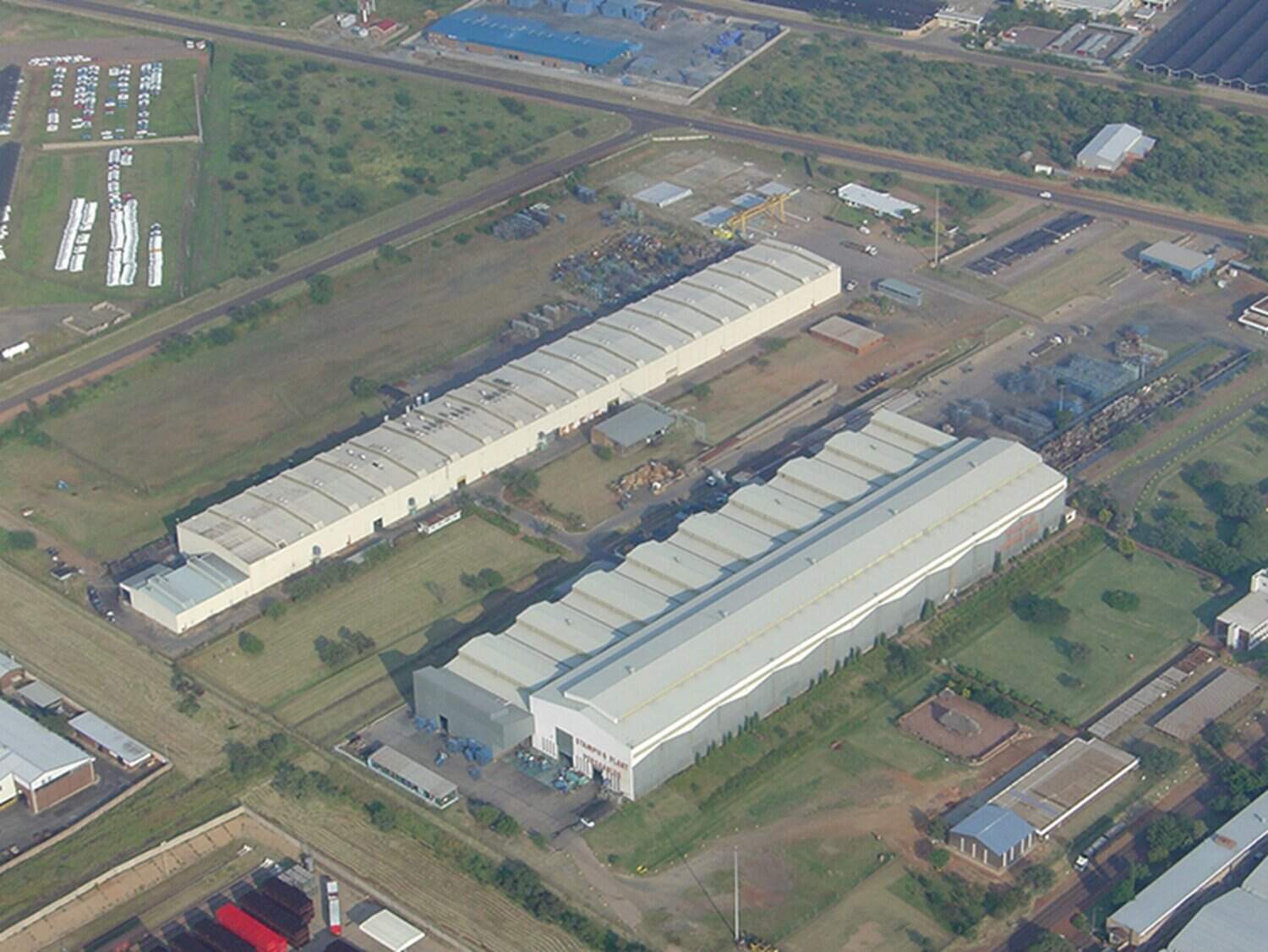
In an announcement long rumoured, Nissan has confirmed that its manufacturing assets and Rosslyn plant outside Pretoria will be been taken over by Chery South Africa.
The future of the 60-year old plant having been uncertain following a report last year that it could face closure as one of seven global Nissan factories, its offloading to Chery won’t, however, lead to its complete departure from South Africa.
All but confirming Nissan as an imported brand, the facility has been struggling ever since production of the NP200 ended in 2024.
Despite former Nissan Chairperson for the Africa, Middle East, India, Europe and Oceania regions, Guillaume Cartier, stating in 2023 that it is still looking into producing a second model alongside the Navara, an apparent suitable model to make the facility’s output viable, has not been found.
The imminent end of the NP200 saw the factory reduce its workforce by 400 jobs in 2023 as the almost-ready replacement for the former, had to be scrapped as a result of Russia’s invasion of Ukraine and ultimate withdrawal of both Nissan and alliance partner Renault from said market.
As with the NP200, based on the first generation Dacia/Renault Logan Pick-Up, principle sourcing of the “second generation” was to come from Russia, with eventual assembly taking place at Rosslyn.
“Nissan has a long and proud history in South Africa and has been working to find the best solution for our people, our customers and our partners,” Nissan Africa President, Jordi Vila, said in a statement.
“External factors have had a well-known impact on the utilisation of the Rosslyn plant and its future viability within Nissan”.
According to the agreement, both the land Rosslyn is situated on, its surrounding buildings and stamping plant, will become the property of Chery South Africa by mid-year.
At the same time, the majority of the current workforce will be offered Chery employment with the same terms and conditions as those of Nissan.
According to a report by cars.co.za, Nissan South Africa’s sales last year dropped 32.3% year-on-year to a mere 15 085 units, which saw it drop from fourth place in 2024 to 12th in 2025.
“Through this agreement, we’re able to secure employment for the majority of our workforce thereby also preserving opportunities for our supplier network,” Vila said.
“This move also ensures that the Rosslyn site will continue contributing to the South African automotive sector”.
Nissan’s departure also means the end of local Navara production, which started in 2021 following the decision to manufacture it locally rather than sourcing from Thailand to boost capacity alongside the NP200.
The incoming facelift Navara – and not the all-new D27 based on the Mitsubishi Triton – will, therefore, again be imported, most likely from Thailand.
In addition, tend of South African production means all of the brand’s future models will be imported, starting with the Renault Duster-based, Indian-made Tekton later this year, followed by the all-new Y63 Patrol and an incoming new seven-seater model on the Renault Boreal.
Excluding the Navara, the brand’s current range consists only of the Indian-made Magnite and the X-Trail, which will continue to be offered as a step-up from the Boreal-underpinned model, and below the Patrol.
The announcement means Chery becomes the third Chinese vehicle brand with a manufacturing facility in South Africa after BAIC and truck maker FAW (First Automotive Works), who both have facilities in the Coega Industrial Zone outside Gqeberha (Port Elizabeth) in the Eastern Cape.
An official statement from the Wuhu-based marque regarding the acquisition has not yet been made.
About the Author