
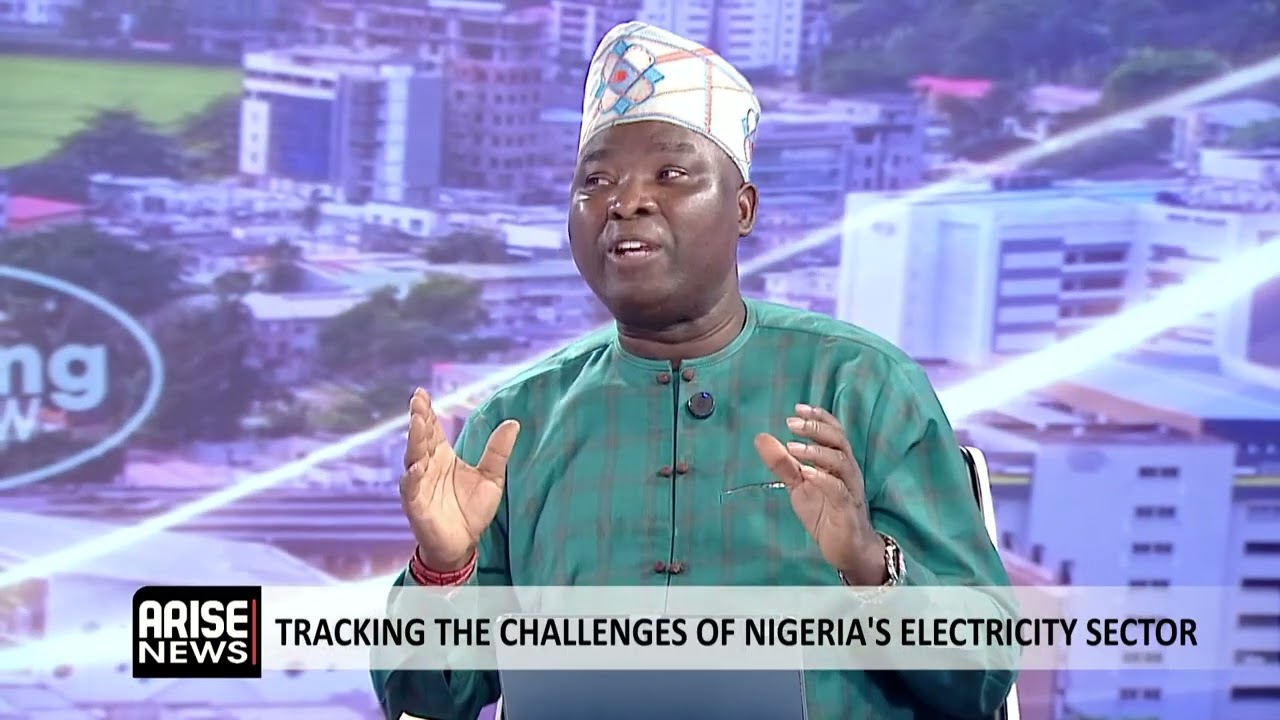
The Managing Director and Chief Executive Officer of the Association of Nigerian Electricity Distributors (ANED), Sunday Oduntan, has said Nigeria’s decades-long electricity crisis cannot be resolved within a single political term, stressing that fixing the country’s power sector will require time, massive investment and sustained reforms.
Speaking during an interview with ARISE News on Saturday, Oduntan said it was unrealistic to expect the country’s electricity challenges—built up over several decades—to be solved in four years.
“You cannot fix the adversity of 50 years in four years. Nobody can do that anywhere in the world,” he said.
He explained that the Nigerian power sector suffers from deep structural and infrastructure deficits that have accumulated for decades.
“Because of the huge investment required and the infrastructure that we have everywhere, what we need to do is focus on solutions—how can we get it done one after the other,” Oduntan said.
The ANED chief, who also serves as spokesperson for Nigeria’s electricity distribution companies, noted that although progress has been made since the power sector was privatised, the country still has a long way to go.
“I started with this sector on November 1, 2013, so I can say that we are better today than we were 10 years ago. But we still have to get things better,” he said.
According to him, Nigeria’s electricity demand far exceeds its current supply.
“A country that requires about 20,000 to 30,000 megawatts is sharing between 4,000 and 5,000 megawatts. We have failed in that regard and we still have a long way to go.”
Oduntan identified transmission infrastructure as one of the most critical challenges affecting electricity supply across the country.
He noted that despite efforts by the Transmission Company of Nigeria to upgrade infrastructure over the years, major bottlenecks still prevent generated electricity from reaching consumers.
“There are a lot of bottlenecks. Over the years we have had stranded power because power cannot move from one point to another due to transmission limitations,” he said.
He however expressed optimism about the federal government’s plan to establish a Grid Asset Management Company (GAMCO), which he described as a potential “game changer” for the sector.
“The aim is to optimise power generation and modernise transmission evacuation because there has been a lot of stranded power over the years,” Oduntan said.
He explained that Nigeria’s power system suffers from a mismatch between generation, transmission and distribution capacity.
“If you are able as a country to generate 10,000 megawatts, you should be able to transmit 10,000 megawatts and distribute 10,000 megawatts. What we have in Nigeria is a mismatch,” he said.
Oduntan also pointed to gas supply shortages as a major factor limiting electricity generation.
“There are a lot of issues, and one of them is the issue of gas constraint,” he said, noting that many power plants cannot operate at full capacity because of insufficient fuel supply.
He explained that Nigeria actually has higher installed generation capacity than what is currently produced.
“Generation capacity has always been as high as 11,000 to 14,000 megawatts in total capacity, but we are not able to utilise it fully,” he said.
Oduntan also addressed the recent directive by the Nigerian Electricity Regulatory Commission ordering electricity distribution companies to refund ₦20.33 billion to customers who purchased meters under the Meter Asset Provider scheme.
He said distribution companies would comply with the regulator’s directive and ensure affected customers receive their refunds.
“The order from NERC is a good one. As service providers we must ensure that the system is credible and that we comply with every regulation given to us by our regulator,” he said.
Oduntan assured customers who have not yet received refunds that payments would be made, including arrears.
“By the time the full implementation starts, those who have not received their credits will get it in arrears because this has to be paid and will be paid,” he said.
He added that some distribution companies had already made significant progress in refunding customers.
“For instance, NERC confirmed that Ibadan Disco has done refunds of up to 92 per cent under the MAP scheme,” he said.
Oduntan urged politicians, critics and stakeholders to avoid politicising electricity issues and instead focus on long-term solutions.
“The government, the people, the opposition and critics should help us take the Nigerian power sector out of politics. We cannot afford to continue to politicise it,” he said.
Despite the current challenges, he expressed confidence that the country would eventually overcome its electricity problems.
“I am very confident that there will be power in Nigeria. I am very sure that Nigeria will have electricity. It is a matter of time,” Oduntan added.
Boluwatife Enome
About the Author


