
Attendees at the fifth Piny Luo Festival, held at Rongo University in Migori County, were captivated by a stirring presentation from Dr Oburu Oginga on the heritage and historical identity of the Luo community.
The celebration carried a solemn undertone, marking the first festival held without Raila Odinga, patron of the Luo Council of Elders, who passed away in October this year.
The shadow of Raila
His absence was deeply felt, yet many in attendance found reassurance in the voice and presence of his brother.
Several participants drew striking parallels between Dr Oburu’s oratory and that of Raila.
“For a second, I thought we were at the fourth edition of the Luo festival in Siaya because of Dr Oburu’s oratory skills. He articulated the history of the Luo community in exactly the same way Raila moves his audience,” said Merseline Akinyi, an audience member.
Jeremiah Okuto, another attendee, observed that the community could take comfort in Dr Oburu’s leadership.
“Dr Oburu has proved that we can see Raila in him. The history and the humour he used were just the same as his brother’s,” he said.
In his address, Dr Oburu traced the origins of the Luo name and identity, drawing richly from historical accounts and Luo oral tradition.
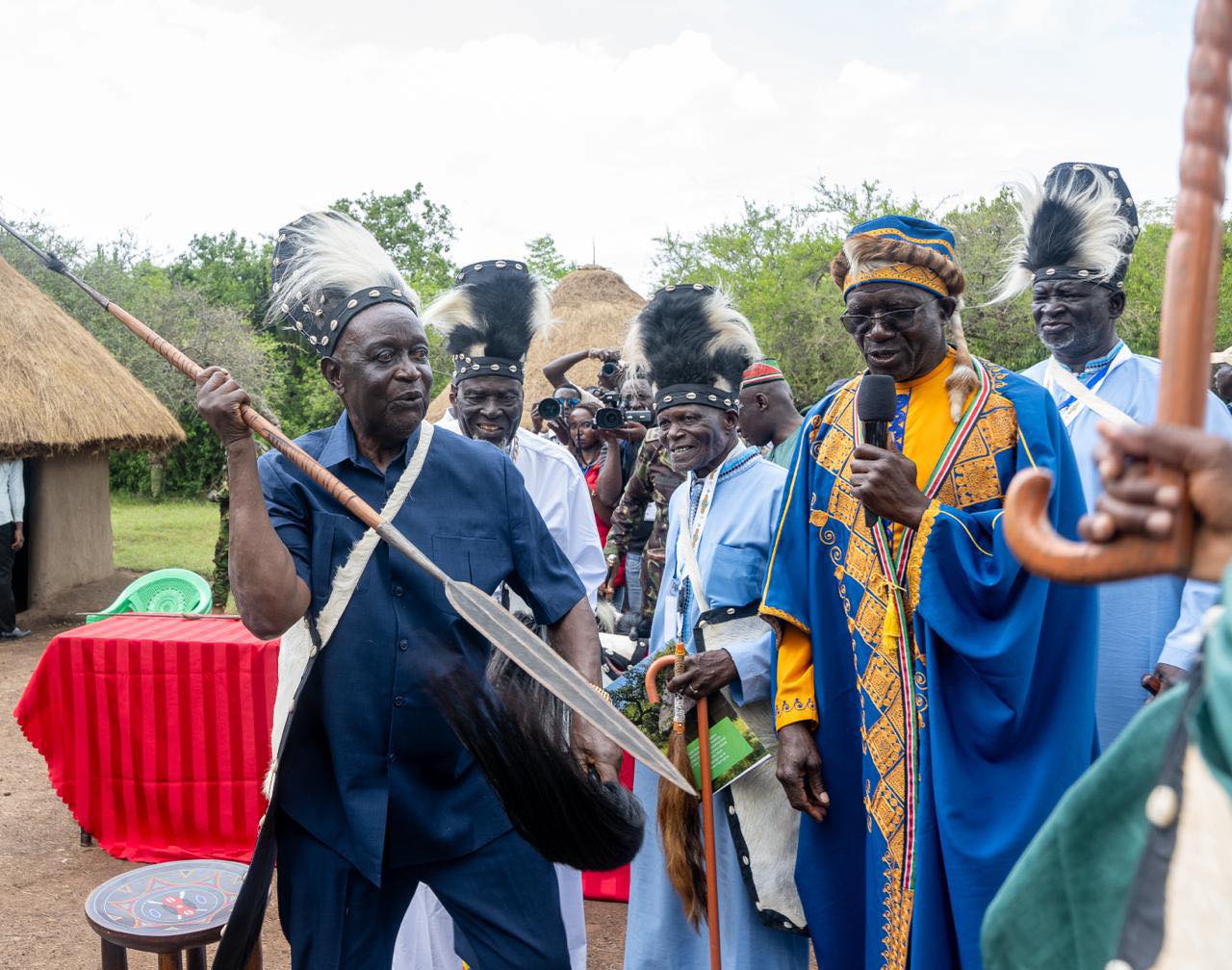
On the origin of the name “Luo”, Dr Oburu linked it to wise men from the Far East, including China. He cited the Luo River in China, describing it as a sacred waterway revered for its perceived blessings. According to his account, these travellers named the Nile River “Luo”, and the people living along its banks adopted the name for themselves.
While the community retained its broader identity as Nilotic speakers, reflecting its migration along the Nile River, it embraced “Luo” as its distinct name.
Global connection
Public documents state that the Luo River in China is primarily a major tributary of the Yellow River, flowing from Shaanxi through Henan Province. It is notable for passing through the ancient capital of Luoyang and near the iconic Longmen Grottoes, and for its cultural significance in myths such as the “Goddess of the Luo River” (Luo Shen).
Historically vital to agriculture, ancient capitals and literature, the river also faces modern environmental challenges, with different sections varying in length and confluence, including links to the Wei River or directly to the Yellow River.
Dr Oburu further described how the community reached Lake Albert, where, according to his account, they miraculously parted the waters with an axe, in a moment reminiscent of Moses parting the Red Sea. Some members of the community crossed the lake and settled in the Democratic Republic of Congo.
“Some people crossed Lake Albert and settled in the Democratic Republic of Congo (DRC). Those who settled in Congo are many compared to the Luo in Kenya; they are over four million,” Dr Oburu explained.
About the Author