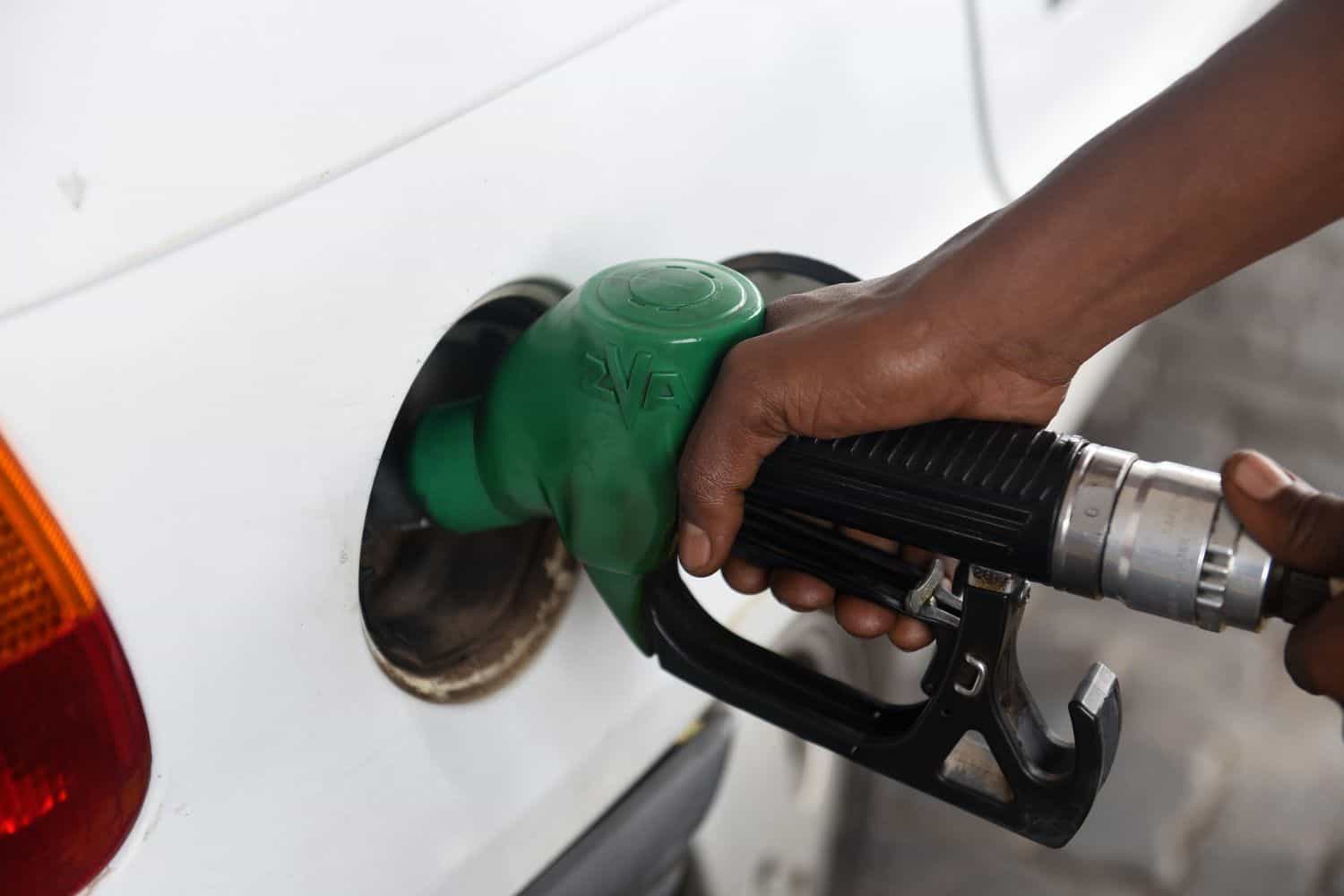
A surge in panic buying by motorists has disrupted fuel distribution across South Africa, despite the country having sufficient supplies, according to Minister in the Presidency Khumbudzo Ntshavheni.
Long queues formed at fuel stations this week as consumers rushed to fill up ahead of a sharp increase in petrol prices, driven by instability in global energy markets linked to war in the Middle East.
On 1 April 2026, petrol prices rose by R3.06 per litre.
ALSO READ: Fuel levy cut offers relief but falls short
This pushed the cost of 93 unleaded to R23.25 per litre and 95 unleaded to R23.36.
In an effort to ease financial pressure on households and businesses, the government implemented a temporary R3 per litre reduction in the general fuel levy until 5 May.
The intervention, recommended by a ministerial task team appointed by President Cyril Ramaphosa, lowered the levy for petrol from R4.10 to R1.10 per litre and diesel from R3.93 to R0.93 per litre.
South Africa’s fuel supply stable
Addressing media in a post-Cabinet briefing on Thursday, Ntshavheni stressed that the country is not facing a fuel shortage.
“Fuel supplies in the country remain stable and the current dry fuel stations are a result of logistic constraints due to panic buying and fuel hoarding,” she told reporters.
The minister warned that continued panic buying could worsen temporary shortages at individual stations.
“Depending on how South Africans behave will determine the extent to which we’ve got the supply,” Ntshavheni said, adding: “So, please, let’s be patient. We’ll make sure that you’ve got fuel at all material times.”
READ MORE: Energy inequality deepens as paraffin users left exposed to punitive hike
Ntshavheni explained that if motorists go out and buy fuel when stations know that the supply they receive once a week is meant to last seven days, they end up reducing that availability to three days.
This creates logistical challenges since trucks have to travel from depots and some provinces do not have depots nearby.
“Their depots are far away, so they still have to drive long distances to deliver fuel. As a result, you may experience situations where stations run dry.
“That’s why, when you go to a fuel station, they may tell you, ‘We have run out of this fuel, but the supply will arrive tomorrow or the day after’.”
Middle East tensions impact refined fuel
Ntshavheni clarified that South Africa’s crude oil imports are sourced elsewhere.
“Our crude oil is coming from Angola and Nigeria.”
However, the country still relies on imported refined fuel, some of which comes from the Middle East – a region where key infrastructure has been damaged.
The minister noted that rebuilding refineries in countries such as Saudi Arabia and Iran will take time, thus, stability will not return immediately.
“Even if the war stops today, they will need a little time to rebuild.”
READ MORE: No April Fools: Fuel and electricity up, wallets empty as SA feels the pain
The crisis, according to Ntshavheni, has renewed focus on South Africa’s limited refining capacity.
She emphasised that restoring the country’s refining capacity is a key medium-to-long-term measure under consideration, warning that the continent cannot depend on external regions.
“It is our responsibility as the leading economy in the continent to develop reliable refining capacity not only for ourselves but that could also supply the [SADC] region and the continent.”
Watch the briefing below:
The ministerial task team is further examining how rising fuel costs could ripple through the broader economy.
“What does it mean when the electricity increases and the tariff increases are taking place? What does it mean for food security?
“What does it mean to have fertiliser shortages for our ability to have food security?
“So it’s a range of measures we are considering to see what then becomes the interventions and those interventions will be structured in a manner of a short, medium, and long-term intervention.”
Crackdown on illegal fuel price hikes
Ntshavheni addressed complaints that some fuel stations have been “scamming people” by raising prices prematurely.
She stressed that fuel pricing is strictly regulated and and that a regulatory body exists where citizens can report any unlawful increases.
“We are aware that there are fuel stations that hiked prices last week.
“We are going to publicise a number and the contact information which the complaints can then be directed to so that we can have a follow up.
“We please request proof from yourselves that they were charging you outside of what is the regulated price set by government.”
READ MORE: Road freight under immense pressure after diesel surge
She also pushed back against claims that current increases are solely due to the Middle East conflict.
“There will be fuel price increases due to this or that. Sometimes, we’ve had fuel price decreases.
“In fact, for a bulk of last year, we saw significant decreases in petrol prices, whereas in 2024 there was a serious and continuous increase in fuel prices and there was no war.”
South Africa shrugs off G7 snub
Separately, Ntshavheni commented on France’s decision to withdraw South Africa’s invitation to attend the G7 summit in June, reportedly influenced by the administration of United States President Donald Trump.
“On attempts by the US to undermine South Africa, there’s nothing new there. But we remain a very strategic partner of the US.
“We are unavoidable to each other. We cannot wish each other away. We must coexist, and that’s why we continue to engage with the US as a valued partner.”
She downplayed the significance of the snub, saying South Africa is not a G7 member.
“So, actually, it saves our president time for going there to observe members of the G7 speaking and taking decisions.
“Sometimes they will even allow non-members to speak. If the time runs out, non-members are not even allowed to speak.
“But even when you speak, it doesn’t change the price of bread because you are not a member, you don’t contribute to decision making. In terms of our relationship with France, we remain solid.”
NOW READ: ‘SA will not bow’ – Ramaphosa hits back at US pressure over G7 snub