Agency warns weak compliance by states, MDAs and government-owned entities could derail ambitious revenue drive under new tax regime….
The Nigeria Revenue Service has sounded the alarm over rising tax leakages, delayed remittances and poor compliance by some government institutions and sub-national authorities, warning that the challenges could threaten the country’s ambitious plan to generate about ₦40 trillion in revenue in 2026.
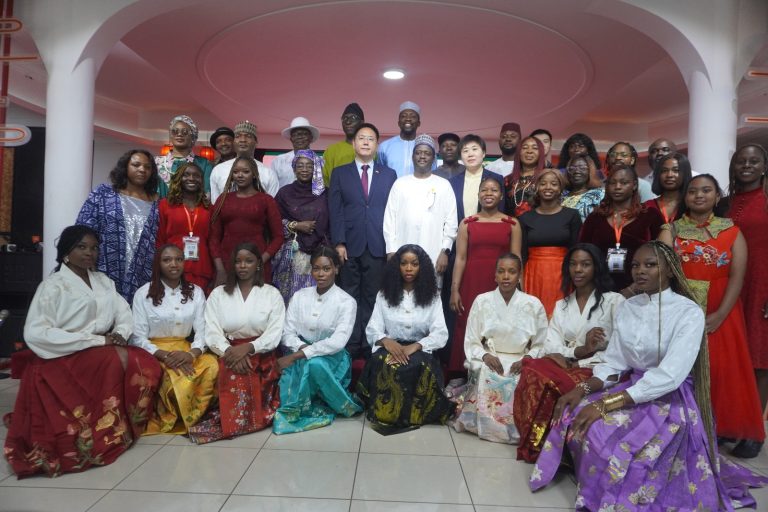
The warning was issued on Tuesday during the National Workshop on Strengthening Tax Compliance Under the New Tax Regime held at the Transcorp Hilton Abuja, where top government officials, revenue agencies, state representatives and Ministries, Departments and Agencies gathered to discuss strategies for improving tax collection and plugging revenue leakages.
Speaking at the event, Executive Director of the Large Taxpayer and Government Directorate at the Nigeria Revenue Service, Amina Ado, revealed that monitoring and audit activities conducted by the agency uncovered major gaps in tax deductions and remittances across several institutions.
According to her, achieving the ₦40tn target would require unprecedented transparency, accountability and cooperation across all levels of government.
“This workshop is coming at a time when the Nigeria Revenue Service has taken the huge responsibility of raising about ₦40tn in tax revenue for the Federation. This historic goal requires us to approach our compliance gaps with sincerity and complete transparency,” she said.
Ado explained that although some states and government entities had maintained strong compliance records, the agency discovered persistent structural leakages, especially involving delayed remittance of Value Added Tax and Withholding Tax.
“Our field monitoring and audit activities have revealed that while many sub-national entities are exemplary in their civic duties, there are still some significant structural leakages, especially in the prompt deduction and delay in remittance of Value Added Tax and Withholding Tax,” she stated.
She warned that uneven compliance among states was creating serious distortions within Nigeria’s fiscal system.
“Whereas some jurisdictions work hard to fill the national revenue pool while others participate in the distribution without making their fair contribution, this compliance gap distorts and creates an imbalance in our fiscal federalism,” she added.
The agency said it is now seeking to replace what it described as an “enforcement-heavy” approach with a collaborative tax compliance framework supported by technology-driven remittance systems and improved transparency.
In his keynote address, Executive Chairman of the Nigeria Revenue Service, Zacch Adedeji, represented by Executive Director of Finance and Corporate Services, Muhammad Lawal, described the ₦40tn target as a “Herculean task.”
Adedeji said the agency’s primary responsibility remained sustaining the Federation Account Allocation Committee, which he described as the financial backbone of Nigeria’s three tiers of government.
“Our major role at the Nigeria Revenue Service is to sustainably finance the Federation Account Allocation Committee. This fund is the financial lifeblood of the three tiers of government,” he said.
He noted that the workshop was designed to tackle recurring compliance bottlenecks, improve awareness among MDAs and government-owned enterprises on statutory tax obligations, and address implementation issues arising from the country’s new tax laws.
According to him, the agency intends to encourage voluntary compliance rather than rely heavily on sanctions and enforcement.
“Our goal is to move away from an enforcement-dependent approach and move to a collaborative, voluntary compliance framework where every institutional stakeholder contributes its fair share to our collective national prosperity,” he stated.
Adedeji also disclosed that the NRS plans to introduce a new recognition initiative from 2026 that would reward the most tax-compliant states in the country.
“Excellence deserves recognition, and we look forward to honouring our top performers at the end of the year,” he added.
Meanwhile, the Minister of Finance and Coordinating Minister of the Economy, Taiwo Oyedele, represented by his Chief of Staff, Tolu Adegbie, said the Federal Government’s ongoing tax reforms are aimed at reducing dependence on unstable revenue sources and building a more predictable tax-based economy.
He said the reforms form part of broader structural changes introduced by the government, including fuel subsidy removal, naira reforms and anti-inflation measures.
“The new tax regime is a key part of our wider structural reform agenda, designed purposefully to move our economy away from reliance on volatile revenue sources towards a stable, predictable and equitable tax-based platform,” he said.
Oyedele added that the government plans to expand the tax net without placing additional financial pressure on Nigerians.
“The opportunity is to reform our tax space, expand the tax net without increasing the tax burden and encourage voluntary compliance while using technology to plug leakages,” he stated.
Also speaking, Accountant-General of the Federation, Shamseldeen Ogunjimi, stressed the need for stronger institutional coordination, transparency and innovation in tax administration.
Chairman of the Forum of Finance Commissioners and Ekiti State Commissioner for Finance, Akintunde Oyebode, said states were ready to strengthen collaboration with the NRS to improve revenue generation and tax administration nationwide.
Oyebode pointed to Nigeria’s massive informal sector as one of the biggest tax collection challenges facing the country.
“Only 10 per cent of the payroll is actually in salary or wage-paying jobs. Ninety per cent of Nigeria’s employers sit in a diverse and often very dark informal sector,” he said.
He noted that deeper cooperation between state governments and federal revenue agencies would improve data sharing, expand the tax base and strengthen voluntary compliance across the country.
The renewed push comes as the Nigeria Revenue Service intensifies efforts to achieve its projected ₦40.7tn revenue target for 2026 through taxes, petroleum earnings, mineral royalties and other non-oil revenue streams driven by the Federal Government’s ongoing economic reforms.