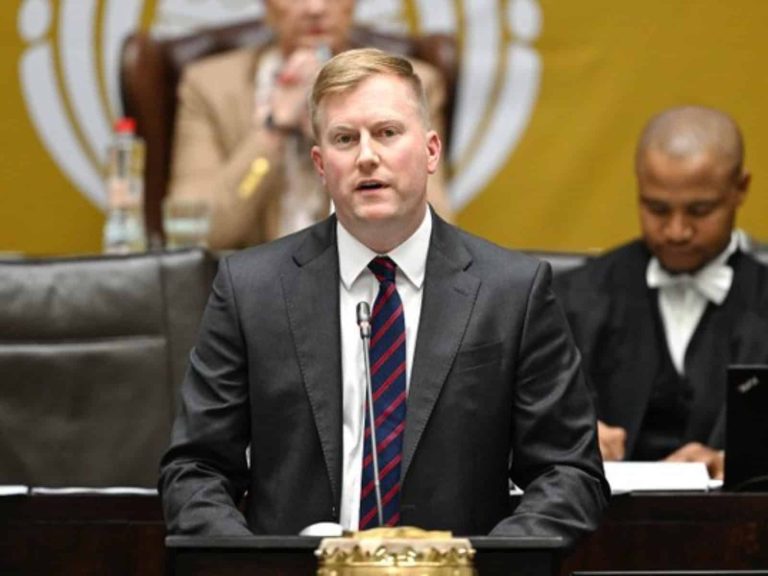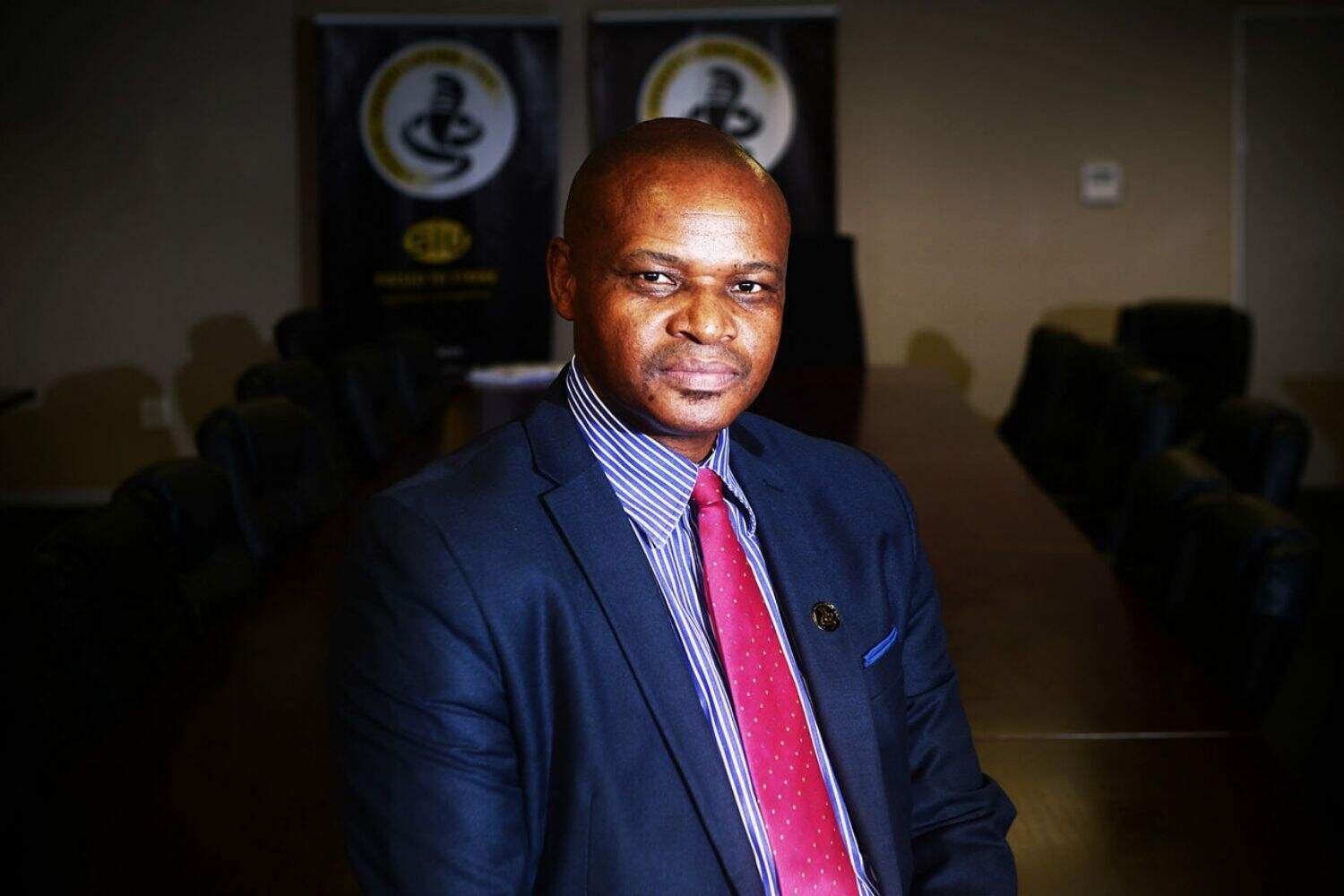
The new head of the National Prosecuting Authority (NPA) is envisioning a modern and capable legal force to hold criminals accountable.
National Director of Public Prosecutions Andy Mothibi on Thursday gave a detailed breakdown of how the NPA will shape its work under his watch.
President Cyril Ramaphosa appointed Mothibi in January, after the public interviews of six candidates that were ultimately overlooked.
Mothibi said that he had spent the last two months gauging the organisation’s culture, having taken “time to immerse himself” in the task at hand.
‘Operational and financial independence’
In his state of the NPA address, Mothibi provided a “situational analysis” of the NPA’s challenges and how it would meet the public’s expectations.
Formerly the head of the Special Investigating Unit, Mothibi described his vision as the “corporatisation” of the organisation that was being backed by the Department of Justice and Constitutional Development.
“The vision and mission of the NPA that we are committed to, and continue to strive towards, is the achievement of justice in our society so that people can live in freedom and security,” said Mothibi.
He explained that this would require organisational reforms and that he was working on refining leadership structures and filling vacancies, with many senior positions requiring presidential appointment.
“We would want the NPA to have operational and financial independence.
“I have been in discussions with the Ministry of Justice and Constitutional Development on this subject, and I am pleased to say that the ministry and department are fully supportive and have committed to drive the legislative reform process,” said Mothibi.
Broader objectives
As well as priority crimes like murder, rape and gender-based violence, the NPA will place an emphasis on organised crime and financial crimes such as money laundering.
Mothibi explained that while he will ensure the NPA strives to achieve the best possible results in these areas, the NPA is one part of an intricate network.
“The NPA is the final link in a broader criminal-justice chain that includes the police, forensic laboratories and courts.
“Weaknesses elsewhere inevitably impact on case readiness and trial readiness,” said the national director.
He also listed a host of objectives that he wished to see in the coming years.
In the courtroom, the NPA will fast-track cases from the Truth and Reconciliation Commission and other apartheid-era crimes.
Additionally, prosecuting complex corruption cases and securing more impactful community-repeated prosecutions were on Mothibi’s shortlist.
Administrative objectives include establishing a digital evidence unit within the Investigating Directorate Against Corruption and the integration of artificial intelligence and technology through an electronic case management system from all lower courts.
To ensure public trust, Mothibi wants to see professional and ethical prosecutors, proactive communication and a dedication to skills development.
‘Without fear, favour’
Having the personnel to implement his vision is important to Mothibi, who stressed the need to fill the 17% vacancy rate in the NPA with skilled professionals, especially for financial investigations.
“These are critical skills in the sense that the matters that we investigate, in particular in commercial crimes and in the corruption space, they require serious financial analysis.
“We have skills now, but we really need to beef up on that,” he said.
Answering a question on political interference or factions within the NPA hampering his work, Mothibi said he was working unconstrained.
“I’d like to believe that the legislation, as it speaks, puts me as the NDPP such as I execute, to ensure that prosecutions are effective, prosecutions are capacitated; that prosecutions are carried out without fear, favour or prejudice.
“Nothing holds my hands such as I am not able to contribute to that mandate,” Mothibi stated.
NOW READ: ‘I must be perceived as a good worker rather than belonging to Sibiya,’ says Shibiri
About the Author