Screenshot
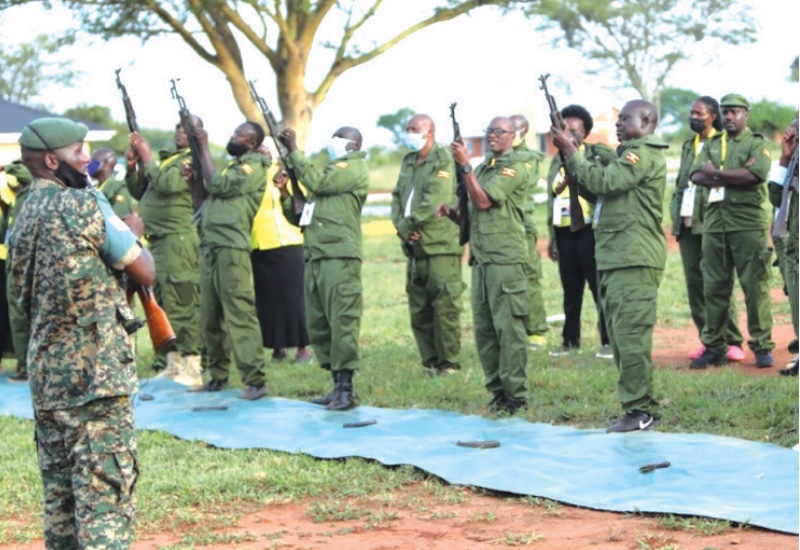
Mention the National Leadership Institute in Kyankwanzi, and many Ugandans picture something closer to a military boot camp than a classroom: gun drills with AK-47 rifles, bodies rolling through mud in ‘chakamuchaka’, and discipline enforced through exhaustion.
For others, the institute is imagined as an exclusive finishing school for ministers, members of parliament, and senior officials angling for promotion. The reality, for those who recently spent a week there, is far less dramatic, and far more deliberate.
The National Leadership Institute (NALI), tucked into rolling green forests along the Hoima road, is not primarily about weapons training. It is about ideas: how power is exercised, how leaders think, and how Uganda’s long-standing challenges, corruption, inequality, weak institutions might be confronted by people far removed from the corridors of State House.
During a week-long Transformational Leadership Development course held recently, more than 300 participants gathered in Kyankwanzi from across the country. They came not as generals or ministers, but as workers: union leaders, journalists, teachers, drivers, nurses, market vendors, and mobile money operators.
Many arrived curious, some skeptical, others openly nervous about what awaited them. What they found was not gunfire, but long days of discussion. There were a few physical routines, early morning jogging at 4:30am. and light ‘chakamuchaka’ drills during a 7am. assembly.
But these were optional, and far from the centrepiece. The bulk of the programme focused on lectures and debates on patriotism, pan- Africanism, democracy, socio- economic transformation, and the fight against corruption.
Some military training, including basic skills at arms, is provided to participants attending courses that last a fortnight or longer, to demystify the means of violence.
“I had always thought Kyankwanzi was about military drills,” one participant said. “But this training was about how you think as a leader.”
The course carried an unexpected weight for many attendees. Beyond the learning itself, the NALI certificate is widely regarded as valuable in public service recruitment, a reality that drew some participants to Kyankwanzi with urgency.
“I have been looking for a NALI certificate for about six years but failed to get it,” one trainee Nabukeera said.
“It is highly valued in government job applications, together with academic qualifications. Most of my colleagues who had it were given jobs in big institutions. When I heard about this training, I cancelled all my programmes to attend.”
Another worker told a similar story. “Two of my colleagues were denied jobs in government institutions. But when they later presented a NALI certificate, they were reconsidered and got the jobs.”
Participants represented at least 57 unions, including the Uganda Midwives and Nurses Union, Uganda Journalists Union, Uganda Markets Union, the Teachers’ Union, Drivers’ Union, Mobile Money Union, Medical workers, Marine Workers’ Union, Uganda Local Government Union, Pharmaceutical Union, Microfinance Union and legal professionals.
Set on more than 21 square miles of land, about 160 kilometers from Kampala, NALI’s physical environment reinforces one of its core philosophies: equality. Once inside the compound, hierarchy dissolves quickly.
Most participants came with perception of Kyankwanzi having a poor hygiene due to the big numbers of participants but surprisingly, it was an amazing place to live in with cleanliness all-over the place, dormitories, restrooms and it was hard to find any littered garbage on the compound.
All participants wear the same military-style uniform during the day. They eat the same food, sleep in similar dormitories, and sit side by side in the auditorium. There are no reserved tables for ministers, no special meals for MPs, no VIP washrooms. Many participants said the uniformity was initially unsettling, then quietly powerful.
“It creates a sense of unity,” one attendee said. “Here, everyone is the same, whether you are an MP, a minister’s child, a diplomat or an ordinary worker.”
NALI’s director, Col Okei Rukogota, says that the sense of equality is intentional. “Patriotism means love for one’s country,” he said.
“A patriot must care about the environment, must not be sectarian in religion or tribe, and must respect gender equality.”
“Good leaders are those who can take an organisation or society to a higher level,” Rukogota added.
“They influence others and work towards changing perspectives and behaviour.” He said the course is designed to help participants understand the dynamics of society, diagnose its problems and clarify their vision for Uganda’s development.
“Leaders should believe in themselves, research, and understand the problem before trying to solve it,” he said.
At the closing ceremony, the chief of staff, UPDF Air Forces, Brig Gen David Robert Gonyi praised the organisers, arguing that leadership training, not force, is the foundation of national development.
“The importance of this training is to build a spirit of national service and commitment,” he said.
“Transformational leadership inspires collective vision, fosters innovation and empowers citizens beyond self-interest.” Workers’ member of parliament Arinaitwe Rwakajara, who organised the training, said participants left with practical skills that extend beyond theory.
“They have gained skills in strategic planning, teamwork, critical thinking, decision-making and communication,” he said.
“They are also exposed to the economic challenges facing the country, with an emphasis on wealth creation initiatives, including joining savings and credit cooperatives where they can borrow at low interest.”
Rwakajara said similar trainings would be organised for more workers in the future. For many participants, the week at Kyankwanzi did not erase the institute’s myths, but it complicated them. The drills exist, they acknowledge.
The discipline is real. But beneath the uniform and routine lies something quieter and more enduring: an attempt to shape how Ugandans imagine leadership itself. As one participant put it, borrowing from a saying often attributed to Napoleon Bonaparte, “A leader is a dealer in hope.”
At Kyankwanzi, that hope is taught not through weapons, but through ideas. The intellectual motivation sessions on leadership, along with patriotic songs such as “Tembeya…”, “Songa Mbere…”, “Yoweri… Maama Yoweri…”, “Muzeei Jjuu… Jjuu Zaidi,” the Ugandan and East African anthems in Swahili, and Col. Okei’s signature “Shukran” slogan, will long be remembered by Kyankwanzi attendees.
About the Author