Improved feedstock lifts fuel supply outlook, but refinery still falls short of optimal capacity amid global sourcing challenges……
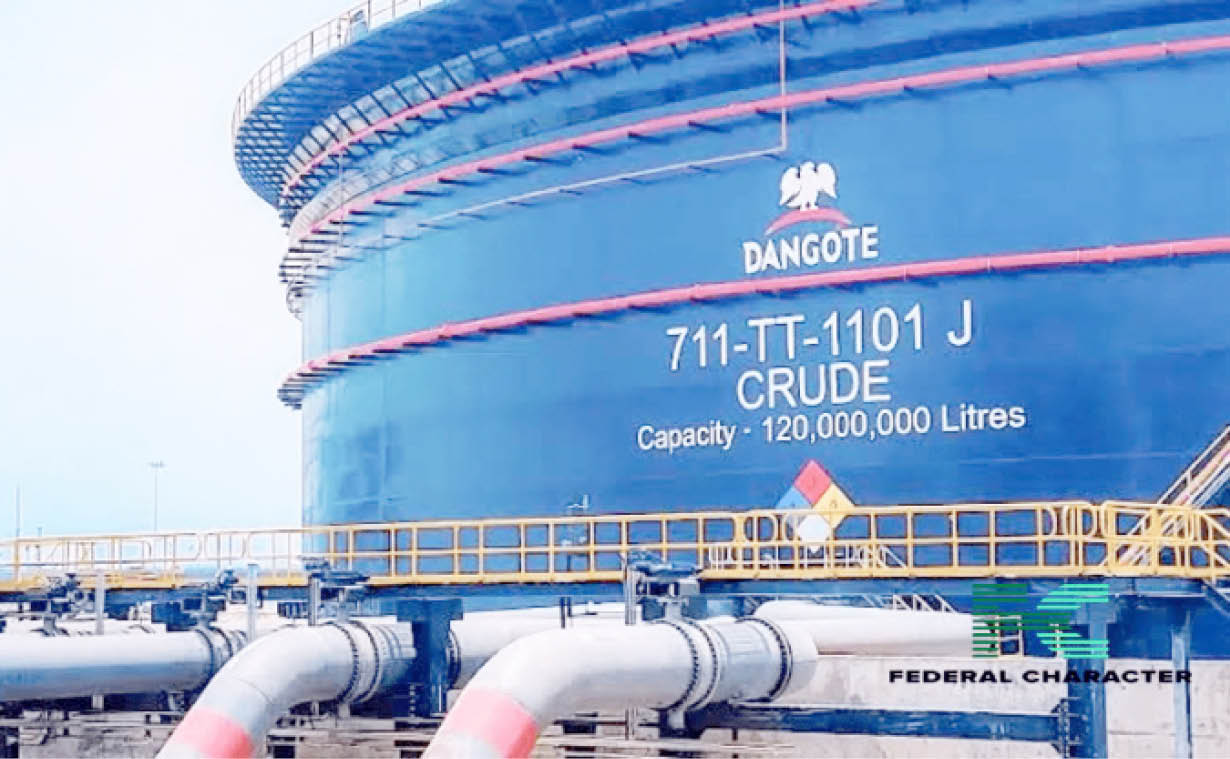
Crude oil deliveries from the Nigerian National Petroleum Company Limited to the Dangote Petroleum Refinery saw a sharp increase in March, raising optimism about improved fuel availability in Nigeria and across the region.
The development was disclosed by Aliko Dangote, President and Chief Executive of Dangote Industries Limited, during a visit by Amina Mohammed, Deputy Secretary-General of the United Nations, to the industrial complex in Ibeju-Lekki, Lagos.
Dangote revealed that crude supply from the national oil company doubled in March, with the refinery receiving a total of 10 cargoes six priced in naira and four in dollars. The increase, he noted, reflects a stronger push to support domestic refining and ease fuel supply pressures.
“Last month, they gave us six cargoes for naira and four cargoes for dollars,” he said.
Despite the improvement, the refinery is still operating below its full requirement. Dangote explained that about 19 cargoes are needed monthly for optimal performance, leaving a significant shortfall that the company continues to cover through imports from the United States and other African producers.
He also raised concerns about supply constraints linked to international oil companies operating in Nigeria. According to him, many prefer selling crude to foreign traders rather than directly to the local refinery, forcing the company to buy back the same crude at higher prices on the global market.
This practice, he warned, adds pressure to production costs and has wider implications for the Nigerian economy.
To address this, Dangote said the refinery is pushing for greater access to domestically priced crude, particularly under local currency arrangements. Such a move, he argued, would help stabilise fuel prices and strengthen long-term energy security.
Beyond energy, discussions during the visit also touched on food security, a growing concern across Africa. Mohammed highlighted the strategic role of Dangote’s fertiliser operations in tackling the continent’s agricultural challenges.
She described the company’s integrated industrial model as a viable solution to rising food shortages and called for stronger international collaboration to expand its impact.
“I think the UN’s role is to amplify solutions that can help mitigate the food security crisis, and this is clearly one of them,” she said, adding that deeper partnerships with governments and global stakeholders would be essential.
Her remarks come amid mounting pressure on food systems across Africa, driven by economic headwinds, climate-related disruptions, and geopolitical tensions, particularly in the Middle East.
Dangote noted that the group has already begun scaling up exports of fertiliser and refined petroleum products to countries affected by supply disruptions. In recent weeks, shipments of urea have increased significantly, targeting markets that previously relied on other sources.
“We’ve been loading fertiliser to several African countries, which we were not doing before,” he said. “Now, we’re also supplying petroleum products to many of these markets.”
The refinery has also exported about 17 cargoes of Premium Motor Spirit to African countries, leveraging its 650,000 barrels-per-day capacity to help stabilise fuel supply across West, Central, and East Africa.
Dangote expressed confidence in the facility’s ability to meet regional demand, assuring that both Nigeria and neighbouring countries stand to benefit from increased output as supply conditions improve.
“What I can do is assure Nigerians and indeed much of Africa that we have the capacity to supply them,” he said.