Nigeria’s midstream and downstream petroleum regulator as well as policymakers on Thursday voiced concerns over Nigeria’s sub-optimal energy performance, particularly in power generation and gas utilisation.
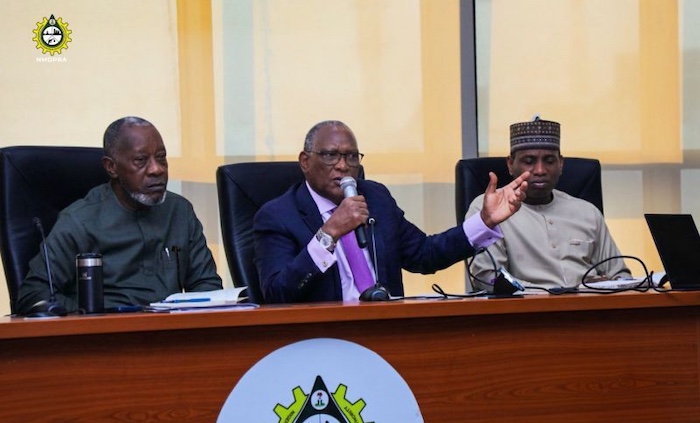
Speaking at the ‘National Gas Day’ session of the 9th Nigeria International Energy Summit (NIES) in Abuja, the Authority Chief Executive of the NMDPRA, Saidu Mohammed, expressed frustration over the country’s long-standing stagnation in electricity generation.
Mohammed said Nigeria was still generating about 5,000 megawatts of electricity, a level that has barely improved in more than two decades. He recalled that as a young engineer, the country had celebrated achieving around 4,500MW some 25 years ago, yet today remained “hovering around 5,000 megawatts,” despite having installed capacity of more than 13,000MW.
According to him, the problem was not the absence of gas resources or power plants, but weak commercial structures and inefficiencies across the gas-to-power value chain. Nigeria, he said, produces about 8 billion cubic feet of gas daily and exports significant volumes, yet continues to operate a small and underdeveloped domestic gas market.
Mohammed questioned frequent claims by power plants that gas shortages were responsible for low generation, arguing that very few plants could demonstrate firm, bankable gas sales agreements for volumes allegedly not delivered. Gas, he said, is a commodity that must be sold before it is produced, warning that without credible buyers and enforceable contracts, producers have little incentive to invest in domestic gas supply.
He described gas as more than an energy commodity, calling it an economic enabler that underpins sustainable power, industrial growth, and economic development. Without reliable gas supply, he said, Nigeria would struggle to industrialise or diversify its economy, regardless of its resource endowment.
“We have been talking about gas-to-power. For us, actually, some of us grew up in it. As younger engineers, we have been talking about gas to PHCN, to the privatised companies and unfortunately in Nigeria, we are still hovering around the same thing.
“About 20 years ago or more, when I was a younger engineer operating a department at the Nigerian Gas Company (NGC), I think it was the first year or second year, we celebrated 4,500 megawatts of electricity generated at that time. 25 years later, we are still hovering around 5,000 megawatts,” he lamented.
He added: “It is rather unfortunate that we are still hovering around 5,000 megawatts or so. Not because there is no generating capacity, there is up to 13,000 megawatts. There is a little bit more constraint in terms of wheeling capacity, but then the fundamental question is every time you hear no gas. The question I always keep on asking the power plants is how much gas did you buy which is not delivered?
“Well, when we ask those questions, you hardly get an answer. I think we have not more than one or two power plants today that have bankable commercial gas sales agreements. If we don’t move the commerciality, we will not move those molecules called gas. Gas is a commodity that is sold before you even start drilling for it. If there is no buyer for gas, you don’t look for it,” he argued.
The NMDPRA chief said the Petroleum Industry Act (PIA) had introduced critical reforms, including domestic gas supply obligations, clearer pricing frameworks, and defined regulatory responsibilities. He said the authority was working with other regulators to enforce these provisions, while improving transparency in gas pricing and transportation tariffs.
Infrastructure development, Mohammed stressed, remained central to unlocking gas demand. He cited the Escravos-Lagos Pipeline as an example of how gas infrastructure can create markets, noting that industrial clusters had emerged along its corridor over time. Similar outcomes, he said, could be replicated across other industrial zones if pipelines and virtual gas networks are expanded.
He added that the regulator was deliberately shifting from a control-based culture to an enabling and performance-driven framework, focused on network discipline, predictable supply, and timely approvals for infrastructure projects. Domestic gas supply, he said, would remain a priority, even as Nigeria faces financing challenges for fossil fuel projects in a global energy transition environment.
In the same vein, the emphasis on gas as a driver of national growth was reinforced by the Minister of State for Petroleum Resources (Gas), EkperikpeEkpo, who warned that Nigeria’s vast gas reserves would count for little unless they translated into tangible benefits for citizens.
Addressing participants at the summit, Ekpo said Nigeria’s proven gas reserves of about 210 trillion cubic feet, the largest in Africa, would remain “useless” if gas failed to reach homes, hospitals, schools, and industries. He said the real measure of progress was not reserve size, but outcomes such as megawatts delivered, jobs created, energy access expanded, and economic opportunities unlocked.
Ekpo said natural gas was central to Nigeria’s energy transition and industrial ambitions, describing it as a bridge fuel linking current realities with future low-carbon goals. Under the federal government’s Renewed Hope Agenda, he said gas was being entrenched as the backbone of the national energy architecture, supported by regulatory reforms and investment incentives.
The minister highlighted several policy milestones, including the domestication of locally produced LPG to stabilise prices and improve household access, the resolution of long-standing gas-to-power debts that had undermined investor confidence, and the nationwide rollout of free LPG cylinder distribution to promote clean cooking. He also pointed to Nigeria’s strengthened international standing following the election of a Nigerian as Secretary-General of the Gas Exporting Countries Forum.
Ekpo said gas already fuels more than 70 per cent of Nigeria’s on-grid electricity generation, but warned that industrialisation ambitions would require stronger gas-to-power linkages, long-term supply contracts, expanded infrastructure, and closer coordination between the energy and power sectors. Beyond electricity, he said gas was critical to agriculture, manufacturing, petrochemicals, and transportation, and could help Nigeria shift from exporting raw molecules to exporting value-added products.
He reaffirmed the government’s commitment to creating a commercially viable and investor-friendly gas market under the Petroleum Industry Act, insisting that Nigeria must be seen not just as a country of promise, but as a platform of reform and sustainable returns.
“Nigeria stands today at a defining moment. With 2P natural gas reserves of 210.54 Tcf—the largest in Africa and the ninth largest globally—our nation is positioned for transformative growth. Yet, the true value of our gas wealth lies not in reserves alone, but in its impact on the lives and prosperity of our people.
“The measure of our progress is found in: Megawatts delivered to homes, hospitals, schools, and industries; jobs created across the gas value chain; foreign exchange earned from exports and investments and peace, stability, and opportunity enabled through access to clean, reliable energy,” he stated.
Besides, discussions at the summit extended to maritime financing and infrastructure, with the Nigerian Maritime Administration and Safety Agency (NIMASA) outlining progress on reforms to the Cabotage Vessel Financing Fund.
Representing Dr Dayo Mobereola, the Director-General of NIMASA, Nneka Obianyor, a Director at the organisation, said the fund, financed through a 2 per cent surcharge on cabotage contracts, had existed for years but suffered from disbursement challenges.
She said the current administration had restructured the framework to ensure transparency and equitable access, including the engagement of 12 primary lending institutions, the launch of a dedicated application portal, and the provision of single-digit interest loans with up to eight-year tenures.
Emmanuel Addeh, Peter Uzoho and Blessing Ibunge
About the Author