Minister hails country’s re-election to the International Maritime Organisation after 14 years, pledges stronger leadership in global maritime governance.
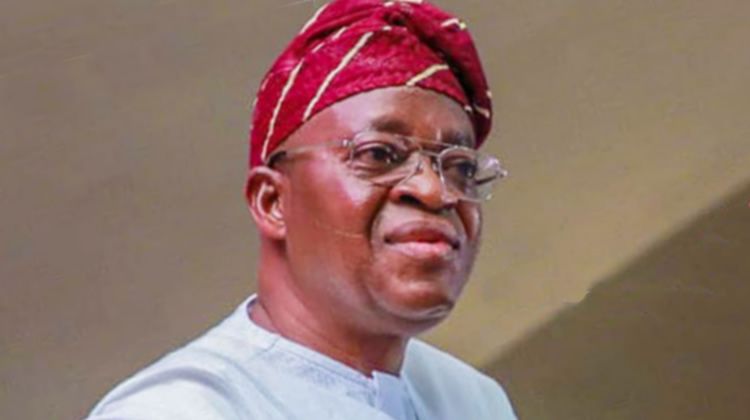
Nigeria’s re-election into Category C of the International Maritime Organisation (IMO) Council signals renewed global trust in the country’s maritime leadership, the Minister of Marine and Blue Economy, Adegboyega Oyetola, has said.
Oyetola made the remark on Monday in London during an appreciation lunch held for IMO delegates, according to a statement issued by his media aide, Dr. Bolaji Akinola. He reaffirmed that Nigeria remains committed to constructive and responsible maritime engagement on the global stage following its diplomatic win.
Over the weekend, Nigeria secured a place in Category C of the IMO Council for the 2026–2027 term, marking its return to the organisation’s decision-making body for the first time since 2011. The election, conducted during the IMO General Assembly in London, is regarded as a major milestone for the country after a 14-year absence from the council.
The IMO, a specialized UN agency, oversees safety, security, and environmental standards for international shipping.
Oyetola, speaking on behalf of President Bola Tinubu, said Nigeria’s successful bid was “a renewed vote of confidence in the country’s role within the international maritime system.” He added that the broad support Nigeria received underscores the international community’s belief in its capacity to contribute meaningfully to the IMO’s mission.
Describing the achievement as both an honour and a significant responsibility, the minister noted that council membership places Nigeria at the heart of global policy-shaping on maritime safety, decarbonisation, pollution prevention, maritime security, and sustainable blue-economy development.
He explained that ongoing reforms in the Marine and Blue Economy sector, driven by President Tinubu’s administration aim to strengthen Nigeria’s maritime landscape by modernising ports, improving flag and port state administration, enhancing hydrographic services, boosting seafarer training, and expanding critical infrastructure.
According to him, promoting a safer and environmentally responsible maritime environment is a collective obligation, and Nigeria’s progress will continue to create positive ripple effects for international shipping and neighbouring coastal countries.
Reaffirming Nigeria’s commitment to multilateral cooperation, Oyetola said the country will support IMO values such as transparency, regulatory consistency, and equitable maritime development. He added that Nigeria will use its council seat to advocate stronger capacity-building for developing countries and expand opportunities for technical cooperation across regions.
“As a council member, Nigeria intends to intensify advocacy for capacity-building for developing nations, expand avenues for technical cooperation, and promote a level playing field that enables all states to confront emerging maritime challenges effectively,” he said.
Oyetola assured delegates that Nigeria’s contributions to the council will be forward-looking and solution-oriented, with a focus on enhancing maritime safety, sustainability, and economic development globally. He stressed that the trust shown in Nigeria has further strengthened its determination to deliver measurable results during the 2026–2027 tenure.
He also commended IMO Secretary-General Arsenio Dominguez and his team for their dedication to maritime advancement, while congratulating all newly elected members across the council’s three categories.
About the Author