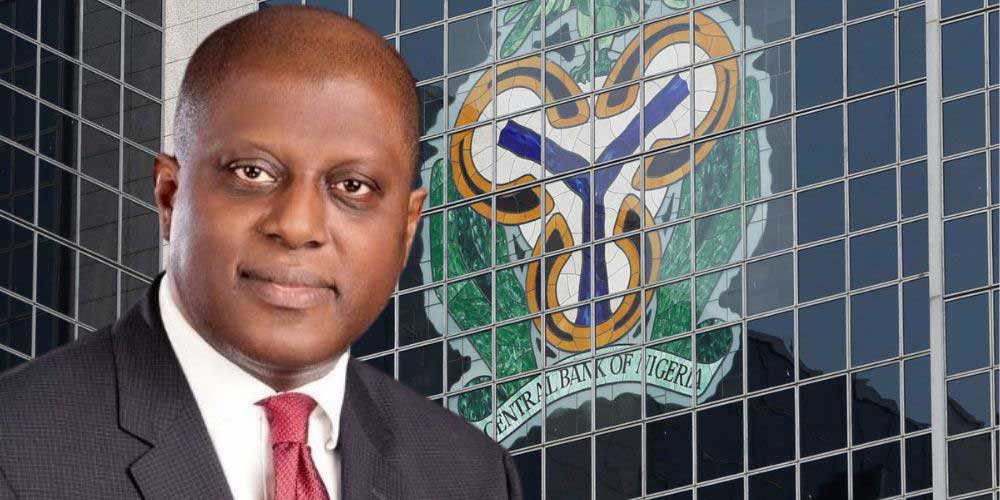
Cardoso cites trade surplus, rising non-oil exports and market confidence as key drivers…
Nigeria’s gross external reserves have climbed to $50.45 billion as of February 16, 2026, the highest level recorded in 13 years, according to the Governor of the Central Bank of Nigeria (CBN), Olayemi Cardoso.
Cardoso disclosed this on Tuesday while briefing journalists at the end of the 304th Monetary Policy Committee (MPC) meeting in Abuja. He said the surge in reserves reflects strengthening macroeconomic fundamentals and growing investor confidence in the country’s policy direction.
“Gross external reserves rose significantly to $50.45 billion as of February 16, 2026, the highest in 13 years. This provides an import cover of 9.68 months for goods and services,” Cardoso stated.
The current reserve position represents the strongest balance since May 2013, when reserves stood at about $48.51 billion. Nigeria ended 2025 with approximately $45.5 billion in reserves, up from $40.8 billion at the beginning of that year, and the upward trajectory has continued into early 2026.
Drivers of growth
Providing further insights, Cardoso attributed the increase to favourable trade developments, a healthy current account surplus and improved performance in non-oil exports.
“The gross reserves are the largest that we have had in the last 13 years. We have seen very positive signals with respect to the way the macro is developing, favourable trade developments, the current account is in healthy surplus, and non-oil exports have also gone up,” he said.
He emphasised that improved market confidence has been central to the gains.
“Underpinning all these, quite frankly, is market confidence. Without market confidence, no matter what you do, you will find significantly sub-optimised outcomes,” Cardoso noted.
According to him, the apex bank has consistently engaged international stakeholders, maintained transparency and adhered to policy commitments in order to build credibility.
“We have been as open and transparent as possible to engender positive market sentiment, and I believe that has paid off,” he added.
Sustainability concerns
Despite the positive outlook, Cardoso cautioned that risks remain, both globally and domestically. He pointed to potential global shocks, oil price volatility and fiscal pressures as factors that could affect reserve sustainability.
“There will always be risks to any outlook. We cannot underestimate potential global shocks that could come our way. Nobody has a crystal ball; we can only project into the future,” he said.
He also warned that pre-election spending and widening fiscal deficits, if not carefully managed, could undermine the stability achieved so far.
“Importantly, pre-election spending, if not properly contained, could destabilise the stability we have accomplished. On our side, we must ensure consistency in policy formulation and avoid policy somersaults,” Cardoso stated.
The CBN has projected that reserves could rise further to about $51 billion by the end of 2026 if current trends are sustained.
Interest rate decision
At the same briefing, Cardoso announced that the MPC reduced the Monetary Policy Rate (MPR) by 50 basis points to 26.50 percent from 27 percent, with all committee members voting unanimously.
“The committee decided to reduce the monetary policy rate by 50 basis points to 26.50 percent,” he said.
The MPC retained the liquidity ratio at 30 percent and maintained the Cash Reserve Ratio at 45 percent for commercial banks and 16 percent for merchant banks, including the 75 percent CRR on non-Treasury Single Account public sector deposits. The standing facilities corridor was adjusted to +50/-450 basis points around the MPR.
Cardoso explained that the decision followed a balanced assessment of risks, noting that headline inflation declined for the eleventh consecutive month in January 2026.
“The decision was premised on a balanced evaluation of risks to the outlook, which suggests that the ongoing disinflation trajectory would continue, supported by the lagged transmission of previous tightening, sustained exchange rate stability, and improved food supply,” he said.
He added that stronger export earnings and rising remittance inflows have reinforced improvements in the external sector and bolstered overall balance of payments stability.
About the Author