Screenshot
AMSG expands leadership structure as ministers push coordinated mineral development across Africa
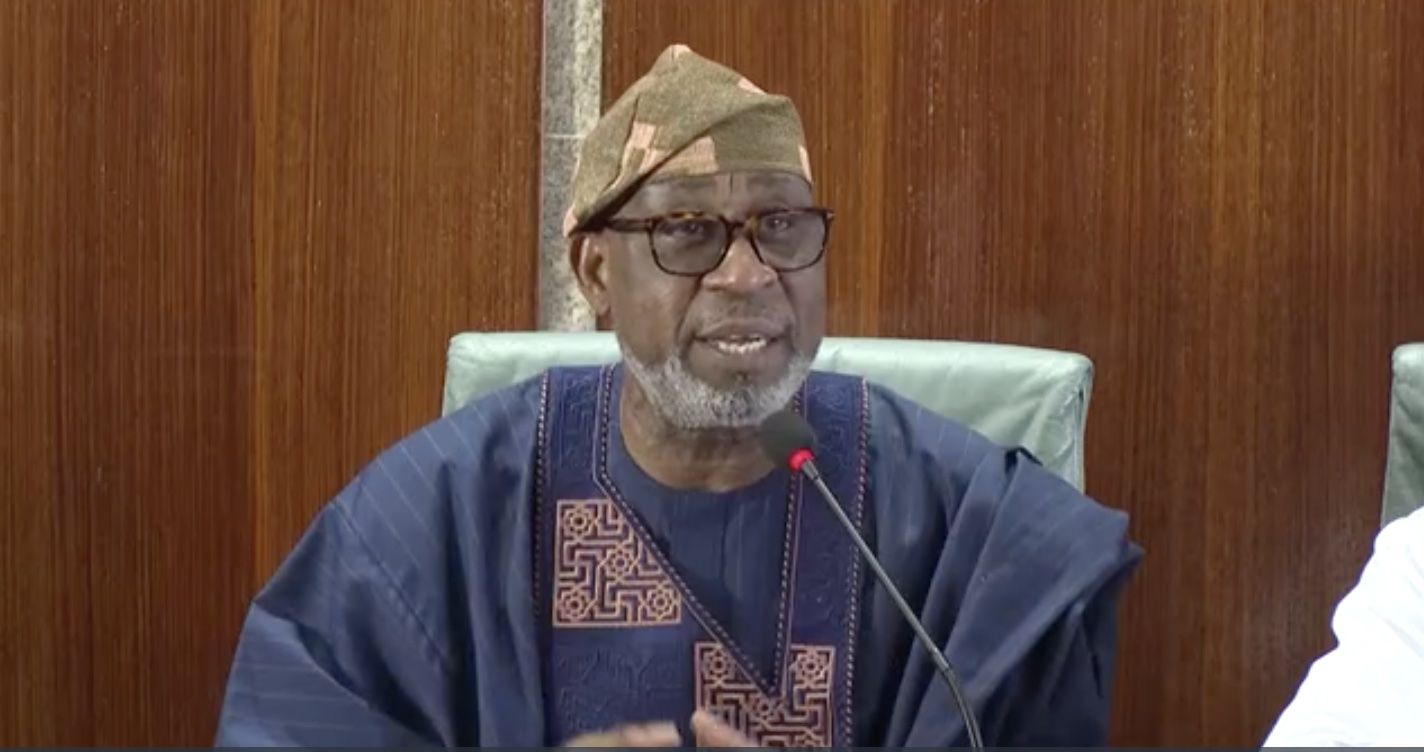
Nigeria’s Minister of Solid Minerals Development, Dele Alake, has been re-elected Chairman of the Africa Minerals Strategy Group (AMSG), a pan-African forum bringing together ministers responsible for minerals and mining across the continent.
Alake was first elected as the pioneer chairman in 2024 during the Future Minerals Forum (FMF). His re-election was confirmed at the 2026 Annual General Meeting (AGM) of the AMSG, held on the sidelines of the FMF in Riyadh, Saudi Arabia.
The confirmation was announced in a statement issued on Sunday by Segun Tomori, Special Assistant on Media to the Minister of Solid Minerals Development.
Expanded Leadership to Strengthen the Group
According to the statement, AMSG members at the AGM approved the creation of new leadership positions aimed at strengthening the group’s institutional capacity and improving regional representation.
The newly created offices include Vice-Chairman, Deputy Secretary-General, and Financial Secretary, with members agreeing that the roles should be equitably distributed across Africa’s sub-regions to ensure balance and inclusivity.
While the positions of Chairman and Vice-Chairman are elective and reserved for serving ministers, other roles will be filled through appointments from member states within designated regions.
Under the new structure:
- Dele Alake (Nigeria) continues as Chairman, representing West Africa
- Louis Watum Kabamba, Minister of Mines of the Democratic Republic of Congo, was elected Vice-Chairman, representing Central Africa
- Uganda retains the position of Secretary-General for East Africa
- Mauritania was appointed Deputy Secretary-General for North Africa
- South Africa was zoned the position of Financial Secretary for Southern Africa
The AGM also approved a two-year tenure for the newly elected executive committee and agreed that zoned positions would remain with member countries, allowing successors to automatically assume office if a serving minister is replaced.
Call for Collaboration and Financial Commitment
In his acceptance remarks, Alake thanked member states for renewing their confidence in his leadership and urged African countries to work collectively to unlock the continent’s mineral-driven economic potential.
He called for agreement on minimum financial contributions by member states and a more refined budgeting framework to improve the group’s operational effectiveness.
“Once member states contribute, accountability will naturally follow,” Alake said.
“This will enhance transparency and strengthen the credibility of the AMSG before the global community.”
Infrastructure Key to Africa’s Mineral Transformation
Earlier at a leadership roundtable titled “Africa: Unlocking Infrastructure Funding for Copper-Belt Production,” Alake stressed that mineral production alone cannot deliver sustainable economic transformation without adequate infrastructure, coordinated policies, and deliberate value-addition strategies.
He cited the Lobito Corridor as an example of how integrated rail, port, energy systems, and policy alignment can unlock economic value.
The minister pointed to other potential corridors across the continent, including:
- the Lagos–Abidjan corridor linking Nigeria, Benin, Togo, Ghana, and Côte d’Ivoire;
- the Walvis Bay corridor serving Southern Africa; and
- the Dar es Salaam and Central corridors connecting East and Central Africa.
“The real issue is not whether Africa has corridors, but whether they are financed, governed, and structured to support industrial growth, regional integration, and long-term stability,” he said.
Focus on Bankable Projects and Policy Alignment
Alake noted that unlocking large-scale capital would require addressing persistent challenges such as:
- weak or unenforceable offtake agreements,
- fragmented and unpredictable cross-border regulations, and
- poor coordination between rail, port, power, and industrial planning.
He said the broader vision of the AMSG is to ensure Africa’s mineral infrastructure is strategically designed, responsibly financed, and efficiently managed in a rapidly changing global environment.
According to the statement, the AGM also resolved to hold quarterly ministerial meetings and approved the creation of standing committees covering legal and institutional affairs, sustainability and responsible mining, and finance, budget, and resource mobilisation.
About the Author