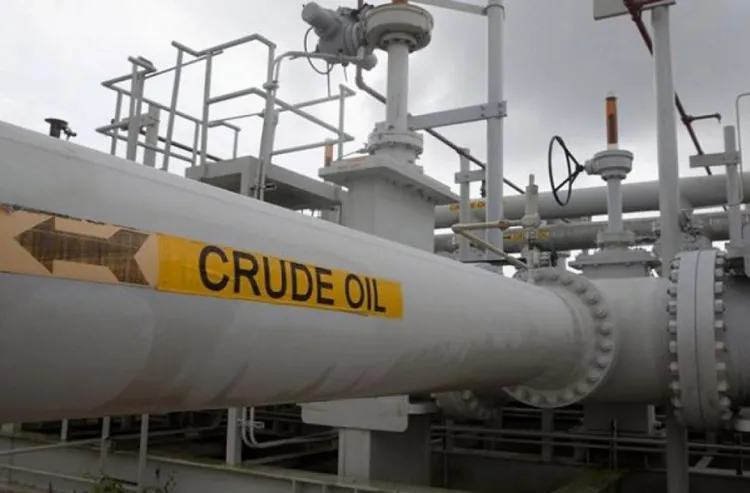
Nigeria’s crude oil production rose to 1.459 million barrels per day in January 2026, according to data submitted directly by the country to the Organisationof the Petroleum Exporting Countries (OPEC) and published in the group’s February 2026 Monthly Oil Market Report (MOMR) released on Wednesday.
The January output represented an increase of 37,000 bpd compared to December 2025 production of 1.422 million bpd. It also marked a rebound from November’s level of 1.420 million bpd, indicating a return to growth at the start of the new year.
Data based on direct communication showed that Nigeria averaged 1.345 million bpd in 2024. Production improved in 2025 to an annual average of 1.453 million bpd, according to OPEC, reflecting gradual recovery efforts in the upstream sector. However, OPEC’s calculation is based on only oil production and not condensate output.
The 37,000 bpd month-on-month increase in January is one of the more notable upward adjustments among OPEC members for the period under review. Nigeria’s performance placed it behind only Saudi Arabia, Iraq, the United Arab Emirates and Kuwait within the organisation based on direct communication figures.
Saudi Arabia, OPEC’s largest producer, raised its output by 16,000 bpd to 10.1 million bpd in January from 10.084 million bpd in December. Iraq also increased production by 16,000 bpd to 4.097 million bpd, while the UAE recorded a 10,000 bpd rise to 3.383 million bpd. Libya posted a 6,000 bpd increase to 1.378 million bpd.
Besides, Algeria trimmed output by 1,000 bpd to 971,000 bpd, while Congo reduced production by 6,000 bpd to 275,000 bpd. Equatorial Guinea and Gabon remained among the smallest producers in the group.
Within Africa, despite struggling crude output, Nigeria continued to rank as the leading oil producer in the cartel, ahead of Libya, Algeria, Congo and Equatorial Guinea based on declared figures.
The improvement in output comes against the backdrop of sustained efforts to stabilise crude production through enhanced pipeline surveillance, clampdown on oil theft and gradual reactivation of previously shut-in wells. Over the past few years, Nigeria’s production had been constrained by vandalism, security challenges in the Niger Delta and underinvestment in upstream infrastructure.
Overall, OPEC oil production declined sharply last month amid losses in Kazakhstan, Venezuela and Iran, the group said. The 22 nations of the alliance produced an average of 42.448 million barrels a day in January, or 439,000 a day less than the previous month, according to a copy of the group’s monthly report.
Meanwhile, the Group Chief Executive Officer of NNPC Ltd, Bayo Ojulari, has identified shared infrastructure, policy alignment, coordinated investment frameworks, cross-border knowledge and technology exchange, integrated gas market development, and sustained regional diplomacy among National Oil Companies (NOCs) as key pillars for securing Africa’s energy future.
Ojulari disclosed this during a fireside chat with Mr. Andy Brown, Deputy Chair of Orsted and President of the Energy Institute, at the 2026 International Energy Week (IEW) in London, on Wednesday, according to a statement from the oil company.
Addressing the imperative of expanding cross-border energy infrastructure, Ojulari said NNPC ongoing regional gas initiatives demonstrate how shared assets can unlock scale, efficiency, and resilience.
He emphasised that accelerated delivery of flagship projects such as the Nigeria–Morocco Gas Pipeline and the expansion of the West African Gas Pipeline is critical to strengthening regional integration and advancing cross-border energy trade.
According to him, the continent must move towards aligned pricing frameworks, transit protocols, local content standards, and joint technical regulations, drawing lessons from reforms such as Nigeria’s Petroleum Industry Act (PIA), to reduce investment friction, safeguard cross-border infrastructure, and ensure equitable access to shared energy assets.
He further called for structured joint investment platforms among African NOCs, stressing that Africa can attract and deploy capital more effectively when acting collectively rather than individually.
On NNPC ambition to raise oil output, expand gas production, and attract investment, Ojulari said delivery will require a pragmatic, Africa-centric strategy—one that positions energy as both a catalyst for economic development and a contributor to global climate goals.
“Our pathway is clear: grow production responsibly, scale gas as the backbone of Africa’s industrialisation, strengthen environmental accountability, and align with global decarbonisation objectives—while ensuring that Africans are not left behind in the energy transition,” he affirmed.
The International Energy Week (IEW) is a premier global energy leadership platform that convenes policymakers, industry executives, investors, regulators, technology innovators, and thought leaders to shape dialogue on the future of energy security, transition pathways, capital formation, and sustainability.
Emmanuel Addeh
About the Author