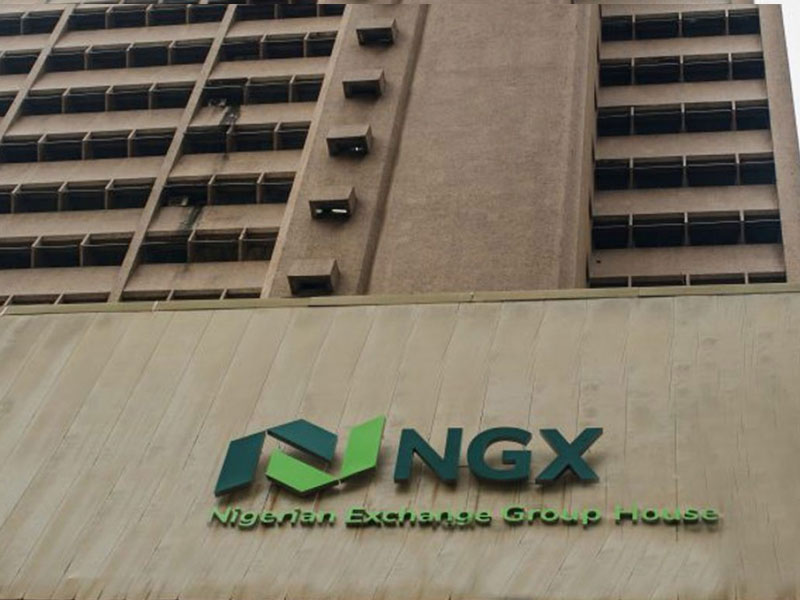
Nigeria’s equities market extended its bullish run in the first two months of 2026, adding N24.4 trillion in value as investors rotated out of low-yield federal government bonds into stocks, buoyed by improving macroeconomic fundamentals and strong corporate earnings.
At the close of trading on Friday, total market capitalisation on the Nigerian Exchange stood at N123.76 trillion, up 24.5 per cent from the N99.38 trillion recorded at the beginning of the year. The market had earlier climbed to a peak of N125 trillion on February 20 before moderating slightly.
Analysis showed that January accounted for N6.8 trillion of the increase, lifting capitalisation to N106.15 trillion, while February delivered a more pronounced gain of N17.61 trillion, pushing the figure to N123.76 trillion.
The sharp February rally followed a policy shift by the National Pension Commission (PenCom), which raised equity investment limits for pension funds, triggering renewed demand for listed equities, particularly fundamentally strong counters.
Within one week of the announcement, the market advanced by N6.79 trillion as fresh liquidity flowed into stocks.
On February 9, PenCom revised investment thresholds for ordinary shares in RSA Funds I, II, III, and VI-Active, expanding pension funds’ capacity to increase equity exposure.
Consequently, the Nigerian Exchange Limited All-Share Index (NGX ASI) closed February at 192,826.78 basis points, representing a year-to-date growth of 23.9 per cent, or 37,213.75 basis points, from its opening level of 155,613.03 basis points.
In January, the index rose 6.3 per cent to 165,370.40 basis points, then surged 16.6 per cent in February to settle at 192,826.78 basis points, underscoring the strength of the rally.
Analysts attributed the market’s resilience to a combination of factors, including elevated liquidity ahead of the 2027 general election, strategic portfolio rebalancing, the ongoing banking-sector recapitalisation drive by the Central Bank of Nigeria (CBN), improved foreign-exchange stability, moderation of inflationary trends, and ongoing fiscal and tax reforms.
Market operators also noted the 2026 performance of the robust reforms implemented in 2025 by the federal government and regulators.
The NGX ASI recorded a remarkable 51.2 per cent annual return in 2025, despite double-digit inflation.
The CBN’s decision to reduce the Monetary Policy Rate (MPR) to 27 per cent was aimed at strengthening the naira and attracting foreign portfolio inflows, further supporting equity market momentum.
That performance marked a decisive departure from the subdued 2015–2019 era, when the market struggled in the aftermath of the 2015 oil price crash and the 2016 recession. The 2020s, however, witnessed a sustained recovery, with equities emerging as a preferred asset class amid structural reforms.
Analysts maintained that the current rally was fundamentally driven.
Vice President of Highcap Securities, David Adnori, described the January–February surge as evidence of improving economic stability and rising foreign investor participation.
He noted that investors were responding positively to the release of full-year 2025 results by listed companies, particularly dividend-paying stocks, which had continued to attract strong demand.
Similarly, the Managing Director/Chief Executive of Globalview Capital Limited, Aruna Kebira, attributed the N24.4 trillion expansion to expectations of impressive 2025 earnings and improving macroeconomic indicators.
According to him, foreign exchange stability and competitive returns on equities relative to fixed-income instruments had continued to support participation, a trend he expected to persist through the first quarter.
“The technical rally began in December 2025,” Kebira said. “Most of the results released so far are impressive, even where some fall slightly below expectations. As more earnings are announced, the positive momentum is likely to be sustained.”
For now, the shift from low-yield bonds to equities, supported by policy adjustments and earnings strength, has reinforced investor confidence, positioning the Nigerian stock market for a potentially strong first quarter in 2026.
Kayode Tokede
About the Author