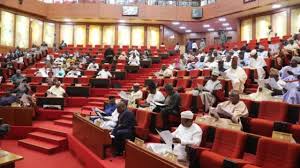
The Nigerian Senate on Wednesday took a decisive step to tackle the nation’s escalating kidnapping crisis by advancing amendments to the 2022 Terrorism (Prevention and Prohibition) Act.
The proposed changes aim to classify kidnapping and related crimes as acts of terrorism, extending the death penalty to all perpetrators, financiers, informants, logistics providers, harbourers, and anyone who knowingly aids or facilitates abductions.
Sponsored by Senate Leader Senator Opeyemi Bamidele, the bill seeks to provide security agencies with broader powers to trace illicit financial flows, disrupt criminal networks, and carry out intelligence-driven counter-terrorism operations.
During plenary presided over by Senate President Godswill Akpabio, lawmakers expressed strong bipartisan support, describing the amendment as a crucial measure to dismantle organised kidnapping operations across the country. The bill has been referred to the Senate Committees on Judiciary, Human Rights and Legal Matters, National Security and Intelligence, and Interior for public hearings, with reports expected within two weeks.
Bamidele emphasised that kidnapping in Nigeria has evolved into “coordinated, commercialised, and militarised violence” akin to terrorism. He warned that ransom payments are impoverishing families, instilling fear in communities, and destabilising entire regions. “This is no longer an ordinary crime. The patterns and ruthlessness now carry all the characteristics of terrorism,” he said, adding that the law targets only violent offenders and their networks while safeguarding innocent citizens’ rights.
Supporting the bill, Senator Adams Oshiomhole, Chairman of the Committee on Interior, criticised the nation’s de-radicalisation programs as ineffective. “Some return to their crimes. Enough is enough. Convicted terrorists must face the death penalty. Even the Bible and Quran affirm that he who kills has no right to live,” he declared.
Senator Orji Uzor Kalu stressed the human toll of kidnappings, highlighting the suffering of young girls, widowed women, and bereaved families. “Anyone involved—sponsors, informants, logistics suppliers—must face the consequences,” he said.
Senator Victor Umeh called for closer scrutiny of financial institutions used to channel ransom payments. “Hundreds of millions are being paid through banks with no accountability. Banks and individuals facilitating ransom must be held liable, with explicit sanctions provided by law,” he stated.
Minority Leader Senator Abba Moro echoed the consensus, describing the amendment as essential to restore internal security. “We can no longer allow the country to be terrorised. Kidnappers must face capital punishment,” he said.
Bamidele further noted that the amendment would empower security agencies to confiscate assets linked to kidnappings, cut off ransom-funding channels, strengthen inter-agency coordination, and ensure faster pre-trial processes. “This is a war on the Nigerian people. Our response must be firm, decisive, and unambiguous,” he affirmed.
About the Author