New CEPA eliminates tariffs on thousands of products, expands access to services and strengthens Nigeria’s global trade reach
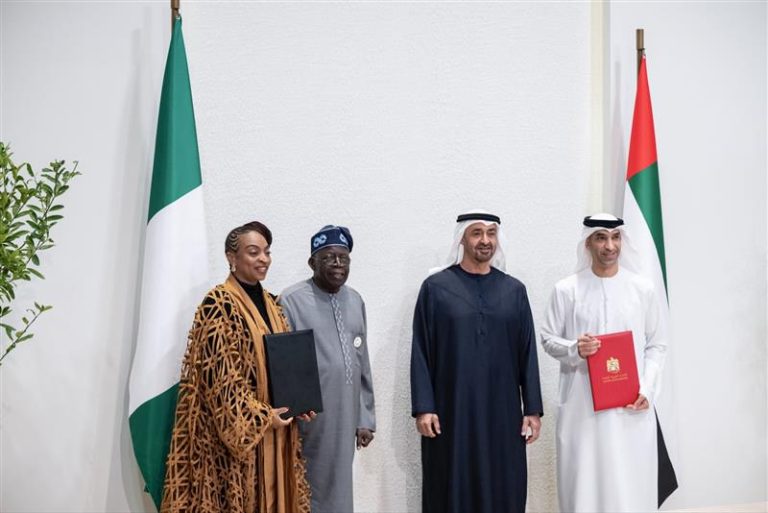
Nigeria and the United Arab Emirates (UAE) have signed a Comprehensive Economic Partnership Agreement (CEPA) aimed at overhauling Nigeria’s trade framework and significantly expanding international market access for Nigerian businesses, professionals and service providers.
The development was announced on January 13, 2026, by the Minister of Industry, Trade and Investment in a post on X (formerly Twitter).
The agreement was executed in the presence of both Heads of State, marking a major milestone in efforts to deepen economic cooperation and trade relations between Nigeria and the UAE.
Under the CEPA, tariffs will be eliminated on thousands of products, while Nigerian businesses will gain access to over 100 service sectors, positioning the UAE as a strategic entry point into the Middle East and global markets.
According to the Minister, the agreement creates a competitive pathway for Nigerian enterprises by eliminating tariffs on more than 7,000 products and opening access to 108 service sectors across both economies.
“The CEPA establishes Nigeria as open for business,” the Minister said, adding that Nigerian companies now enjoy enhanced access not only to the UAE market, but also to wider international trade networks.
The agreement provides for reciprocal tariff elimination on substantially all goods traded between the two countries. It also includes a Rules of Origin framework to ensure that preferential tariff treatment applies only to goods genuinely produced in either Nigeria or the UAE.
Key Tariff Commitments
Under Nigeria’s obligations:
- 3,949 products (63.3 per cent) will enjoy immediate tariff elimination
- 2,294 products (36.7 per cent) will see tariffs removed over five years
- 123 products are excluded
In total, 6,243 Nigerian products will be liberalised under the agreement.
On the UAE side:
- 2,805 products (38.3 per cent) will have tariffs eliminated immediately
- 1,468 products (20.1 per cent) will be liberalised within three years
- 3,042 products (41.6 per cent) will see tariff removal over five years
- 593 products are excluded or prohibited
This brings the UAE’s total number of liberalised products to 7,315.
Alignment with Existing Trade Commitments
The Ministry of Industry, Trade and Investment said the Nigeria-UAE CEPA is fully aligned with Nigeria’s international trade obligations.
For trade in goods, the agreement complies with Article XXIV of the General Agreement on Tariffs and Trade (GATT), while its services provisions exceed Nigeria’s existing commitments and meet the requirements of Article V of the General Agreement on Trade in Services (GATS).
The CEPA also complements Nigeria’s commitments under the African Continental Free Trade Area (AfCFTA), without altering Nigeria’s AfCFTA tariff concessions on goods.
According to the Minister, Nigeria’s AfCFTA commitments in priority service sectors such as business services, communications, financial services, transport and tourism remain more extensive than those under both GATS and the CEPA.
The agreement further operates alongside Nigeria’s obligations under the ECOWAS Common External Tariff and aligns with the ECOWAS Protocol on Trade in Services. Nigeria has formally notified both the ECOWAS and AfCFTA Secretariats of the deal.
Why the Agreement Matters
The CEPA is regarded as one of Nigeria’s most far-reaching bilateral trade agreements in recent years, with the potential to boost exports, attract foreign investment and integrate Nigerian firms into global value chains.
By securing preferential access to the UAE a major global trade, logistics and investment hub the agreement is expected to unlock new opportunities for Nigerian manufacturers, exporters, service providers and professionals.
It also signals Nigeria’s intention to pursue deeper trade liberalisation beyond Africa, while remaining aligned with continental and regional trade frameworks.
Background
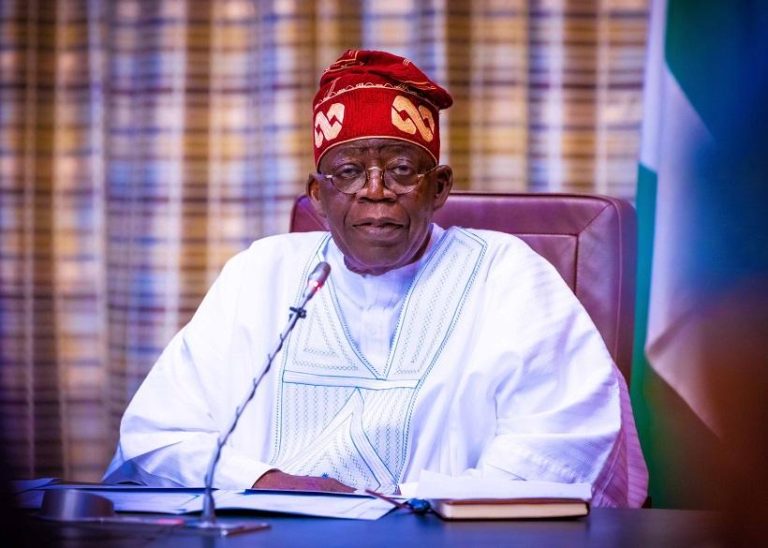
President Bola Tinubu is currently leading a Nigerian delegation in Abu Dhabi for the 2026 Abu Dhabi Sustainability Week (ADSW), which began on Monday.
According to the Presidency, members of the delegation include the Minister of Budget and Planning, Atiku Bagudu; Minister of Foreign Affairs, Ambassador Yusuf Maitama Tuggar; and the Director-General of the National Intelligence Agency, Ambassador Mohammed Mohammed.
The 2026 edition of ADSW, themed “The Nexus of Next, All Systems Go,” brings together global leaders, policymakers, investors and experts to advance discussions on sustainable development, climate action, energy transition and inclusive economic growth.
About the Author