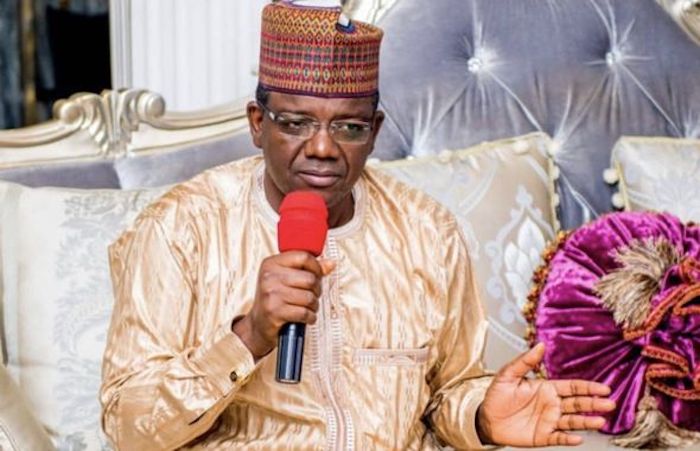
Nigeria is on track to become self-sustaining in defence production within the next five years, the Minister of State for Defence, Bello Matawalle, has said.
Matawalle stated that if the current momentum in strengthening Nigeria’s military-industrial complex is sustained, the country would no longer rely on imported defence and security equipment.
He spoke during the official unveiling of a Light Tactical Armoured Vehicle and civilian armoured platforms manufactured by X-Shield Solutions Company Limited in Jahi District, Abuja.
Represented by the Director-General of Defence Industries Corporation of Nigeria (DICON), Major General Babatunde Ibrahim Alaya, the minister described the unveiling as a major milestone for Nigeria’s defence sector.
“For us at DICON, this is another milestone,” Matawalle said. “One of our joint-venture partners has unveiled an indigenously designed and built light tactical armoured vehicle. This is the way forward.”
He attributed the achievement to the DICON Act 2023, thanking President Bola Tinubu for signing it into law, and expressed optimism that within two to five years Nigeria would no longer import defence equipment.
Matawalle stressed that Nigeria’s future defence capability would be built locally through strategic partnerships that support industrial growth and commercial sustainability.
In a goodwill message, former DICON Director-General, Major General Victor Okwudili Ezugwu (rtd), called for sustained government backing for indigenous defence manufacturing, noting that Nigeria already exports locally produced equipment to some African countries.
Managing Director and CEO of X-Shield, Charles Ibanga, said the project aligns national security needs with indigenous capacity and commercial viability. He cited data showing Nigeria spent over ₦5.06 trillion on imported armoured vehicles in the last quarter of 2023, underscoring the urgency of local production.
Ibanga said the DICON-X-Shield collaboration would deliver advanced armoured solutions to security agencies, critical institutions and businesses, while reducing dependence on imports.
Linus Aleke
About the Author