World Bank document reveals slow disbursement, installation gaps, and growing pushback from local manufacturers over foreign contracts…
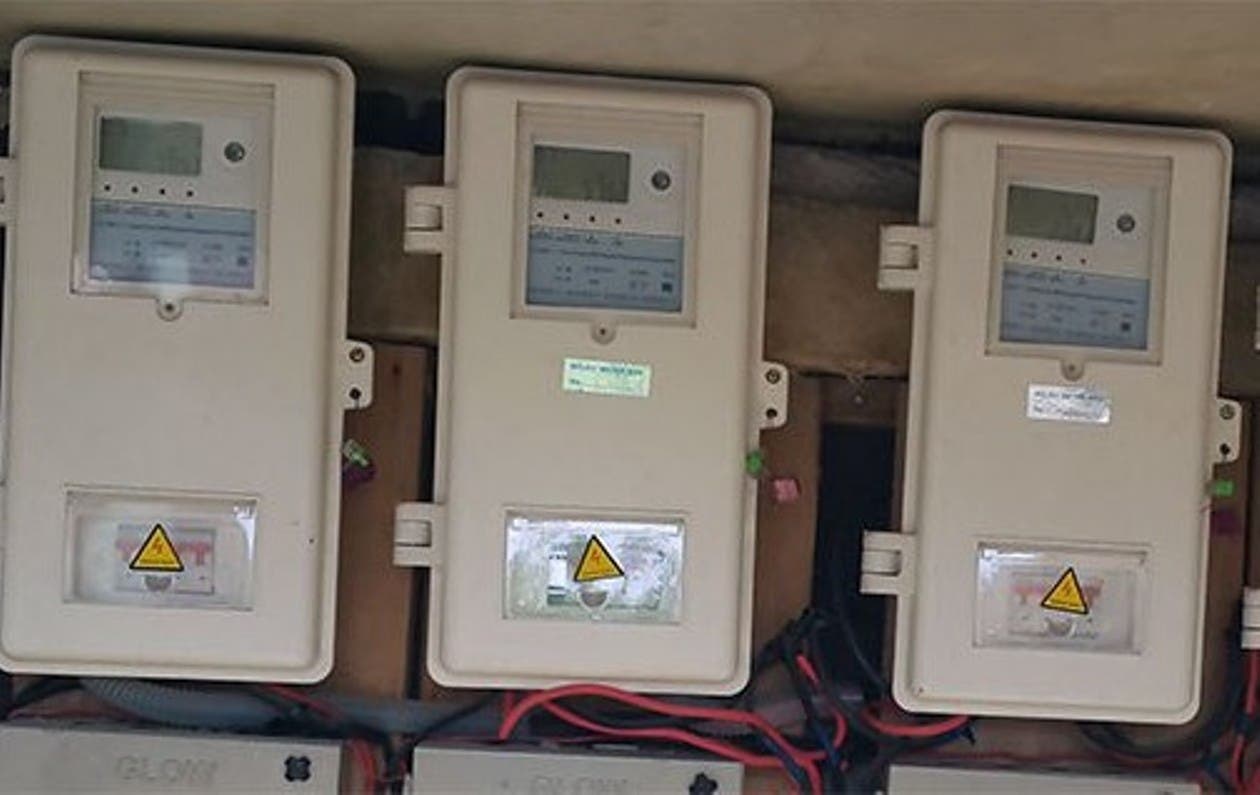
Nigeria has taken delivery of hundreds of thousands of electricity meters manufactured in China under a $500 million power sector reform programme backed by the World Bank, as authorities attempt to tackle a metering deficit affecting an estimated 10 million connections nationwide.
Fresh details from a restructuring paper released by the bank show that a contract covering the first batch of 1.44 million meters was signed in August 2024 and became operational in February 2025 under the Nigeria Distribution Sector Recovery Programme (DISREP).
According to the document, 95 per cent of that batch has already been manufactured, equivalent to 1,368,000 meters, or approximately 1.37 million units with the majority either still in China awaiting shipment or already in transit to Nigeria.
So far, 408,000 meters have arrived in the country, while roughly 130,000 have been installed.
The figures highlight both progress and bottlenecks in the government’s ambitious metering drive.
Slow Disbursement Despite $500m Commitment
DISREP was approved on February 4, 2021, with a total financing envelope of $500 million from the International Bank for Reconstruction and Development. Its core objective is to strengthen the financial and technical performance of Nigeria’s electricity distribution companies.
However, disbursement levels remain relatively low. Of the $500 million commitment, only $69.09 million had been released as of the latest reporting date, leaving more than $404 million undisbursed representing just 13.82 per cent utilisation.
The programme is structured as a hybrid financing model, combining a $250 million Program-for-Results component with a $250 million Investment Project Financing window. The investment arm supports bulk meter procurement, meter data management systems, a Data Aggregation Platform, and technical capacity building all designed to reduce the chronic metering gap.
The bank noted that nearly 60 per cent of electricity users connected to the national grid remain unmetered, a situation that continues to fuel commercial losses, billing disputes, and revenue shortfalls across the distribution segment.
10 Million Connections Without Meters
Nigeria’s metering crisis is deeper than previously estimated. The restructuring paper indicates that more than seven million customers are unmetered, while an additional three million connections are classified as “cascading,” bringing the total shortfall to around 10 million.
The programme is also linked to the Presidential Metering Initiative approved in November 2023, which aims to deploy over five million smart meters by 2027 and reduce Aggregate Technical, Commercial and Collection losses from above 40 per cent to 20 per cent within three years.
Under DISREP alone, the bank disclosed that 3.2 million meters are expected to be deployed.
Beyond the first 1.44 million units, contracts for 217,000 locally procured smart meters are expected to be finalised by January 2026. Procurement for a second batch of 1.5 million smart meters was formally launched on January 12, 2026.
The restructuring also introduces a new performance benchmark measuring the number of Nigerians gaining direct access to electricity through new connections. Using an average household size of 4.1 persons, the bank estimates that 3.2 million installed meters could directly impact about four million people.
Local Manufacturers Push Back
The decision to source large volumes of meters from China has triggered criticism from the Association of Meter Manufacturers of Nigeria (AMMON), which insists domestic manufacturers have the capacity to supply the country’s needs.
The association argues that awarding contracts to foreign firms runs counter to President Bola Tinubu’s Nigeria First Policy, which promotes local production and restricts the importation of goods that can be manufactured within the country.
AMMON President Durosola Omogbengun raised concerns about delivery timelines and cost implications tied to overseas procurement. The group is urging authorities to prioritise National Competitive Bidding under both DISREP and the Presidential Metering Initiative to deepen local content participation and stimulate job creation.
Installation Pace Raises Concern
Despite the scale of procurement, installation numbers remain modest.
At a recent briefing in Abuja, Director-General of the Bureau of Public Enterprises, Ayodeji Gbeleyi, said DISREP is designed to roll out 3.2 million smart meters over four years through a blend of international and local competitive bidding.
Phase one involves the importation of 1,437,500 meters including both single- and three-phase units alongside 217,000 meters from domestic suppliers. Phase two is expected to add another 1.55 million units.
Yet officials acknowledge that actual deployment has lagged behind expectations. Estimates suggest that between 150,000 and 200,000 meters have been installed so far.
The Chief Technical Adviser to the Minister of Power, Adedayo Olowoniyi, described the current installation figures as “not an encouraging statistic,” stressing that fixing the distribution segment widely considered the weakest link in Nigeria’s electricity value chain is critical to broader power sector reform.
A Race Against Time
With millions of households still billed on estimated consumption and distribution companies struggling with revenue leakages, the success of the $500 million recovery programme may ultimately hinge on how quickly meters move from factories and ports into homes and businesses.
For now, Nigeria’s metering reform stands at a crossroads backed by international financing, challenged by domestic capacity debates, and under mounting public pressure to deliver measurable results.
About the Author