Revenue chief says export stagnation, weak industrial base and low economic complexity threaten long-term growth…
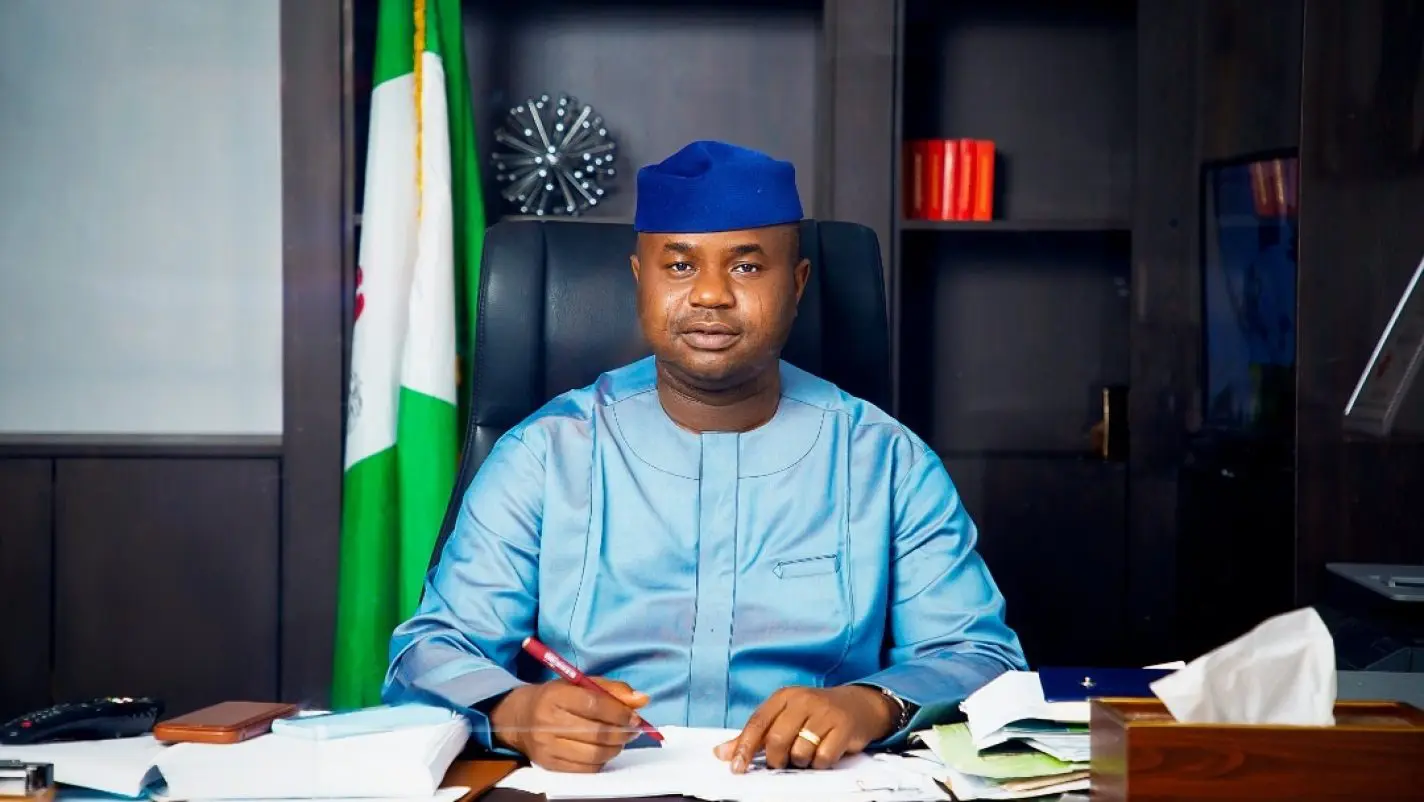
Nigeria must urgently move away from an economy built on raw material exports and embrace innovation, ideas and the production of complex goods to achieve sustainable growth and lasting prosperity, Chairman of the Nigeria Revenue Service (NRS), Zacch Adedeji, has said.
Adedeji made this call on Thursday while delivering the maiden Distinguished Personality Lecture of the Faculty of Administration at Obafemi Awolowo University, Ile-Ife, Osun State. His lecture, titled From Potential to Prosperity: Export-led Economy, warned that Nigeria’s current economic structure leaves the country disadvantaged in a global system that increasingly rewards knowledge, technology and productive sophistication rather than natural resource wealth.
According to him, Nigeria must undertake a fundamental shift from dependence on raw material exports toward a system driven by innovation and the production of more sophisticated goods.
“A paradigm shift is required for Nigeria to move from dependence on raw material exports to one that embraces ideas, innovation and the production of complex products as a pathway to sustainable economic growth and national prosperity,” he said.
In a statement issued by his Special Adviser on Media, Dare Adekanmbi, Adedeji lamented that despite its size and resource base, Nigeria added only six new products to its export basket between 2008 and 2023, highlighting decades of weak diversification. He noted that Nigeria’s export performance showed little progress between 1998 and 2023, even as comparable economies implemented deliberate strategies to upgrade their productive capacity.
“We are not just producing too little; we are producing too little of the wrong things. Growth must be rethought through the lens of economic complexity. It is not about producing more of the same commodities, but about learning how to make new, more sophisticated products,” he said.
Adedeji described Nigeria’s economy as deeply paradoxical. While the oil and gas sector operates with advanced technology, much of the broader economy remains dominated by low-productivity informal activities. He said the country lacks the vibrant, labour-absorbing industrial base needed to bridge the gap, limiting job creation and reducing value addition.
Citing data from the Harvard Atlas of Economic Complexity, Adedeji said Nigeria currently has very limited opportunities to diversify exports using its existing capabilities. “Because of our current position, the Harvard Atlas concluded that we are positioned to take advantage of very few opportunities to diversify using what we already know,” he said.
He urged Nigeria to study the economic journeys of Vietnam, Indonesia, Bangladesh, Brazil and South Africa over the past 25 years, noting that Vietnam’s transformation was driven by a deliberate strategy to build economic complexity through deep integration into global value chains.
According to him, Vietnam positioned itself as a global electronics assembly hub, importing high-tech components and exporting finished products, thereby acquiring technology, management expertise and industrial know-how.
“There are many ways to underperform, but the path to success is remarkably consistent. Avoiding the resource curse is necessary, but not sufficient. A proactive strategy to build productive capabilities is essential,” he said.
In contrast, he noted that countries such as Brazil and South Africa experienced industrial decline due to over-dependence on natural resources and failure to continuously upgrade productive capacity. He warned that Nigeria risks long-term regression if it continues to rely heavily on raw material exports.
“Nigeria remains largely a supplier of raw materials to global value chains rather than an active participant within them. Productive capabilities are not permanent, and countries can lose their industrial edge if they fail to evolve,” he said.
Adedeji stressed that Nigeria must reposition itself from being a commodity exporter to a producer of higher-value goods and services integrated into global production networks.
“Relying solely on natural endowments is not just a path to stagnation; it is a path to regression. The global economy increasingly rewards knowledge and complexity, not just what you can extract from the ground. If Nigeria is to move from potential to prosperity, we must become a source of ideas, innovation and complex products,” he said.
He added that President Bola Tinubu had begun what he described as the difficult process of rebuilding the economy to promote innovation, productivity and resilience. While acknowledging the long road ahead, he expressed optimism that with the right strategy and commitment, Nigeria can achieve sustainable prosperity.
Nigeria’s economy has historically depended on crude oil exports, which provide the majority of foreign exchange earnings and government revenue, leaving the country exposed to global price volatility and limiting industrial development.
Despite multiple industrialisation and export diversification initiatives over the years, including export expansion grants and local content policies, progress has remained slow, with manufacturing contributing only a modest share to GDP and exports.
Meanwhile, countries such as Vietnam and Bangladesh successfully transformed their economies by integrating into global manufacturing networks and investing in skills, infrastructure and institutional capacity.
With declining oil revenues, rising unemployment and mounting fiscal pressures, economists and policymakers increasingly argue that Nigeria must transition from commodity dependence toward higher-value manufacturing and knowledge-based industries to achieve inclusive and sustainable growth.
About the Author