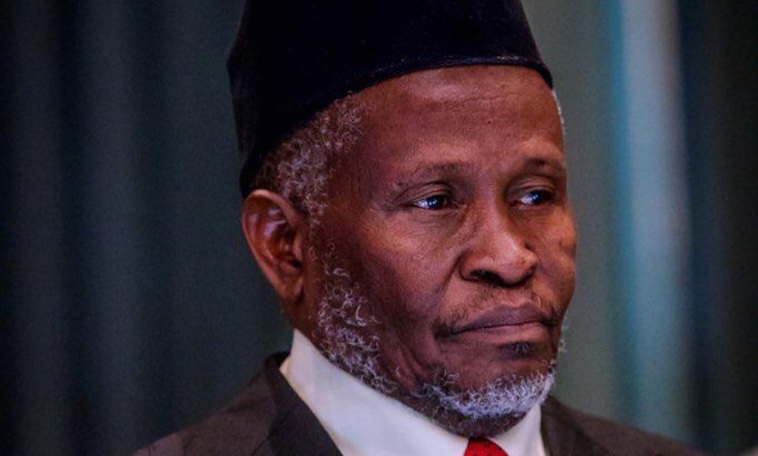
Ibrahim Tanko Muhammad, former Chief Justice of Nigeria (CJN), has died at the age of 71.
Muhammad, who hailed from the Doguwa area of Bauchi State, passed away on Tuesday morning in Saudi Arabia after a brief illness.
His death was confirmed by the Governor of Bauchi State, Bala Mohammed, in a condolence message issued by Mukhtar Gidado, Special Adviser on Media and Publicity.
Describing the late jurist as a dedicated patriot, the governor said Muhammad devoted his life to the service of justice and the advancement of the nation.
“Justice Ibrahim Tanko Muhammad exemplified the qualities of a patriotic Nigerian who devoted his life to the service of justice and the advancement of our great nation,” the statement read. “His passing is a significant loss not only to Bauchi State, but to the Nigerian judiciary and the rule of law.”
Muhammad served as Nigeria’s 17th Chief Justice, holding office as the substantive CJN from July 24, 2019, to June 27, 2022. He was first appointed Acting Chief Justice on January 25, 2019, under controversial circumstances following the suspension of his predecessor, Justice Walter Onnoghen.
In January 2019, then President Muhammadu Buhari suspended Onnoghen over allegations of non-declaration of assets. Onnoghen subsequently resigned and was convicted by the Code of Conduct Tribunal (CCT), nearly two years before his scheduled retirement in December 2020.
In June 2022, Muhammad resigned as Chief Justice, citing health challenges. His resignation came days after 14 justices of the Supreme Court accused him of abandoning his leadership responsibilities.
The justices also alleged that he undertook foreign trips with members of his family while denying them approval for international training programmes.
In a condolence message signed by Festus Akande, Director of Information and Public Relations, the Supreme Court paid tribute to Muhammad’s service, describing his tenure as CJN as one marked by steadfast commitment to the rule of law.
“Justice Tanko’s tenure as Chief Justice of Nigeria from 2019 to 2022 was characterised by an unwavering commitment to the rule of law, judicial independence, and the fair administration of justice,” the statement said.
“His keen intellect and compassionate demeanour earned him the respect of judges, lawyers, and citizens alike, and his contributions have left an indelible mark on Nigeria’s legal landscape.”
The apex court highlighted his legacy, including efforts to strengthen the appellate system, improve procedural efficiency, promote the professional development of judges and judicial staff, and foster transparency and accountability within the judiciary.
“We extend our heartfelt condolences to his family, the judiciary, and the Nigerian public,” the statement added. “We pray that his legacy of integrity, humility, and dedication continues to inspire all who serve in Nigeria’s justice system. May his soul rest in peace.”
About the Author