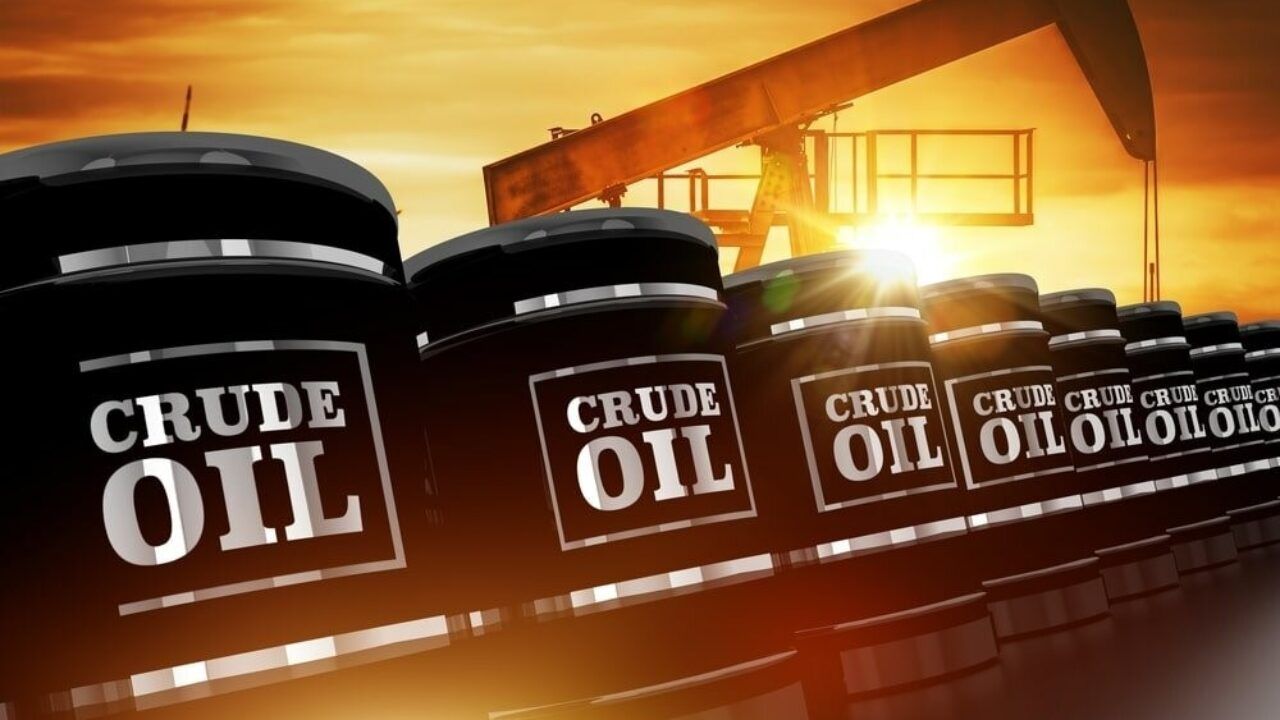
Nigeria’s crude oil production fell short by 93.74 million barrels between January and August 2025, raising concerns about the country’s ability to fund its ₦28.7 trillion national budget.
Data obtained from the Nigerian Upstream Petroleum Regulatory Commission (NUPRC) shows that total crude oil and condensate output for the eight-month period stood at 406.84 million barrels, representing an 18.27% deficit against the 500.58 million barrels projected for the period.
The shortfall translates to a loss of about $6.85 billion in oil revenue, based on the average price of $73.06 per barrel for Bonny Light crude. Using the government’s 2025 benchmark of $75 per barrel, the loss rises to $7.03 billion.
Nigeria’s 2025 budget was predicated on a daily production target of 2.06 million barrels per day (bpd), but actual output averaged 1.673 million bpd, a deficit of roughly 390,000 barrels daily.
If the trend persists through the last four months of the year, the country could lose another 47.6 million barrels, amounting to an estimated $3.56 billion in potential revenue.
Quarterly Breakdown
The NUPRC data shows that:
- Q1 2025: 35.01 million barrels shortfall valued at $2.63 billion.
- Q2 2025: 34.67 million barrels shortfall worth $2.59 billion.
- July 2025: 10.78 million barrels lost, valued at $808.5 million.
- August 2025: 13.28 million barrels lost, valued at $996 million.
In its August report to the Federation Account Allocation Committee (FAAC), NUPRC disclosed a revenue shortfall of ₦459.6 billion, remitting ₦745 billion against a target of ₦1.2 trillion. July’s remittance was ₦723 billion, meaning a combined two-month shortfall of ₦941 billion.
The Commission blamed the underperformance largely on poor royalty inflows from oil and gas, revealing that only ₦682.28 billion was realised out of the ₦1.144 trillion projected for August.
Between January and August 2025, total remittances from the oil sector stood at ₦5.475 trillion, far below the expected ₦8.43 trillion.
Why Nigeria Keeps Missing Oil Targets
Industry experts attribute the persistent shortfall to oil theft, pipeline vandalism, declining investment, and unrealistic production targets.
Energy analyst Engr. Joe Nwakwue, Partner at Zera Advisory, said the government’s expectations were unlikely to be met:
“It’s certainly a stretch. Most unlikely, we would achieve both volume and price targets going by current trends,” he said, while noting some improvement in non-oil revenue.
Similarly, Henry Adigun, CEO of AHA Consultancies, criticised the government for basing budgets on “unrealistic projections.”
“Every year, they overestimate the barrels we produce and end up borrowing to fill the gap,” Adigun said.
Government Optimism
Despite industry skepticism, Minister of State for Petroleum Resources (Oil), Senator Heineken Lokpobiri, maintained that two million barrels per day was achievable before year-end.
He disclosed that the government was tackling financing challenges in the upstream sector through the creation of a $5 billion African Energy Bank, to be headquartered in Nigeria.
“Nigeria has met all legal and financial obligations as host country. Once operational, the bank will help mobilise local financing for oil investments,” Lokpobiri said.
Also, the Chief Executive of NUPRC, Gbenga Komolafe, said the national production target was 2.5 million barrels per day by 2027, citing ongoing initiatives such as Project 1Mbpd, which aims to steadily boost output.
Outlook
Nigeria’s crude oil sector remains pivotal to its fiscal stability, accounting for over 70% of export revenue. However, persistent underproduction and governance issues threaten to derail the country’s 2025 fiscal projections and broader economic recovery efforts.
About the Author