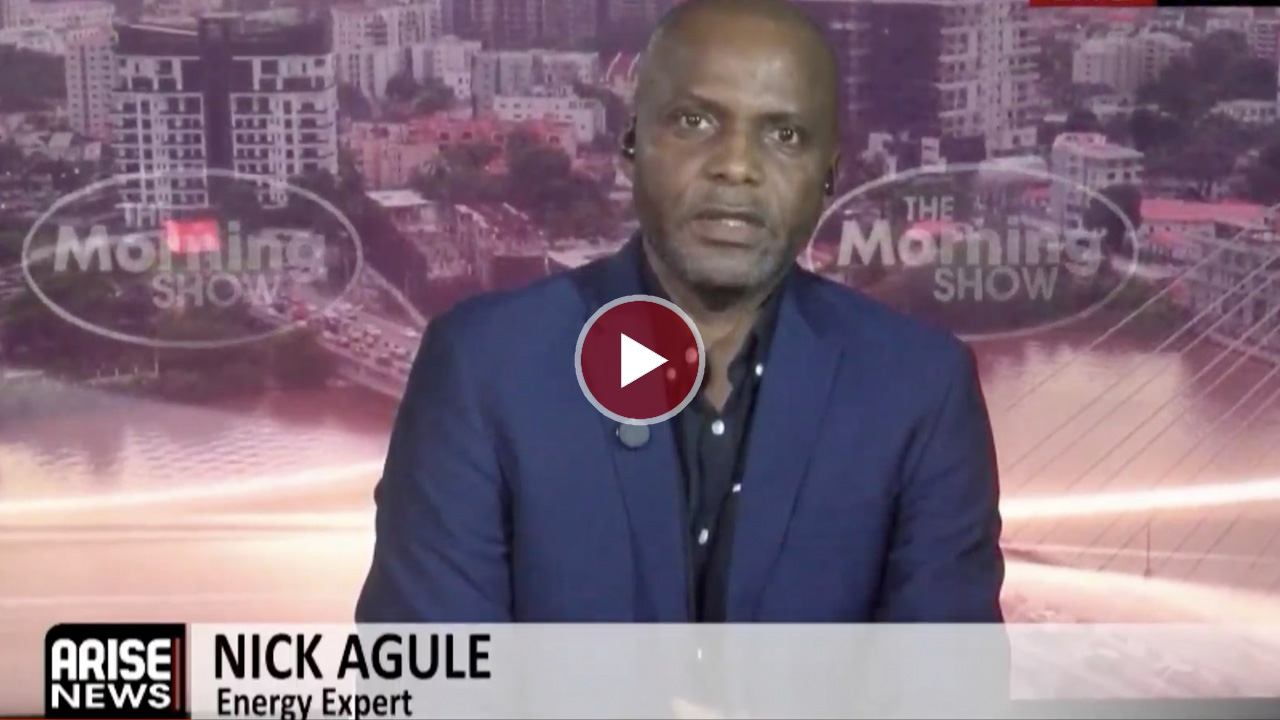

Energy expert, Nick Agule, has described President Bola Tinubu’s Executive Order 9 on the direct remittance of oil revenues to the Federation Account as “perhaps the most significant reform of his government,” insisting that it restores constitutional order and ends what he called the unlawful diversion of federation revenues.
Agule, who spoke during an interview with ARISE News on Friday, he said the President acted rightly by insisting that all oil revenues due to the federation must first be paid into the Federation Account in line with the Constitution.
“The president in deciding to issue Executive Order 9 is standing by the constitution,” he said.
Clarifying key terms, Agule explained: “So when we say the federation, we’re referring to the three tiers of government — that’s the federal government, state governments, and local governments. The federation is different from the federal government.”
Citing Section 162(1) of the 1999 Constitution (as amended), he said: “Section 162, subsection 1 of the Nigerian Constitution says all revenues — and the constitution is very clear — it says all revenues accruing to the federation shall be remitted to the federation account. That’s what the constitution says.”
He argued that certain provisions of the Petroleum Industry Act (PIA) 2021 contravened this constitutional requirement.
“Basically what the PIA did was to kidnap federation revenues on their way to the federation account and put them in some buckets. And those buckets were out of the purview, out of the oversight of the three tiers of government,” he said.
According to him, the Act enabled the deduction of 30 per cent as a management fee on production sharing contracts’ profit oil, another 30 per cent for the Frontier Exploration Fund, as well as 10 per cent on rents from petroleum prospecting and mining licences — all before remittance to the Federation Account.
Questioning the management fee in particular, Agule said: “You are not the one producing the oil. It is an international oil company like Shell producing the oil in Bonga under a production sharing contract.
After they have suffered and produced the oil, and now they say, government, this is your share of profit oil. You only carry the oil to go and sell in the market. How can that be 30 per cent for you as management fee? What are you precisely managing?”
He maintained that profit oil lifted on behalf of the federation must first go into the Federation Account before any appropriation.
“That profit oil must come to the federation account first. When it comes to the federation account, then we can appropriate it. That is the right thing to do,” he stated.
On the fate of frontier exploration funding, Agule said the executive order does not foreclose continued investment.
“The president can go ahead with the money in the federation account, negotiate with the other subnational governments — that is the federal government negotiating with the other subnational governments — to say, what do we do with frontier exploration? And if they all come to an agreement that let’s continue funding it, then they can continue funding it. It might not be 30 per cent; it could be any percentage — 5 per cent, 10 per cent — whatever the three tiers of government agree.”
Turning to concerns about the impact on the Nigerian National Petroleum Company Limited (NNPCL), Agule said the company must now operate as a true commercial entity.
“To me, as far as I can see it, this Executive Order 9 that the president has signed is perhaps the most significant reform of his government. Because we’re talking about the NNPCL. The NNPCL is now a commercial entity,” he said.
“The implication of that is that the NNPCL is just like Chevron, Mobil, Shell, Total. It’s an oil company that is operating like any other oil company that we know.”
He added that unlike other commercial entities such as NLNG, NNPCL should not rely on federation revenues to fund its operations.
“The NNPCL by this executive order have now been given the marching orders: go and be that commercial entity that the PIA says you are. Stop breastfeeding from your mother’s milk. You are now an adult. Go and do it for yourself.”
Agule argued that if the company’s revenues fall short of costs, it must either increase revenue, reduce costs, or both.
“If their revenues are not meeting up with their costs, there are only two things that Chevron or Shell will do. They will either try and increase their revenue, or they will reduce their cost, or they will do both. And the NNPCL has to do that.”
He criticised the continued payment of refinery staff despite years of inactivity.
“As we are speaking today, this NNPCL has been paying salaries to refinery workers for up to 20 years — no barrel of crude oil refined. And they are paying those salaries from this 30 per cent management fee they are taking free of charge from the federation account.”
“So now that the money is not there, they will go and either start the refineries to start working and making money, or they will now have to start shutting down and telling workers that, sorry, we cannot fund you again. That is what a commercial entity will do.”
While agreeing that returning funds to the Federation Account is only the first step, Agule stressed the need for accountability in public spending.
“You are very correct that this is part one of the show, which is get the money into the purse. There must be part two of the show, which is what do we do with that money?”
“The reforms of government must not stop at bringing petroleum profits into the purse, bringing tax revenues into the purse, and the removal of subsidies and all of that. The part two must accompany it, which is how do we ensure that there is accountability in this purse? And that is work for the president to do.”
He urged strict adherence to the rule of law.
“Bring everybody in Nigeria before the law. Nigeria will become so strict. Nigeria will become a developed country in no time if we run this country with the rule of law. And that’s all that the president needs to do.”
Agule further called on President Tinubu to review the status of joint venture assets, alleging they were improperly consolidated into NNPCL’s books.
“The president has done this job halfway. The other job that the president needs to do is the joint venture assets,” he said.
“The CFO of the NNPCL, sitting before a National Assembly panel, himself conceded that before the PIA, the joint venture assets were assets of the federation. He now says, after the PIA, the joint venture assets are now assets of the NNPCL. And there is nothing like that in the PIA at all.”
“So on what basis has the NNPCL taken joint venture assets into NNPCL, consolidating it with their books, using it to pay cost of their staff who are doing nothing?”
He added: “President Tinubu, please go and also rescue the joint venture assets that the NNPCL hijacked.”
Agule’s comments come amid growing debate over the implications of the executive order for revenue transparency, subnational allocations and the future commercial direction of the state oil company.
Boluwatife Enome
About the Author