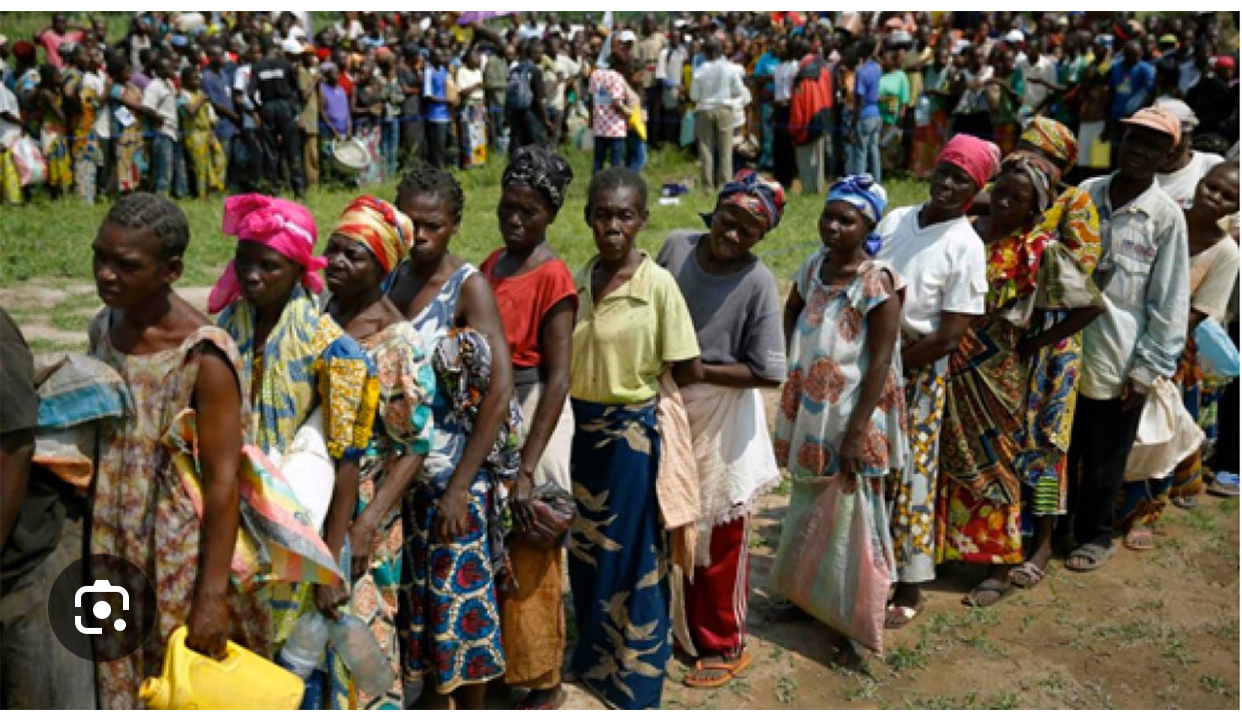
A new report by the National Human Rights Commission (NHRC) has revealed that 10,884 persons were displaced across nine states in Nigeria between January and February this year, underscoring what it describes as a worsening and persistent protection crisis.
The Executive Secretary of the Commission, Tony Ojukwu, raised the concern during a dashboard presentation on the protection of Internally Displaced Persons (IDPs) held at the NHRC headquarters in Abuja. He was represented at the event by the Director of Legal Services, Rabi Anwar.
According to the Commission, the displacement figures were driven largely by ongoing insecurity across the monitored states, which include Kano, Akwa Ibom, Yobe, Borno, Taraba, Katsina, Adamawa, Benue, and Cross River.
Officials also noted a reduction in the number of monitored states, explaining that due to funding constraints, coverage had been reduced from 11 to nine states, leading to the exclusion of Sokoto and Zamfara.
Data presented by the NHRC showed that Benue and Borno recorded the highest numbers of internally displaced persons within the period, with 4,178 and 3,411 cases respectively.
Ojukwu attributed the high figures in Benue to repeated attacks on farming communities, which have resulted in long-term displacement and loss of livelihoods. In Borno, he linked the situation to recurring insurgent attacks that continue to disrupt rural life and restrict access to farmlands.
He noted that similar patterns of displacement have been documented over the years, with previous assessments by the United Nations High Commissioner for Refugees (UNHCR) identifying insurgency, banditry, and farmer-herder clashes as major drivers of forced movement in Nigeria. The UN agency had previously estimated that about three million Nigerians were living as internally displaced persons, particularly in the North-East and Middle Belt regions.
The NHRC also disclosed figures for other categories of displaced populations, including 527 asylum seekers, 1,159 refugees, and 2,213 returnees across the nine states.
The report further revealed that children accounted for a significant proportion of displaced persons, with 6,003 children representing about 36 per cent of the total IDP population.
State-level breakdown showed that Benue had the highest number of displaced children with 2,355 cases, followed by Borno with 1,648, Yobe with 556, Taraba with 538, Kano with 389, Adamawa with 280, Katsina with 185, and Cross River with 52.
Among other vulnerable groups, the Commission recorded 1,129 children as refugees, 375 asylum seekers, and 2,094 returnees, who made up the majority of returnee populations.
The NHRC also highlighted several human rights violations affecting displaced persons, including restrictions on freedom of movement, breakdown of social cohesion, lack of access to asylum processes, gender-based violence, and documentation challenges.
Ojukwu described the denial of access to education for displaced children as particularly alarming, calling it “a catastrophic situation”, with long-term implications for the future of affected communities.
The report indicated that 59 IDPs experienced gender-based violence in Borno, 82 faced documentation challenges in Katsina, 87 reported security-related issues, while 120 child protection cases were recorded in Adamawa.
On its interventions, the Commission said it handled 374 cases directly and referred 5,061 others to relevant agencies for further action.
It also conducted 69 monitoring visits to detention centres across police and military facilities, reaching 362 detainees, in addition to 502 community outreach sessions that engaged 9,185 individuals.
Ojukwu expressed concern over prolonged detention periods, inadequate feeding, and poor sanitation in some detention centres, particularly in Taraba and Benue, while calling for stronger partnerships to support ongoing protection efforts.
He also welcomed the recent presidential assent to the African Union Convention on the Protection and Assistance of Internally Displaced Persons, expressing hope that it would strengthen national responses to displacement and humanitarian challenges.