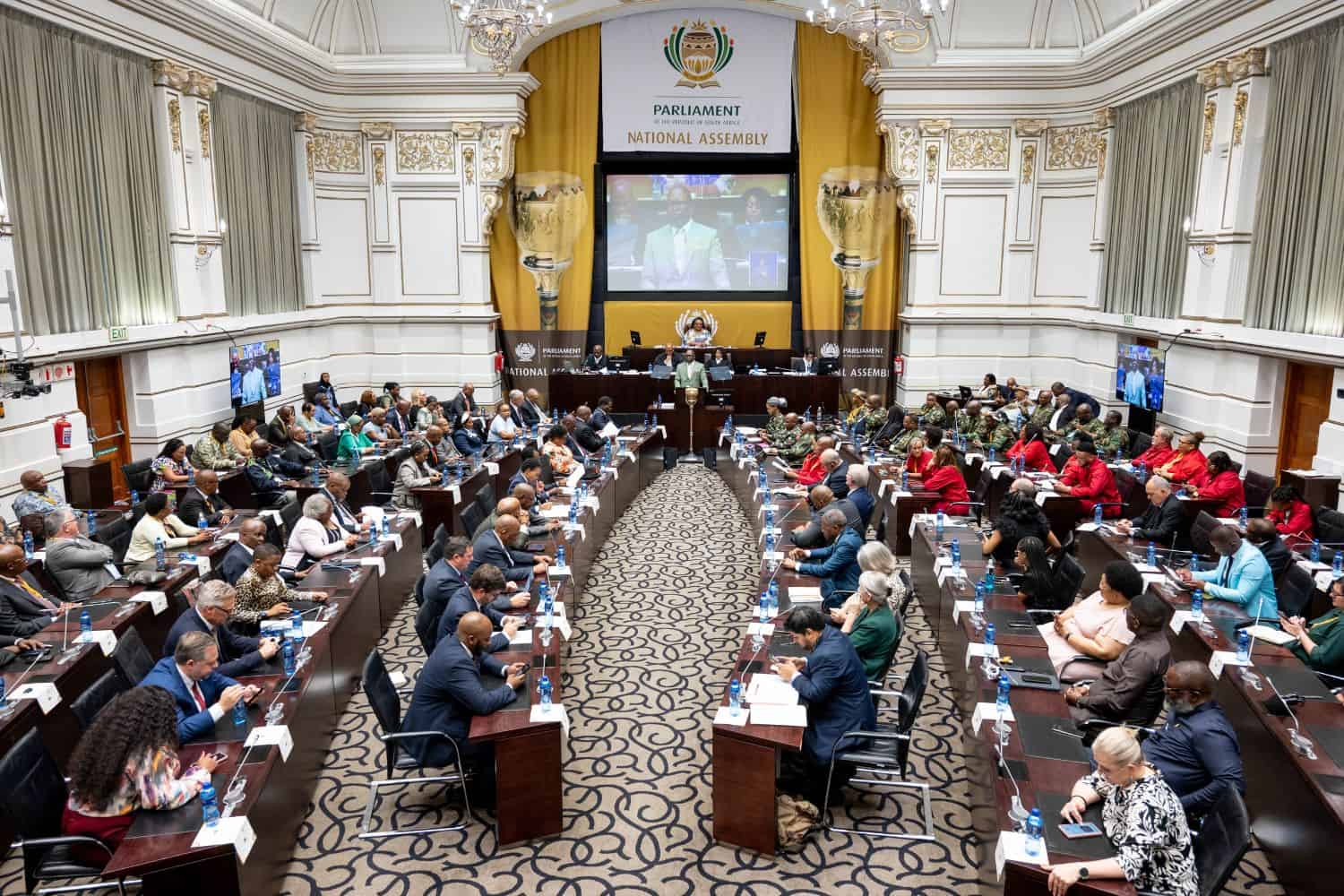
2025 has already proven to be a pivotal year in South Africa’s legislative landscape, with several political parties tabling new laws in Parliament.
Private Member’s Bills allow individual Members of Parliament (MPs), rather than the executive, to introduce draft legislation.
Once introduced, a bill must pass through both the National Assembly and the National Council of Provinces (NCOP), be published for public comment, debated and possibly amended in committee, and finally signed into law by the president before becoming enforceable.
The most prominent proposal this year was the DA’s anti-Black Economic Empowerment (BEE) bill.
DA targets BEE with major procurement overhaul
.Broad-based black economic empowerment (B-BBEE), long a cornerstone of South Africa’s transformation agenda, came under intense international and local scrutiny in 2025.
The debate intensified after United States (US) President Donald Trump and billionaire entrepreneur Elon Musk publicly criticised BEE as discriminatory.
In October 2025, the DA introduced the Economic Inclusion for All Bill, aimed at replacing BEE with a new, poverty-based empowerment model.
The party argues that economic disadvantage, rather than race, should be the primary basis for redress.
ALSO READ: ANC: B-BBEE hasn’t only benefited a few politically connected individuals
If passed, the bill would amend the Public Procurement Amendment Act of 2024 by repealing all race-based preferential procurement provisions.
The bill also proposes the phased shutdown of the BEE Commission within 12 months and the removal of BEE references across existing legislation.
In addition, companies found guilty of fraud, corruption, or misrepresentation would be disqualified from bidding for government contracts.
The proposal has sparked fierce political debate, with critics warning it could undermine decades of transformation policy.
EFF moves to clamp down on alcohol advertising
The EFF tabled the Liquor Amendment Bill, a move that would introduce some of the strictest controls yet on alcohol promotion in South Africa.
The bill seeks to amend the Liquor Act of 2003 by banning the advertising, promotion and product placement of alcohol across all forms of media.
It also prohibits the use of a manufacturer’s name, brand or logo to promote liquor consumption and bars alcohol companies from sponsoring or financially supporting organised events.
READ MORE: Push to ban alcohol advertising amounts to ‘self-sabotage’, says traders council
The EFF argued the legislation is necessary to protect public health and social stability.
The party also contended that alcohol advertising masks the devastating social impact of overconsumption, including family breakdowns, gender-based violence, road fatalities and pressure on the public health system.
“The true cost of alcohol abuse is carried by society as a whole, while corporations escape accountability through slick advertising and irresponsible promotion,” the EFF said when announcing the bill in September 2025.
Student Debt Relief Bill targets higher education crisis
In March 2025, the EFF also introduced the Student Debt Relief Bill to address the growing financial crisis facing students in higher education.
The proposed law would establish a dedicated fund to help qualifying students settle their outstanding debts with universities and colleges.
Eligible students would be able to apply for the fund to pay off their fees, allowing them to graduate or receive their qualifications.
READ MORE: EFF wants to introduce bill to prevent students choosing either lifelong debt or unemployment
The bill further proposes that students who have met all academic requirements must be awarded their qualifications, regardless of outstanding debt.
The party cites alarming figures to justify the bill’s urgency. As of 2024, an estimated half a million students were reportedly burdened by fee debt, according to the party.
National student debt stood at about R16.5 billion in 2021, and in 2022 alone, more than 120 000 students were unable to graduate due to unpaid fees.
The EFF emphasised that addressing student debt is both “necessary and urgent”.
Bosa pushes for wage transparency with Fair Pay Bill
Build One South Africa (Bosa) tabled the Fair Pay Bill in June, aimed at eliminating salary discrimination and promoting transparency in the workplace.
The bill proposes amendments to the Employment Equity Act to outlaw “salary history discrimination”, which would prevent employers from requesting past payslips or using previous earnings to determine new salaries.
Bosa argued this practice entrenches wage inequality, particularly for historically disadvantaged workers.
READ MORE: How does the minimum wage apply to workers not remunerated by the hour?
Another key proposal is the mandatory disclosure of salary ranges in all job advertisements to promote fair and competitive pay.
This is intended to prevent “guessing games” and candidates from undervaluing themselves.
The bill also strengthens existing anti-discrimination rules by reinforcing that remuneration must be based on merit — skills, qualifications and experience — rather than race, gender, age or background.
Employees would also be granted the explicit right to discuss their job offers and salary details with colleagues, a move Bosa believes will empower workers and expose unfair pay practices.
ActionSA targets Cabinet reform and executive oversight
ActionSA’s major legislative intervention came in July with the tabling of the Constitution Twenty-Second Amendment Bill.
The proposal seeks to dramatically reshape the structure and oversight of the executive.
The bill aims to reduce the size of the Cabinet, which currently consists of 32 ministers and 43 deputy ministers.
ActionSA wants deputy minister positions scrapped entirely, arguing that they have no constitutional authority to act in the absence of ministers and add little value.
The party also wants to end what it calls the president’s “unfettered prerogative” to appoint and dismiss ministers without parliamentary scrutiny.
READ MORE: Two deputy ministers’ offices rack up R14 million salary bill
The proposed amendments would require parliamentary vetting of all Cabinet appointments, empower the National Assembly to remove individual ministers through motions of no confidence, and increase the number of ministers appointed from outside Parliament from two to four.
These reforms form part of ActionSA’s broader cabinet reform package announced in March 2025, which includes the Enhanced Cut Cabinet Perks Bill.
That proposal seeks to introduce oversight over the Ministerial Handbook, which regulates benefits such as VIP protection, luxury vehicles, staff allocations and free utilities for ministers.
A year of legislative crossroads
Together, these proposed laws reflect sharply different ideological visions for South Africa’s future — from economic transformation and public health controls to wage equality, student support and executive accountability.
While none have yet been passed, each has the potential to bring sweeping changes to governance, education, labour relations, and social policy.
NOW READ: Parliament rejects Bosa’s motion to scrap 30% matric pass mark
About the Author