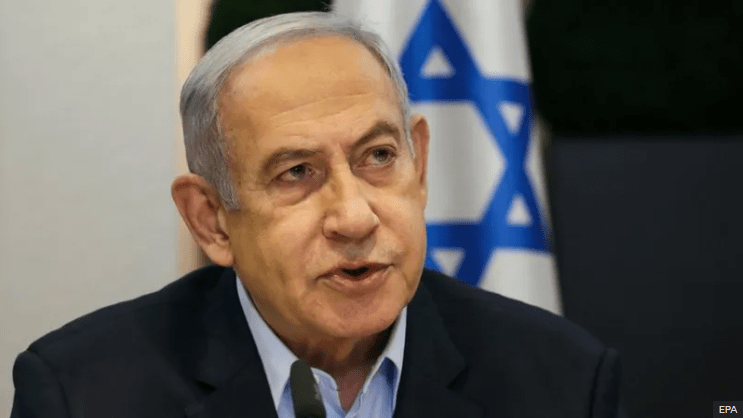
Israeli Prime Minister Benjamin Netanyahu is set to meet U.S. President Donald Trump at Mar-a-Lago in Florida on Monday, with discussions expected to focus on advancing the fragile Gaza truce and addressing perceived threats from Iran.
The meeting, scheduled for 1 p.m. local time (1800 GMT), marks the fifth encounter between the two leaders in the United States this year. White House officials have reportedly expressed concern that both Israel and Hamas are moving slowly in implementing the second phase of the ceasefire agreement reached in October.
Trump, who confirmed that Netanyahu requested the meeting, is keen to push forward the next stage of the deal, which includes establishing a Palestinian technocratic government in Gaza and deploying an international stabilization force.
Israeli government spokeswoman Shosh Bedrosian said Netanyahu would emphasize that “Hamas must be disarmed and Gaza demilitarized” while also highlighting “the danger Iran poses not only to the Middle East but to the United States.”
Recent Israeli reports suggest Tehran is rebuilding its ballistic missile capabilities following strikes during the 12-day conflict with Israel in June. However, some analysts argue Netanyahu’s renewed focus on Iran is aimed at creating a new justification for potential military action.
Sina Toossi, a researcher at Washington’s Center for International Policy, said, “Trump’s claims that US strikes in June neutralized Tehran’s nuclear program have removed Israel’s most powerful historical rationale for US support of a war against Iran. Netanyahu’s missile focus appears to manufacture a replacement casus belli.”
Iran dismissed the reports as a “psychological operation” and warned that renewed aggression would result in “harsher consequences” for Israel.
Netanyahu’s Florida visit comes amid intense diplomatic activity, following Trump’s meetings with Ukrainian President Volodymyr Zelensky and senior officials from Qatar, Egypt, and Turkey to mediate the Middle East conflict.
“Phase two has to begin,” said Gershon Baskin, co-head of the Alliance for Two States’ peacebuilding commission, noting that Hamas has had time to reestablish its presence. The first phase of the truce required Hamas to release hostages taken during its October 7, 2023, attacks on Israel; the group has reportedly returned all living captives and the remains of all but one.
Under the second phase, Israel is expected to withdraw from positions in Gaza, Hamas must lay down its weapons, and an interim authority will govern the territory alongside the deployment of an international stabilization force. Both sides have accused each other of frequent ceasefire violations, complicating progress.
According to Axios, Trump intends to announce the first meeting of a new Gaza “Board of Peace” that he will chair at the Davos forum in January. However, senior White House officials are reportedly frustrated with what they see as Netanyahu’s efforts to delay the peace process.
“Phase two is currently going nowhere,” said Yossi Mekelberg, a Middle East expert at London-based Chatham House, noting that Netanyahu may be attempting to shift international attention from Gaza to Iran as Israel heads into an election year. “Everything is connected to staying in power,” he added.
Despite the ceasefire, Israel continues to conduct airstrikes on Hamas positions in Gaza and Hezbollah targets in Lebanon, with Syria also expected to feature in discussions.
About the Author