Electricity distributors face fresh financial strain as regulator mandates 12-month repayment to consumers who purchased meters under the MAP scheme…..
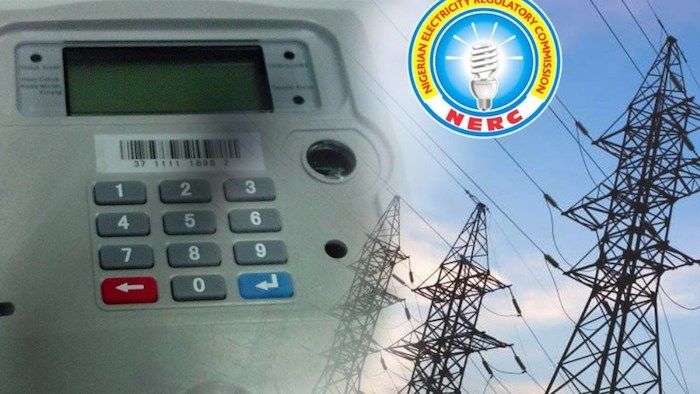
Electricity distribution companies in Nigeria are under renewed financial pressure after the Nigerian Electricity Regulatory Commission (NERC) directed them to refund N20.33 billion to customers who purchased prepaid meters under the Meter Asset Provider programme.
The order, contained in an amended regulatory directive issued on March 1, 2026, requires electricity distribution companies commonly known as DisCos to complete the refunds within 12 months.
Under the arrangement, affected customers will receive the repayments as credits on their electricity bills, spread evenly across the one-year repayment period. The regulator says the move is aimed at strengthening consumer protection and restoring public confidence in Nigeria’s electricity market.
DisCos Warn of Financial Pressure
Industry stakeholders say the directive comes at a time when distribution companies are already grappling with severe liquidity challenges across the Nigerian Electricity Supply Industry.
Executives within several power distribution firms warn that the refund obligation could further weaken their already fragile finances.
A senior manager at the Abuja Electricity Distribution Company (AEDC) said the sector’s cash flow constraints have made it difficult for operators to invest adequately in infrastructure upgrades and network expansion.
“These challenges have significantly constrained the cash flow available to distribution companies for infrastructure maintenance, network expansion, and metering investments,” the official said.
Power sector analysts also expressed concern about the timing of the directive.
Energy analyst Ayodele Oni noted that while the refund policy supports consumer protection, the financial realities facing distribution companies cannot be ignored.
“If we do not address the underlying tariff gaps and revenue recovery challenges, policies like this could worsen liquidity problems and affect the ability of operators to invest in network improvements,” he said.
Energy economist Benjamin Emmanuel echoed similar concerns, warning that imposing large refund obligations without improving sector liquidity could put additional pressure on already weak balance sheets.
Power consultant Adedayo Ademiluyi added that the directive reflects the longstanding financial fragility of Nigeria’s electricity distribution segment.
“DisCos are operating in an environment where tariffs are not fully cost-reflective and revenue collection remains weak,” he said.
Energy policy analyst Ibrahim Maryam also stressed the need for broader reforms alongside consumer protection measures.
“Regulators must ensure that distribution companies remain financially viable. Without financially stable DisCos, the entire electricity value chain will struggle to function efficiently,” she said.
Understanding the MAP Scheme
Nigeria introduced the Meter Asset Provider (MAP) scheme to tackle the country’s persistent metering gap and reduce disputes linked to estimated billing.
Under the initiative, third-party investors supply prepaid meters to electricity consumers. Customers pay upfront for the meters, while distribution companies reimburse the cost over time.
The programme was designed to accelerate meter deployment and reduce estimated billing, a major source of friction between electricity providers and consumers.
However, implementation challenges including funding constraints and operational delays have slowed progress in closing the country’s metering gap.
Complaints from consumers about delayed meter installations and slow reimbursement processes have persisted since the scheme was launched.
Deeper Structural Challenges
Energy analysts say the refund directive highlights deeper structural problems within Nigeria’s electricity market, particularly around tariffs and revenue collection.
Despite several tariff reviews, electricity prices in parts of the market are still considered below the level required to cover the full cost of power supply.
Distribution companies also face substantial revenue losses due to electricity theft, unpaid government bills, and inefficient billing and collection systems.
Officials within some distribution networks say many government institutions and large power consumers still owe significant unpaid electricity bills.
At the same time, aging infrastructure and persistent energy losses continue to erode the revenue available to operators.
These challenges have created a broader liquidity crisis across the electricity value chain, affecting generation companies, the transmission network, and distribution operators.
Refund Timeline and Compliance
Under NERC’s amended order, all refunds must be completed within 12 months, with repayments applied directly to customer electricity bills in equal instalments.
The directive applies specifically to consumers who purchased prepaid meters under the MAP scheme.
Analysts say the ability of distribution companies to meet the deadline will depend largely on their financial capacity and operational performance.
The Federal Government had earlier attempted to address the metering gap by approving N28 billion in funding for electricity distribution companies in October 2025 under the Meter Acquisition Fund (MAF) Tranche B programme.
The funds were earmarked for the procurement and installation of prepaid meters across the country.
Despite these interventions, experts say resolving Nigeria’s electricity sector challenges will require deeper reforms, improved tariff structures, and stronger revenue collection mechanisms to ensure both consumer protection and the financial sustainability of power operators.
About the Author