Shettima says resolving farmer–herder crisis is key to food security and national stability
The National Economic Council (NEC) has constituted a special committee to accelerate the implementation of livestock production reforms across Nigeria.
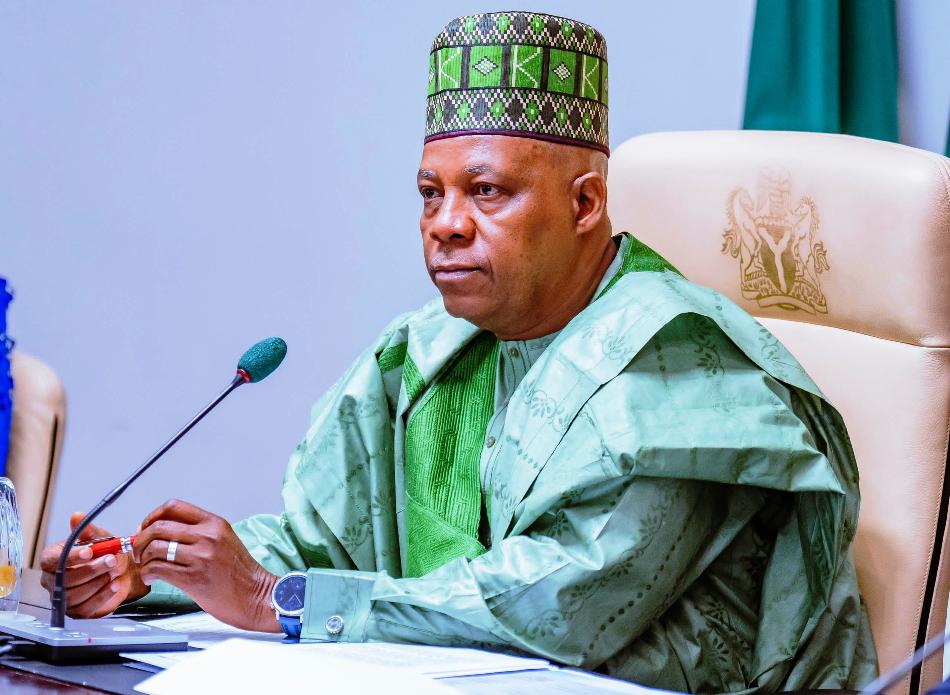
The committee was approved during an emergency virtual meeting of the NEC held on Wednesday and chaired by Vice President Kashim Shettima.
It is chaired by Kebbi State Governor, Nasir Idris, and includes one representative from each of the six geopolitical zones: Bauchi State for the North-East, Niger State for the North-Central, Ondo State for the South-West, Imo State for the South-East, Cross River State for the South-South, and Kebbi State for the North-West.
Other members are the Minister of Livestock Development, Minister of Agriculture and Food Security, Minister of Budget and Economic Planning, and the Senior Special Assistant to the President on Agribusiness in the Office of the Vice President.
Livestock reform tied to peace and food security
Speaking at the 155th NEC meeting, Vice President Shettima said Nigeria could not achieve sustainable food security without resolving the long-standing farmer–herder conflicts that have claimed lives, displaced communities and destroyed farmlands.
He described food security as a moral responsibility and stressed the need for a practical, lasting and nationally accepted solution to the crisis.
“We must acknowledge with regret the deep distrust created by this violence, born out of a trade and ancestral practice that should have remained a pillar of our rural economy,” Shettima said.
“The loss of lives, destruction of homes and devastation of farmlands must end. We cannot perform a task as fundamental as feeding ourselves unless we find an enduring solution to the farmer–herder crisis.”
The Vice President traced the conflict to years of poor management of tensions between farming and pastoral communities, noting that what began as coexistence challenges gradually degenerated into widespread violence.
“What started as a localised problem has become a shared nightmare across the country, disrupting livelihoods and eroding trust among communities that once depended on each other,” he added.
Tinubu’s livestock agenda
Shettima commended President Bola Tinubu for initiating reforms aimed at transforming livestock production and integrating the sector as a major contributor to the national economy.
He urged state governors to take seriously the proposals and presentations by the Ministry of Livestock Development and the Presidential Livestock Reform Committee (PLRC), noting that the sector holds enormous potential for economic growth, conflict resolution and peacebuilding.
The Vice President assured that recommendations from the PLRC and the Ministry would receive priority attention from the Tinubu administration, while calling on state governments to partner with the Federal Government to unlock the sector’s opportunities.
“The presentations before us today address the challenge of stabilising food systems, restoring confidence in rural economies and reducing security pressures caused by competition over land, water and livelihoods,” Shettima said.
“They demonstrate that agriculture and security are not competing choices, but interconnected pillars of national stability.”
Committee mandate
NEC directed the newly constituted committee to review the recommendations of the Presidential Livestock Reform Committee, assess the proposals submitted by the Ministry of Livestock Development, and identify states willing to participate in the implementation of the livestock programme.
President Tinubu had earlier, at the Federal Executive Council meeting of December 10, 2025, instructed the NEC to collaborate with the Ministry of Livestock Development to develop a comprehensive roadmap for reforming Nigeria’s livestock industry.
The proposal, subsequently prepared by the Ministry and presented to the Council, is aimed at repositioning Nigeria’s livestock sector as a modern, peaceful and profitable driver of national development.
About the Author