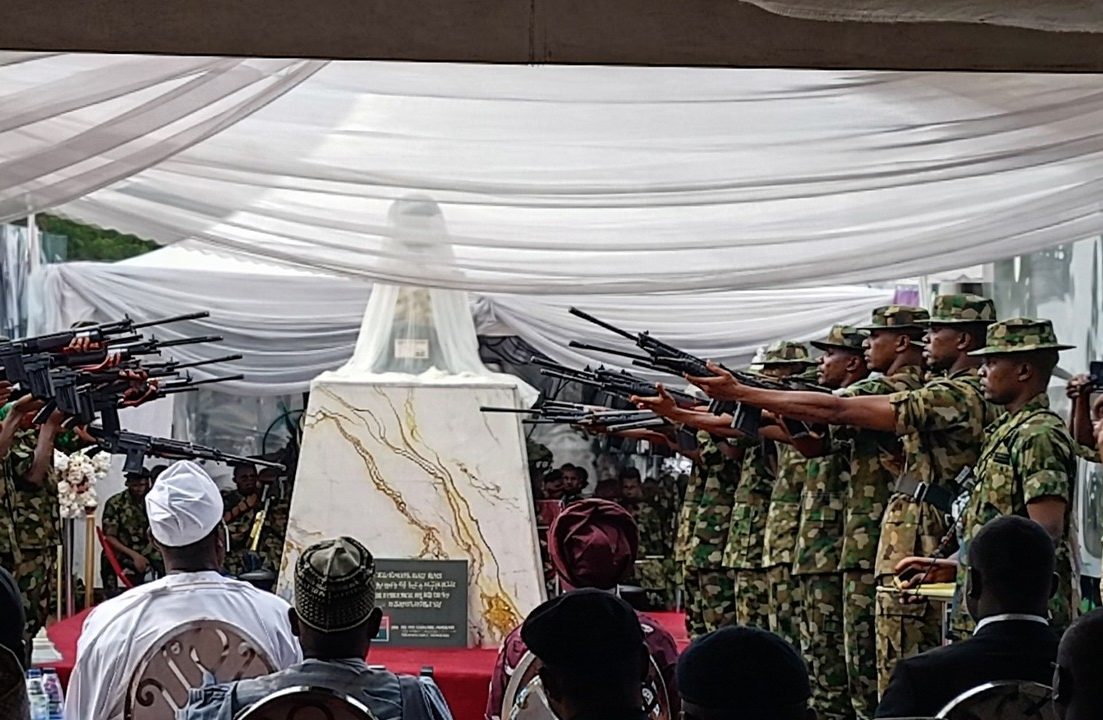
Prominent figures from Nigeria’s political and diplomatic circles convened in Abuja on Thursday to commemorate the life and legacy of former Head of State, Murtala Muhammed.
The solemn ceremony, held at the Murtala Muhammed Arcade, drew senior government officials, members of the diplomatic corps, and other distinguished guests — a testament to the enduring influence of the late leader’s brief but transformative tenure.
President Bola Ahmed Tinubu was represented at the event by the Secretary to the Government of the Federation, George Akume.
Also in attendance was former Chief of Staff to ex-President Muhammadu Buhari, Ibrahim Gambari, alongside the Ambassador of Angola and other dignitaries.
Reflecting on a Defining Era
Organisers described the gathering as an opportunity to reflect on General Muhammed’s “brief but very remarkable” leadership — a period widely remembered for decisive governance, sweeping reforms, and a firm anti-corruption drive.
Though his time in office lasted just about 200 days, from July 1975 until his assassination on February 13, 1976, Muhammed left an outsized imprint on Nigeria’s political evolution.
During his tenure, he implemented bold administrative changes, including the dismissal of more than 10,000 public officials over allegations of corruption and inefficiency. His government also created seven new states to promote administrative efficiency and national integration.
Significantly, his administration initiated the process that ultimately led to the relocation of Nigeria’s capital from Lagos to Abuja — a move that reshaped the nation’s political geography.
A Legacy Cut Short
General Muhammed’s life was tragically cut short in a failed coup attempt barely six months after assuming office. Yet, decades later, he remains widely regarded as one of Nigeria’s most decisive and reform-oriented leaders.
Thursday’s commemoration underscored how his legacy of discipline, reform, and national purpose continues to resonate in Nigeria’s democratic journey.
About the Author