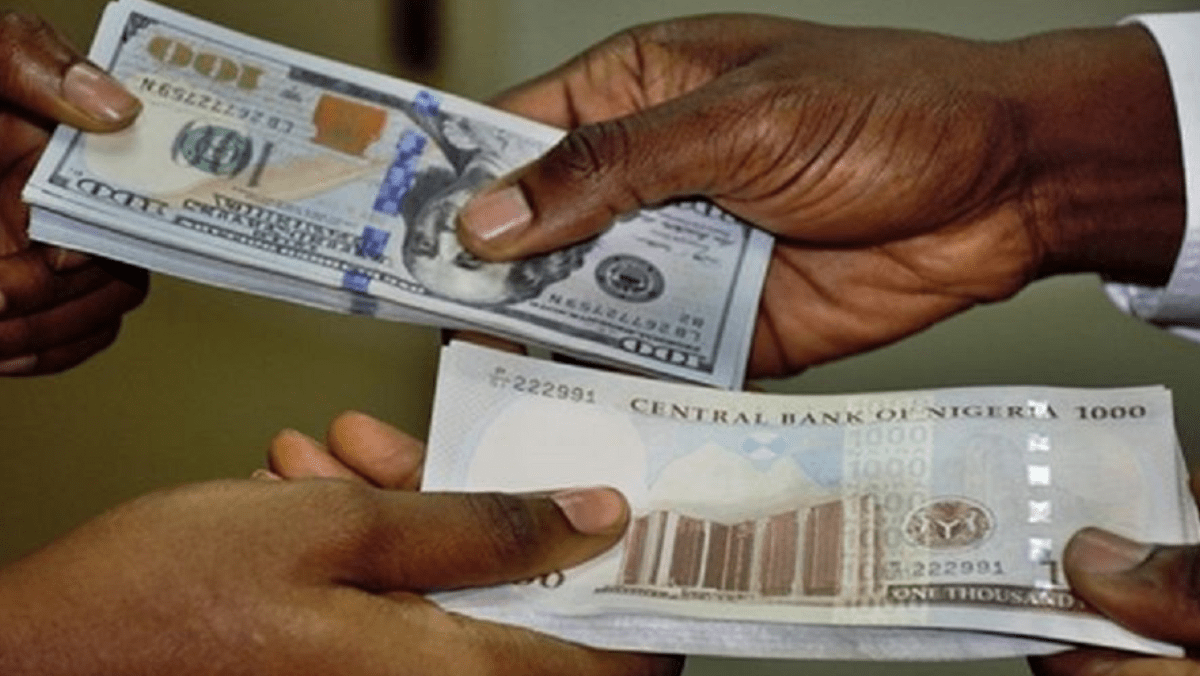
CBN interventions and rising reserves help stabilise Nigeria’s foreign exchange market…
The Naira recorded a modest gain in early trading on Tuesday at the Nigerian Foreign Exchange Market (NFEM), opening at 1,398.24 per dollar before strengthening slightly as the session progressed.
During the early hours of trading, the local currency briefly weakened to a high of 1,398.82 per dollar before recovering to 1,396.24 per dollar by mid-morning, supported by steady foreign exchange supply from the Central Bank of Nigeria (CBN) and authorised dealers.
Market participants said the apex bank has remained active in maintaining liquidity in the official market, helping to sustain the “willing-buyer-willing-seller” framework introduced as part of Nigeria’s foreign exchange reforms.
According to authorised dealers, the continued intervention by the CBN has helped curb speculative pressures that traditionally trigger volatility in the foreign exchange market, particularly at the start of the trading week.
Analysts also attribute the relative stability of the Naira to the central bank’s ongoing supply of foreign exchange to Bureau De Change (BDC) operators. The move has broadened access to foreign currency and eased pressure on the parallel market, reducing the need for high-premium transactions in the informal sector.
The broader economic backdrop has also contributed to the currency’s stability in recent weeks.
Nigeria’s gross external reserves recently climbed above the $50 billion mark, providing the country with stronger buffers to manage currency volatility and external shocks.
In addition, easing inflationary pressures have improved the purchasing power of the local currency. Nigeria’s headline inflation rate recently declined to 15.10 percent, signalling a gradual moderation in price growth.
Meanwhile, crude oil production has remained relatively stable at about 1.46 million barrels per day, ensuring a steady inflow of foreign exchange earnings that support liquidity in the NFEM.
Market observers also point to recent monetary policy adjustments as another factor influencing the current stability. Last month, the Central Bank of Nigeria reduced the Monetary Policy Rate (MPR) by 50 basis points to 26.5 percent, a move analysts say has helped usher the market into a stabilisation phase that could encourage long-term capital inflows into the Nigerian economy.
About the Author