Currency markets react to US-Iran-Israel truce, with the dollar retreating globally while Nigeria’s reserves come under pressure…..
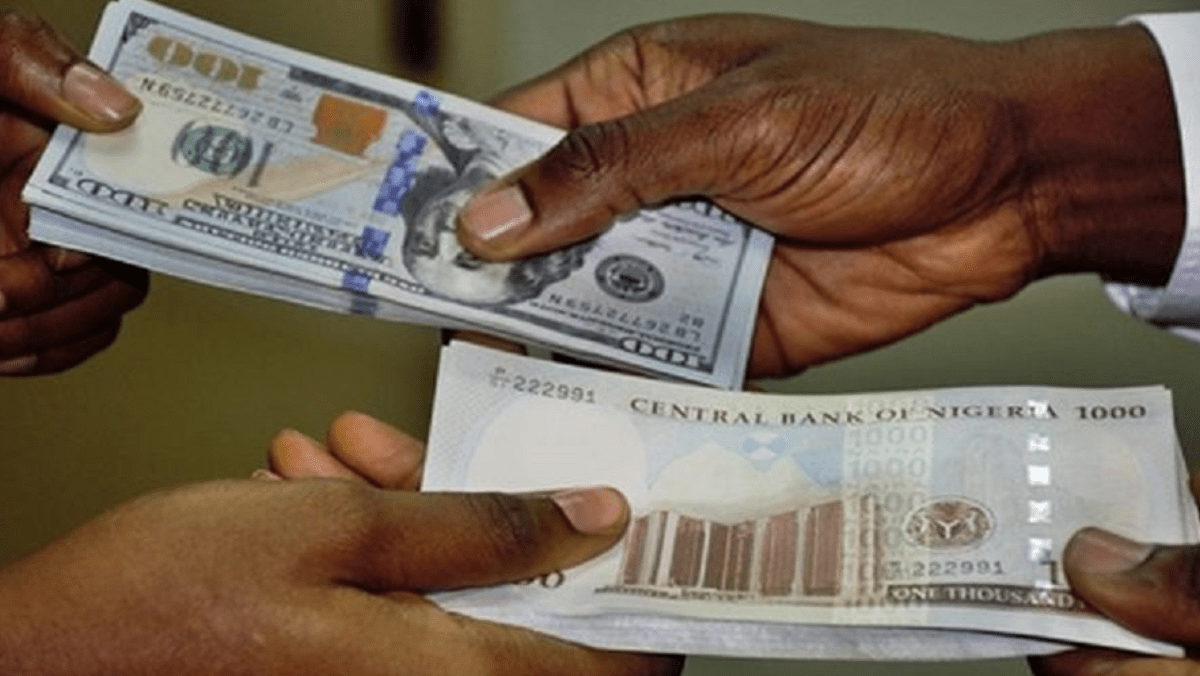
The Nigerian currency came under renewed pressure on Tuesday, weakening to N1,389 per dollar following a temporary ceasefire agreement involving the United States, Israel, and Iran.
Data published by the Central Bank of Nigeria showed the naira depreciated from N1,382.75/$ recorded before the Easter break, reflecting a modest but notable decline as global markets adjusted to shifting geopolitical developments.
Intraday trading highlighted continued volatility, with the currency fluctuating between N1,381/$ and N1,390/$, before settling at an average rate of N1,386.3/$.
Global Markets React to Ceasefire
The two-week truce between the US, Iran, and Israel helped calm fears of a broader conflict, boosting investor sentiment across global financial markets.
As tensions eased, the US dollar weakened against major currencies, reversing earlier gains driven by safe-haven demand.
The Japanese yen strengthened by 0.7 percent to 158.50 per dollar, while the euro rose by the same margin to $1.1677. The British pound also advanced by 0.8 percent to $1.3403.
Commodity-linked currencies recorded even stronger gains, with the Australian dollar climbing 1.2 percent to $0.7063 and the New Zealand dollar rising 1.1 percent to $0.5795.
Meanwhile, the US Dollar Index fell to 98.943 its lowest level since March 11 extending a three-day losing streak.
Why the Naira Still Weakened
Despite the broader decline in the dollar, the naira moved in the opposite direction, highlighting persistent domestic pressures in Nigeria’s foreign exchange market.
Analysts say the currency’s weakness reflects underlying demand for foreign exchange, coupled with declining external buffers.
Recent data shows Nigeria’s external reserves dropped by about $850 million within three weeks, falling to $49.18 billion between March 11 and April 2, 2026.
This decline has raised concerns about the country’s ability to sustain currency stability, especially in the face of global uncertainties.
While the ceasefire has reduced immediate geopolitical risks and stabilised global markets, its impact on Nigeria remains mixed.
On one hand, easing tensions could support oil market stability and reduce external shocks. On the other, the naira continues to face structural challenges, including FX demand pressures and reserve drawdowns.
With global conditions improving but domestic constraints persisting, the naira’s trajectory in the coming weeks will likely depend on foreign exchange inflows, policy direction, and the sustainability of Nigeria’s external reserves.
For now, the latest movement underscores a familiar pattern: even as global risks ease, local fundamentals remain the key driver of the currency’s performance.