Cautious global sentiment and declining external buffers keep pressure on Nigeria’s currency…..
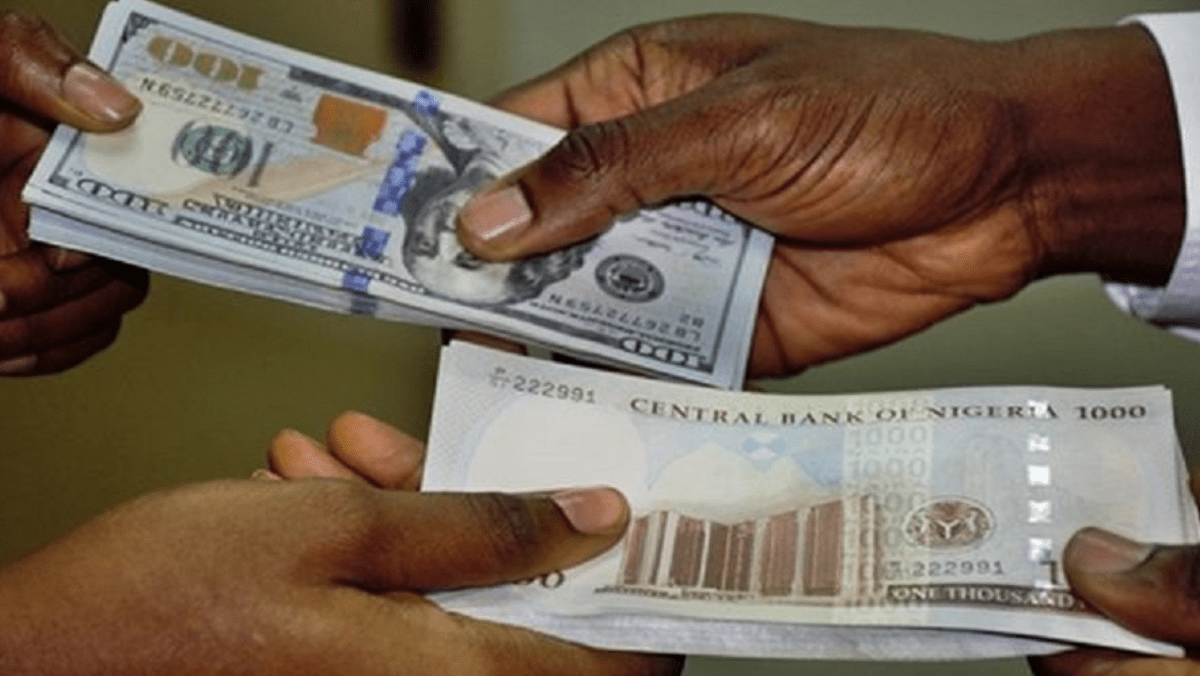
The Nigerian naira recorded a marginal decline on Tuesday, closing at N1,383.5 per dollar, compared to N1,383/$ in the previous session, as pressure from falling external reserves continues to weigh on the foreign exchange market.
Data from the Central Bank of Nigeria showed that the currency traded within a narrow range of N1,372/$ to N1,389/$ during the day, reflecting relatively stable but cautious market conditions.
Despite the modest movement, the depreciation underscores persistent underlying pressures in Nigeria’s FX market, particularly as the country’s external reserves continue to trend downward.
Market Shows Cautious Stability
Trading activity in the Nigerian Foreign Exchange Market (NFEM) indicated moderate liquidity, with participants maintaining a careful approach amid broader uncertainties.
The naira posted a simple average exchange rate of N1,381.86/$, while total interbank turnover stood at $83.44 million across 88 deals pointing to steady but restrained activity.
However, a key concern remains the gradual decline in Nigeria’s external reserves, which slipped to $49.6 billion as of March 23, 2026, down from $49.8 billion recorded just days earlier.
The dip signals continued strain on the country’s FX buffers, even as authorities aim to stabilise the currency.
Global Factors Add to Pressure
Beyond domestic dynamics, global currency markets remain on edge due to geopolitical tensions and shifting monetary policy expectations.
Investors are closely watching developments involving the United States and Iran, as well as signals from major central banks, which continue to shape global risk sentiment.
The U.S. dollar remained broadly stable against major currencies, while modest gains were recorded by the euro and British pound. Meanwhile, the Japanese yen held firm amid indications from the Bank of Japan of potential future rate adjustments.
The U.S. dollar index edged slightly lower, reflecting subdued activity across currency markets, even as geopolitical risks linger.
Fed Outlook Influences Emerging Markets
Expectations around U.S. monetary policy are also playing a critical role. The likelihood of a 25-basis-point rate hike by the Federal Reserve in December has increased significantly, reinforcing the prospect of higher-for-longer interest rates.
Federal Reserve Governor Michael Barr recently signalled that inflation remains above target, suggesting tighter policy could persist.
Such developments typically strengthen the dollar and draw capital away from emerging markets like Nigeria, adding pressure on local currencies.
Outlook: Stability with Lingering Risks
While the naira has shown relative short-term stability, analysts say the trajectory of external reserves, global oil prices, and capital flows will remain critical to its outlook.
The CBN has reiterated its commitment to strengthening macroeconomic stability, recently outlining plans to adopt a full inflation-targeting framework with a medium-term target of 6–9 percent.
The apex bank also projects that external reserves could rise to $51.04 billion in 2026, supported by improved inflows and structural reforms offering some optimism despite current headwinds.
For now, however, the balance between domestic pressures and global uncertainties continues to define the naira’s path in the foreign exchange market.
About the Author