Currency pressure builds despite Nigeria’s oil advantage, as rising fuel costs threaten fresh economic strain…
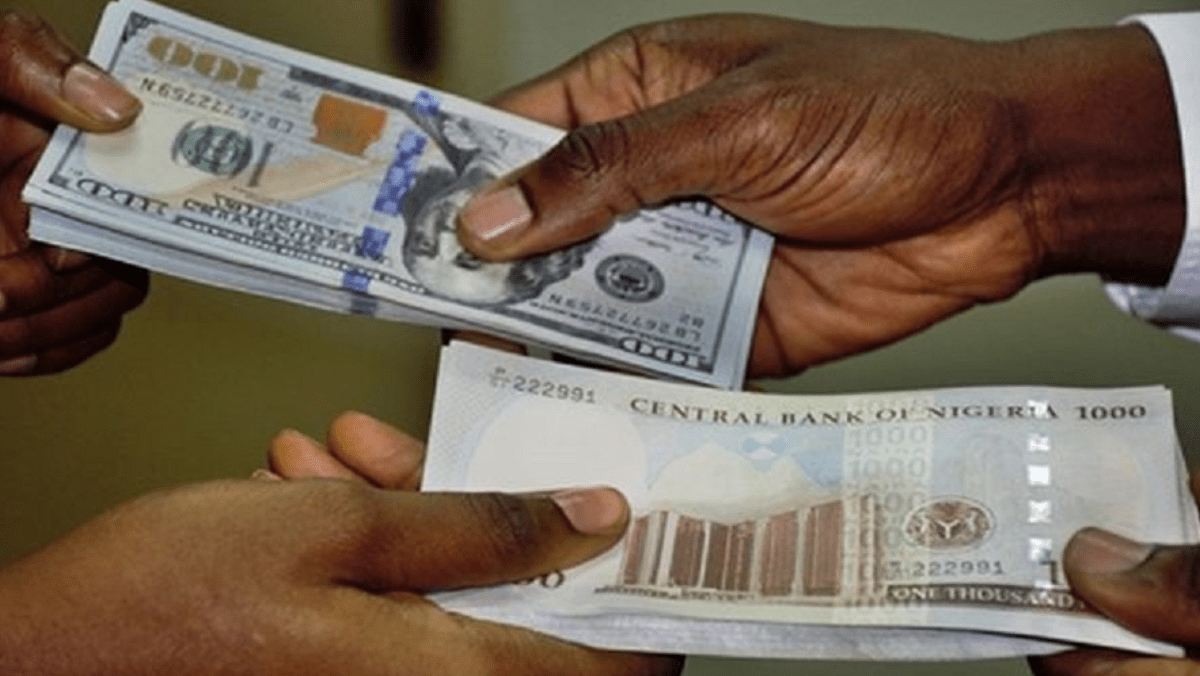
The Nigerian naira has come under renewed strain in the foreign exchange market, weakening to N1,385 against the U.S. dollar as escalating tensions in the Middle East ripple across global financial systems.
The local currency, which had shown signs of stability around N1,360 in recent weeks, has now slipped by roughly 0.3 percent over the past fortnight highlighting growing pressure on emerging market currencies amid rising global uncertainty.
While Nigeria’s status as a major crude exporter has offered some insulation from the broader turmoil, the domestic economy is increasingly feeling the impact of extreme volatility in global energy markets.
That pressure is becoming most visible at home.
Despite a modest easing in inflation to 15.06 percent in February, the renewed conflict abroad has triggered a sharp spike in fuel costs domestically, with gasoline prices jumping by more than 30 percent. The surge is already raising concerns about a fresh wave of inflation, driven by higher transportation and production costs.
Analysts warn that the recent gains in price stability could quickly unravel.
According to market watchers at ForexTime Limited, rising energy and logistics costs are likely to feed directly into consumer prices, complicating the inflation outlook and putting policymakers on edge.
“As tensions escalate, fears of inflation shocks are building, and central banks may be forced to rethink their strategies for 2026,” said Matthew Anthony, the firm’s Senior Market Analyst for Africa.
At the center of the global war is the Strait of Hormuz, a vital shipping route for oil, where ongoing disruptions have intensified fears of supply shortages. Attacks on energy infrastructure across the region have only deepened concerns, pushing crude prices higher.
Benchmark crude has surged above $100 per barrel, with bullish sentiment in the oil market showing little sign of easing despite efforts to stabilise supply.
In response, the International Energy Agency has announced an unprecedented release of 400 million barrels from strategic reserves, while the United States has issued a temporary waiver to allow continued purchases of Russian oil.
Even so, markets remain on edge, with traders bracing for further volatility.
The ripple effects are being felt globally. In Australia, the central bank has already raised interest rates for a second consecutive meeting, signaling a broader shift toward tighter monetary policy as inflation risks resurface.
Attention is now turning to major central banks, including the Federal Reserve, the European Central Bank, and the Bank of England, all of which face mounting pressure to respond to the evolving economic landscape.
Expectations for interest rate cuts in the United States have largely faded, with investors now pricing in just one possible reduction for the entirety of 2026.
For Nigeria, however, the focus remains squarely on the next move by the Central Bank of Nigeria.
The combination of a weakening currency and surging fuel prices may force the apex bank to reconsider any plans to ease monetary policy, instead shifting toward a more defensive stance to contain inflationary pressures.
Recent gains in equity markets have done little to ease concerns, with analysts describing them as a temporary distraction in an otherwise cautious environment.
As global uncertainty deepens and oil markets remain volatile, Nigerian policymakers now face a delicate balancing act, one that could define the country’s economic trajectory in the months ahead.
About the Author